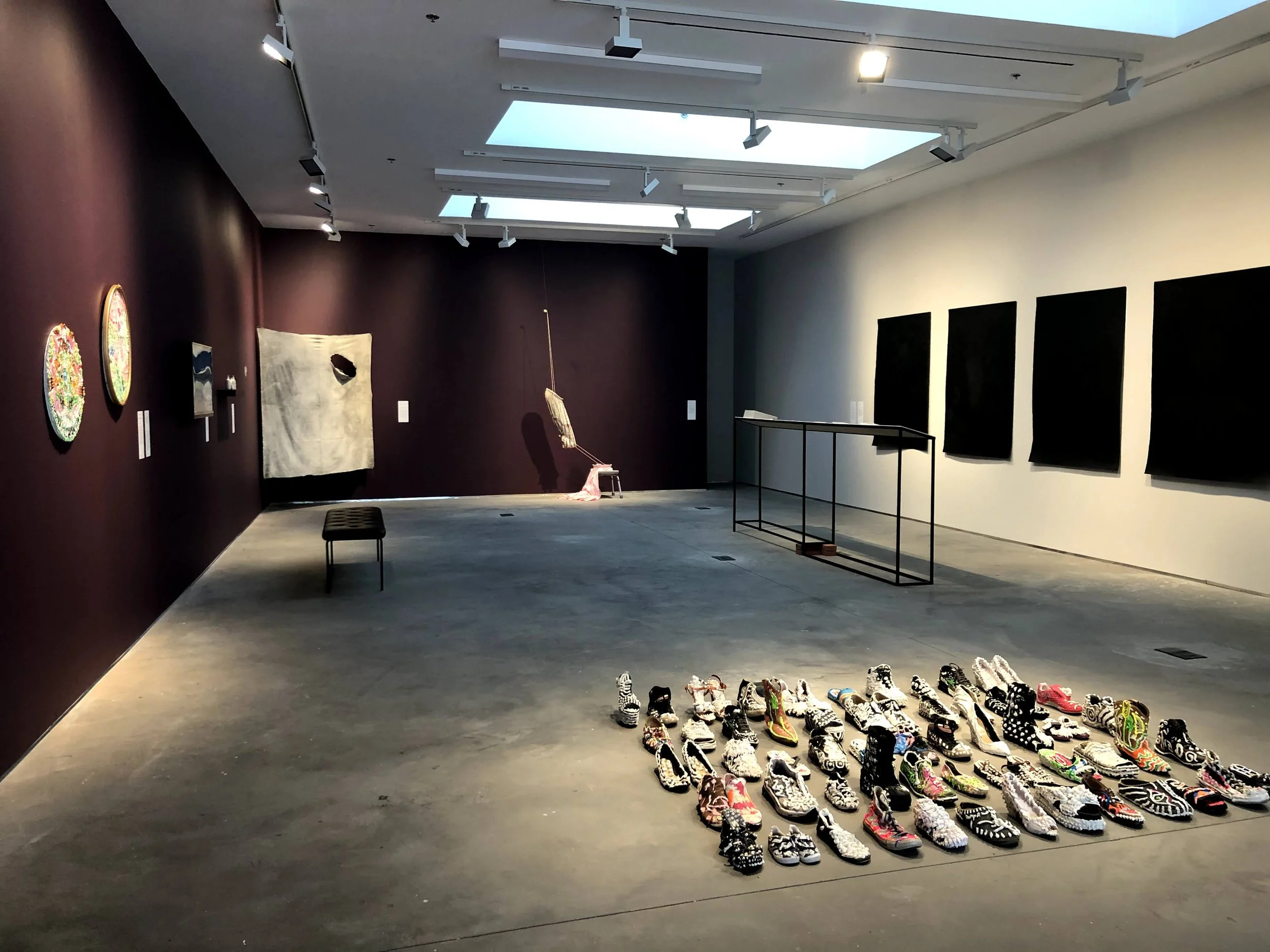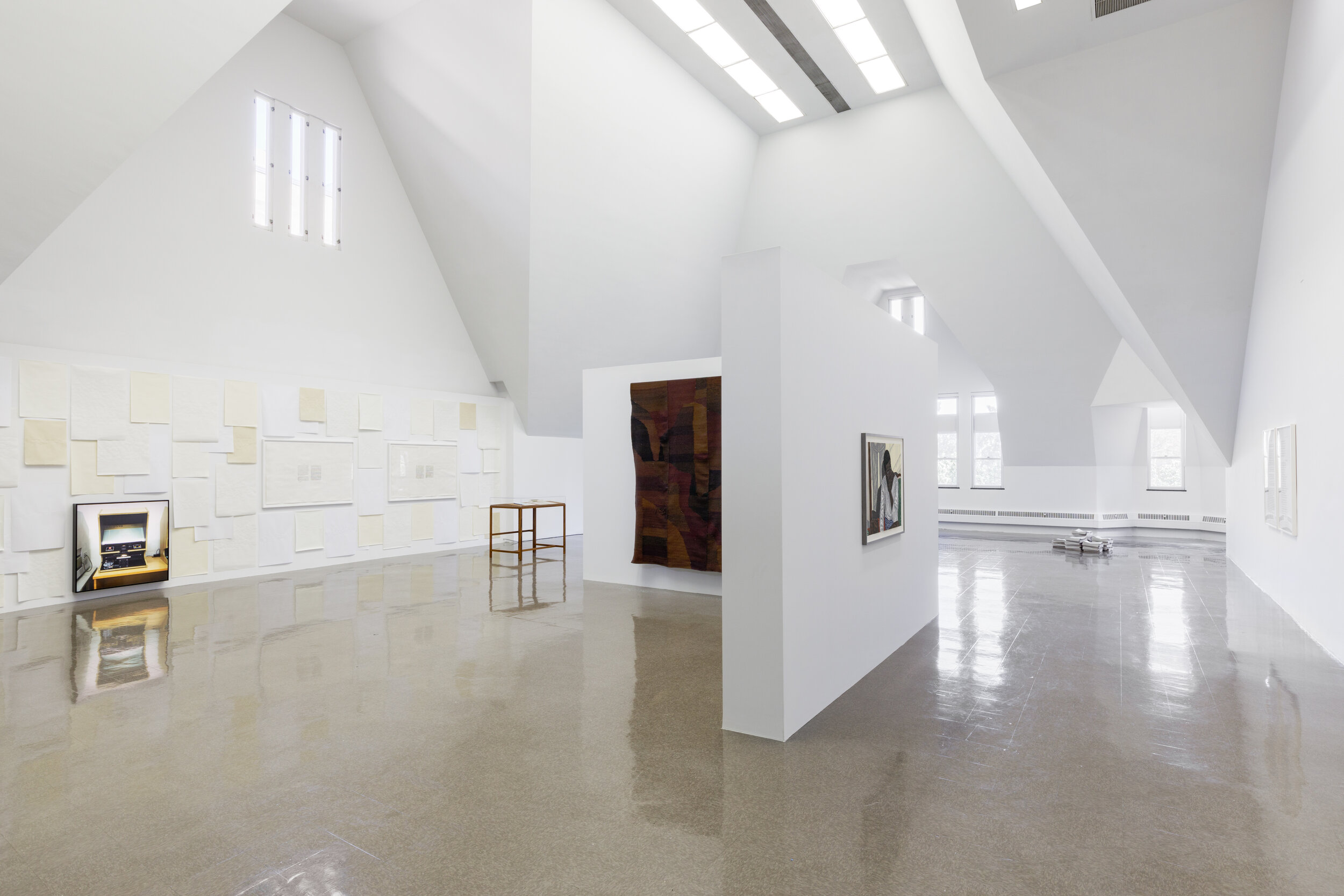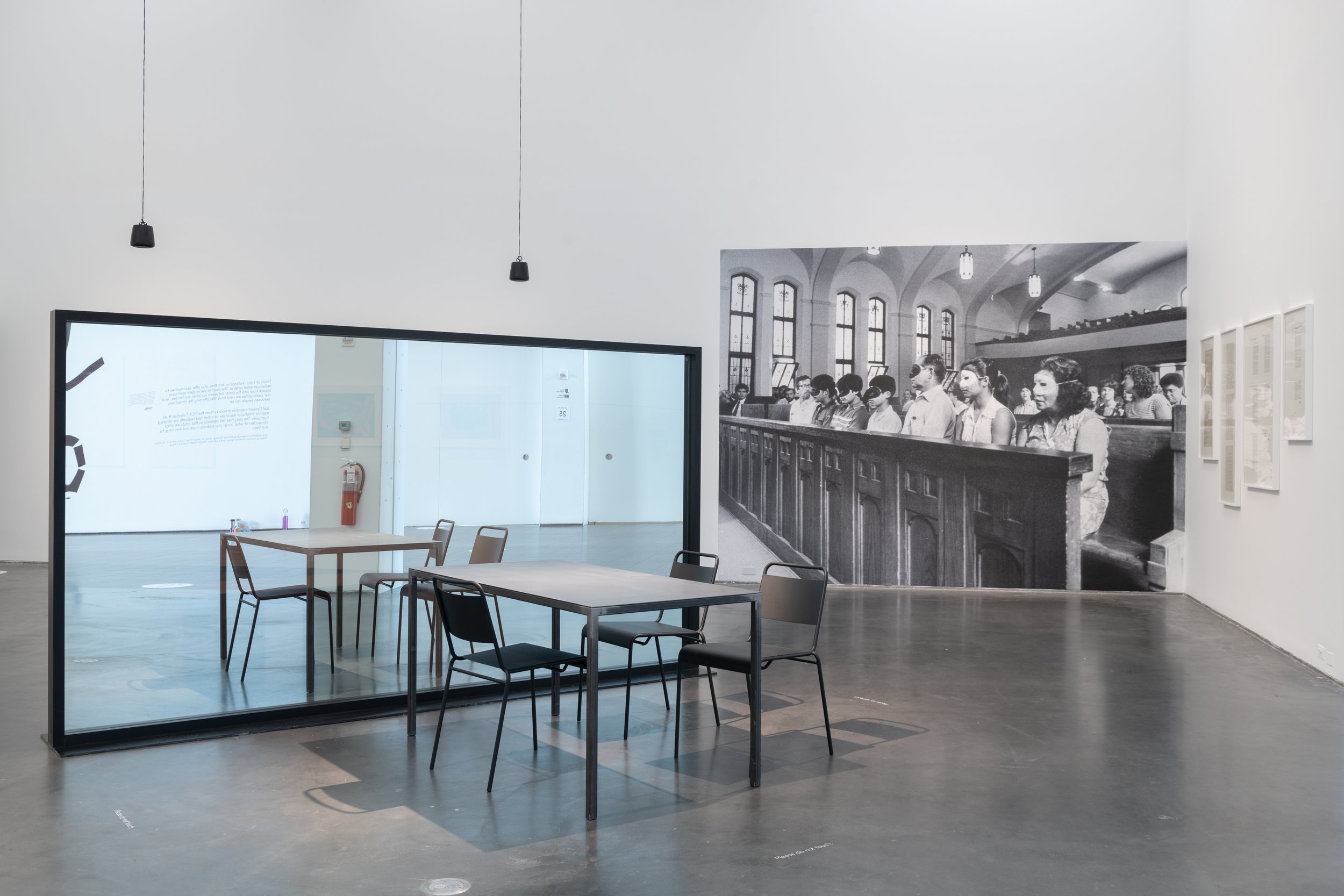
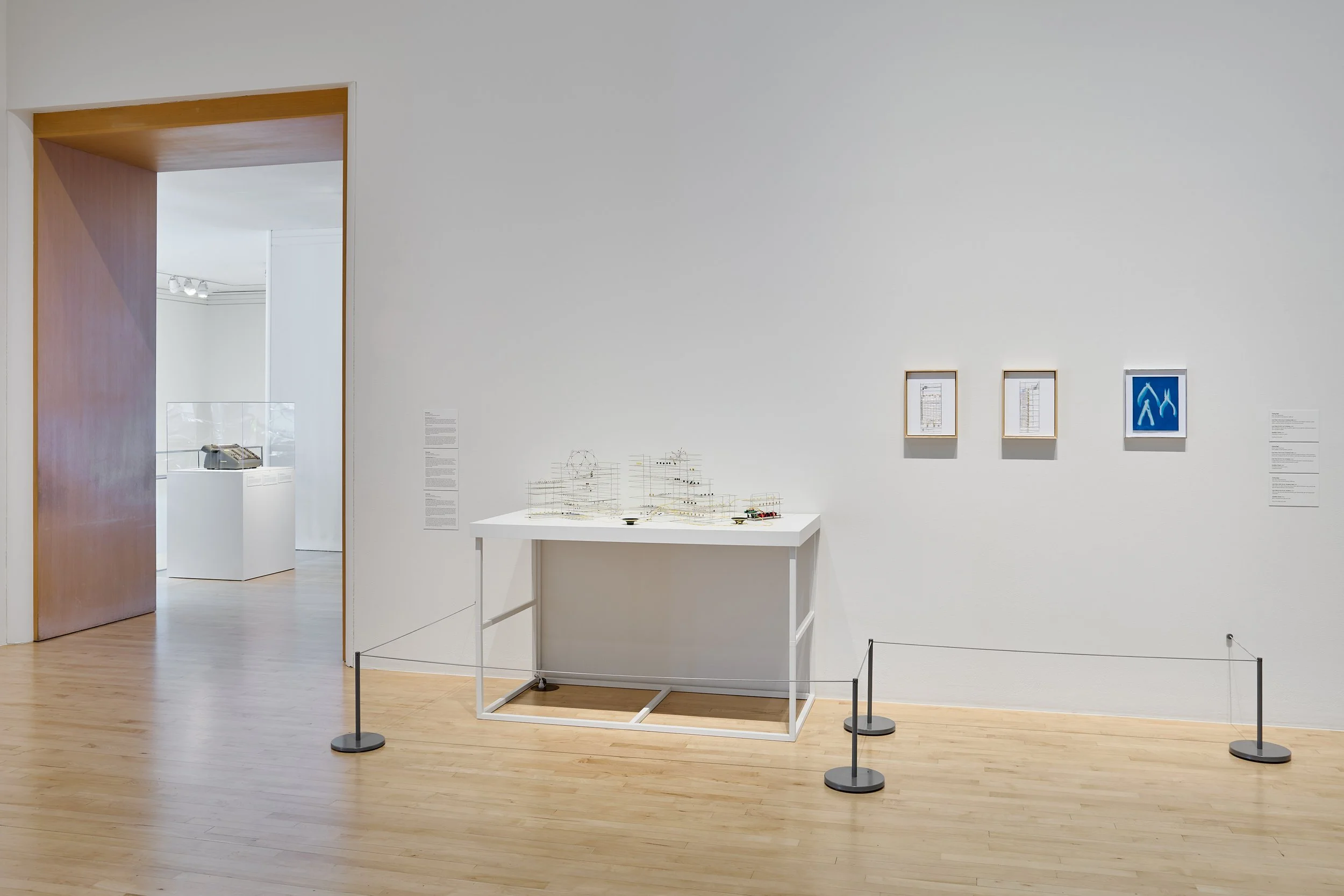
Who Owns the Light?, Smith College Museum of Art Permanent Collection
Sep
1
to Sep 1

Who Owns the Light?, Smith College Museum of Art Permanent Collection

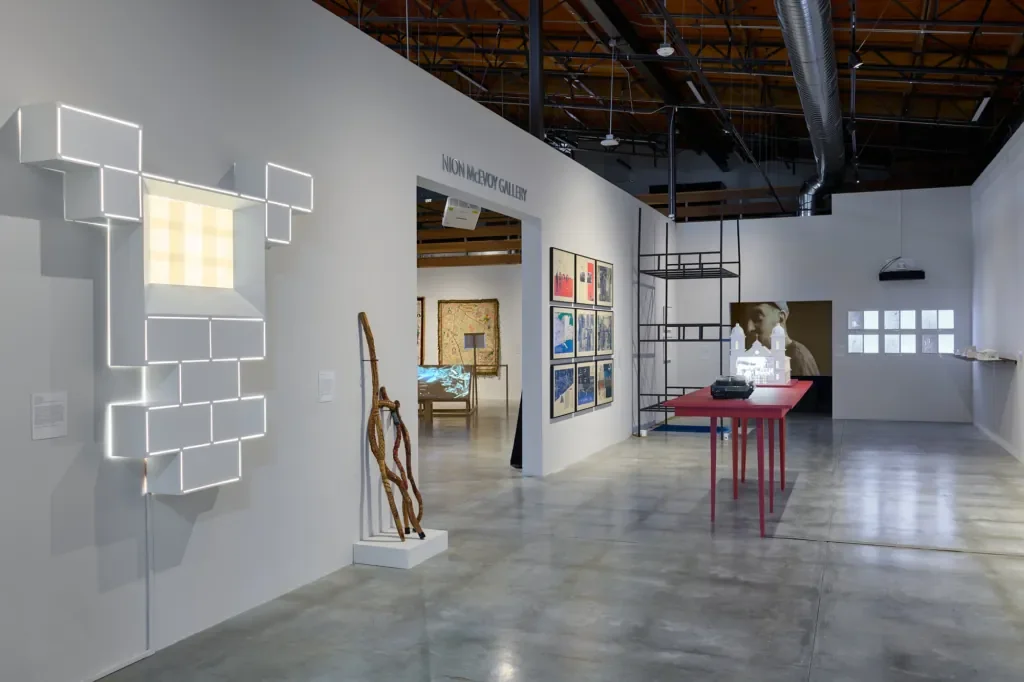
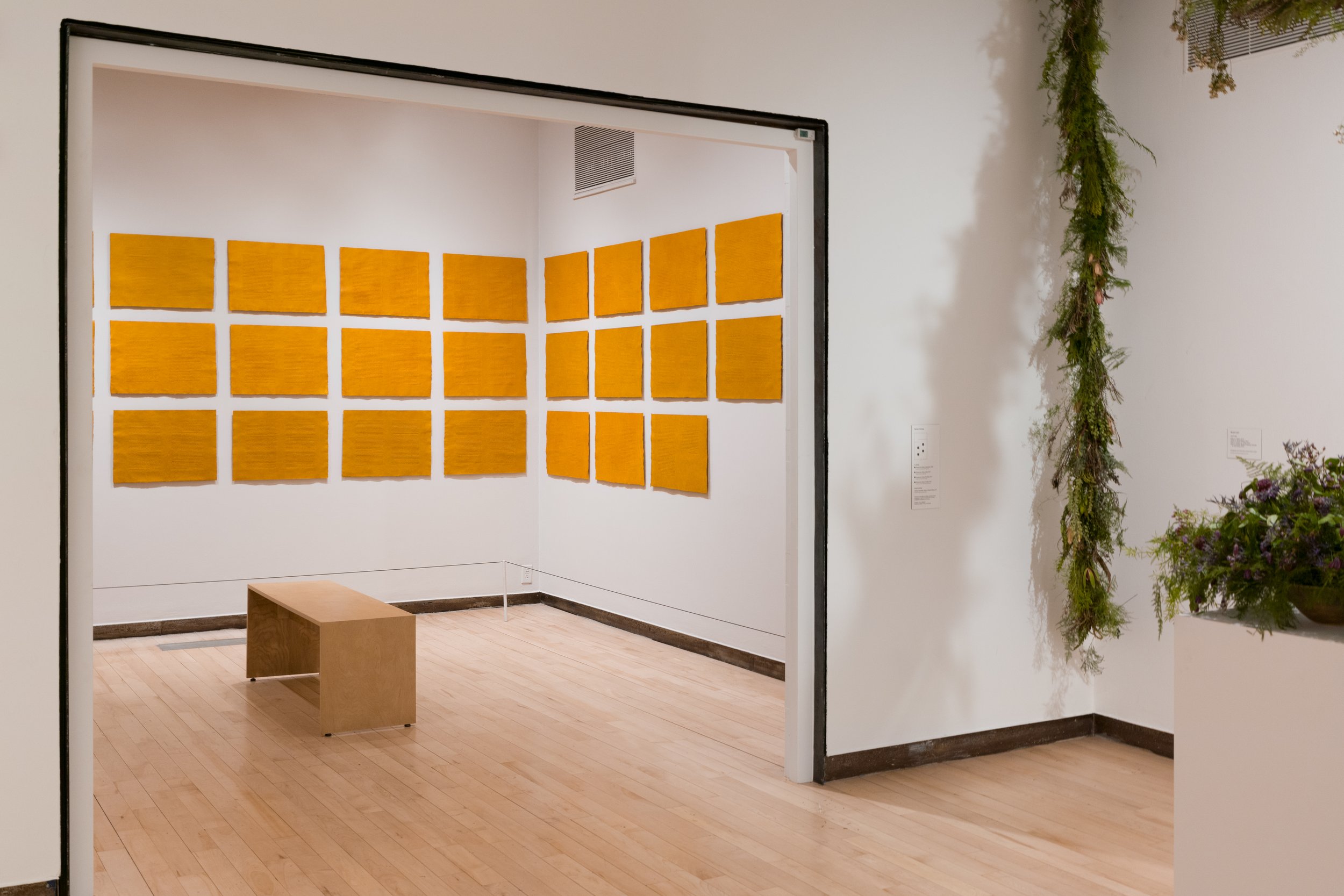
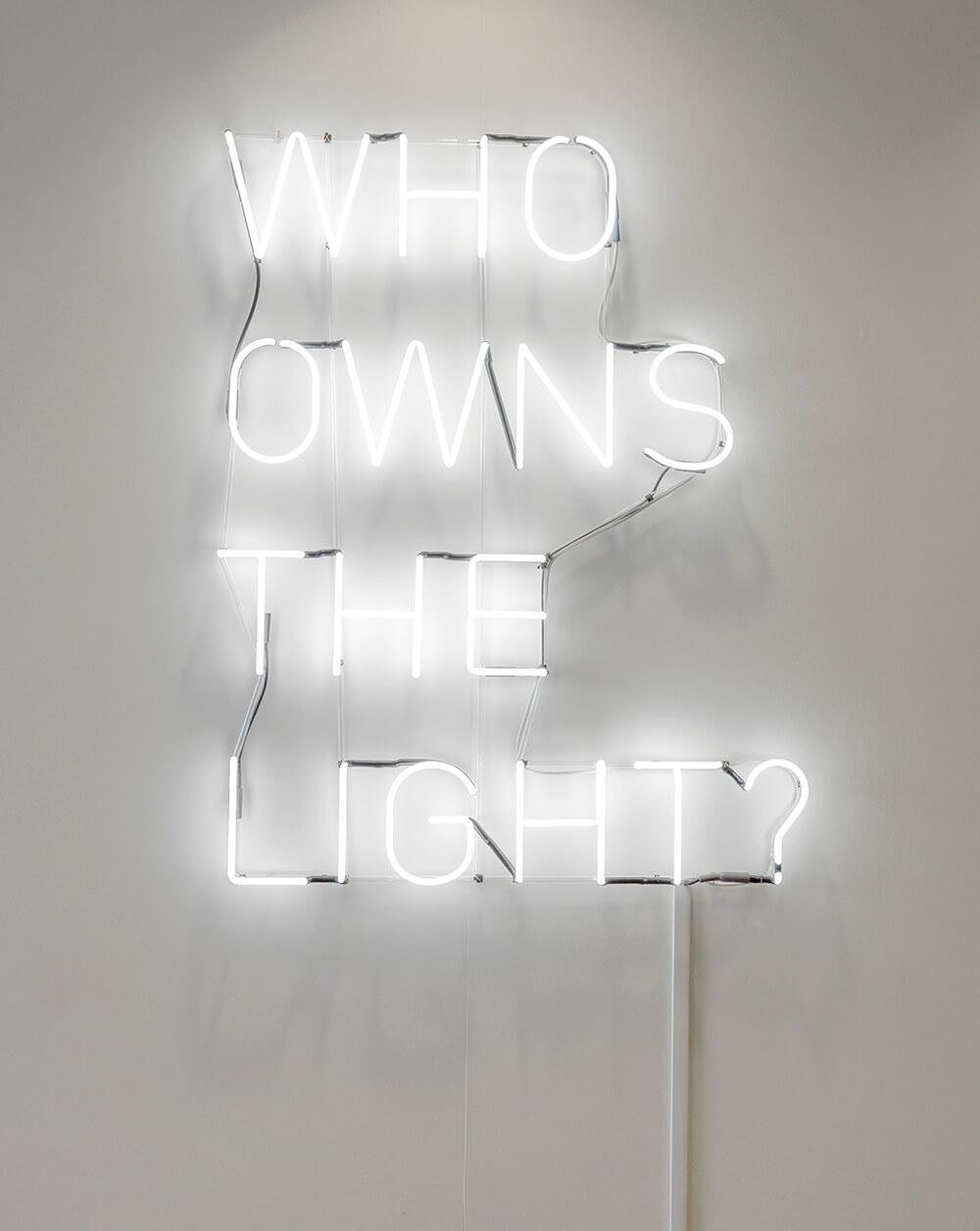
Ngô originally created Who Owns The Light? for her 2017 solo exhibition, To Name It Is To See It, at the DePaul Art Museum (Chicago, IL), which focused on the relationship between language and sight. In writing for the exhibition’s accompanying publication, art historian Faye Gleisser argued that Who Owns The Light? functioned as the exhibition’s lynchpin: “The symbolism of light . . . underscores the politics of the Enlightenment, the European intellectual movement that emphasized reason and individualism and was used to justify colonial conquest.” At DePaul, the sculpture was installed in a gallery window facing the Fullerton CTA stop, where it was visible to riders.

Who Owns The Light? effectively frames one’s time in the museum with a query whose grammatical simplicity belies its complexity. For Ngô, contained within the question of “who owns the light?” are questions about “who claims the authority over the production of knowledge?” and “who is allowed to benefit from that knowledge?” At the same time, because the word “light” could refer to the lit neon itself, the artwork refers to its own materiality, inviting conversations about conceptual art, language, capitalism and commodification. As an art museum on a college campus—two modern institutions that are, in many ways, the product of Enlightenment thought—SCMA is an ideal site to foreground these questions of how and whose knowledge is produced and circulated, valued and claimed.

View Event →
Del Otre Lado, O’Hare Airport Terminal 5 Arrival Corridor
Nov
20
to Nov 20

Del Otre Lado, O’Hare Airport Terminal 5 Arrival Corridor

The arrival corridor at O’Hare’s International Terminal 5 could be perceived as a “non-place,” which in this context could appear universal—it could be anywhere.  But it was important for us to highlight that this corridor is also a specific place, with a particular use. The corridor is the first place that travelers will see when arriving in Chicago, a place that welcomes new visitors or welcomes back home Chicago residents.  But this corridor is also a place of transit where passengers will move —in only one direction — to get to customs. The journey to customs can be emotional and politically charged for many, especially for non-U.S. citizens moving through mandatory immigration processes. The corridor is a space made of expectation, you are almost somewhere, you are almost in customs, almost outside of the airport, almost in Chicago, almost on “the other side.” 

The installations that follow represent the largest acquisition ever made by the City of Chicago’s Department of Cultural Affairs and Special Events.  Therefore we understoodd them as “time capsules” — “containers holding historical records or objects representative of current culture that are deposited (as in a cornerstone) for preservation until discovery by some future age” (Merriam-Webster).   It was important to consider how these works might be received in 25 years.

One of the challenges in displaying art at any airport is the fact that travelers are likely to be tired or anxious for at least several reasons: being away from home, transiting through security, and for many the loss of control inherent in traveling on an airplane.  Therefore, the artists’ installations were conceived as rhythmic intervals for people to experience either briefly as they pass by or as a way to slow down and even stop time.  Each commissioned work has a very different visual allure from the others, to pull in visitors in, even when the works are experienced up close, from afar, or in movement. 

Del Otre Lado, O’Hare Airport Terminal 5 Arrival Corridor, Chicago, IL (in collaboration with Hồng-Ân Trương) (curated by Ionit Behar and Andrew Schachman, Chicago's Department of Cultural Affairs and Special Events (DCASE) and the Chicago Department of Aviation)

View Event →
Ungrafting, Co-published by Inventory Press and the Fine Arts Center at Colorado College.
Sep
16
to Sep 16

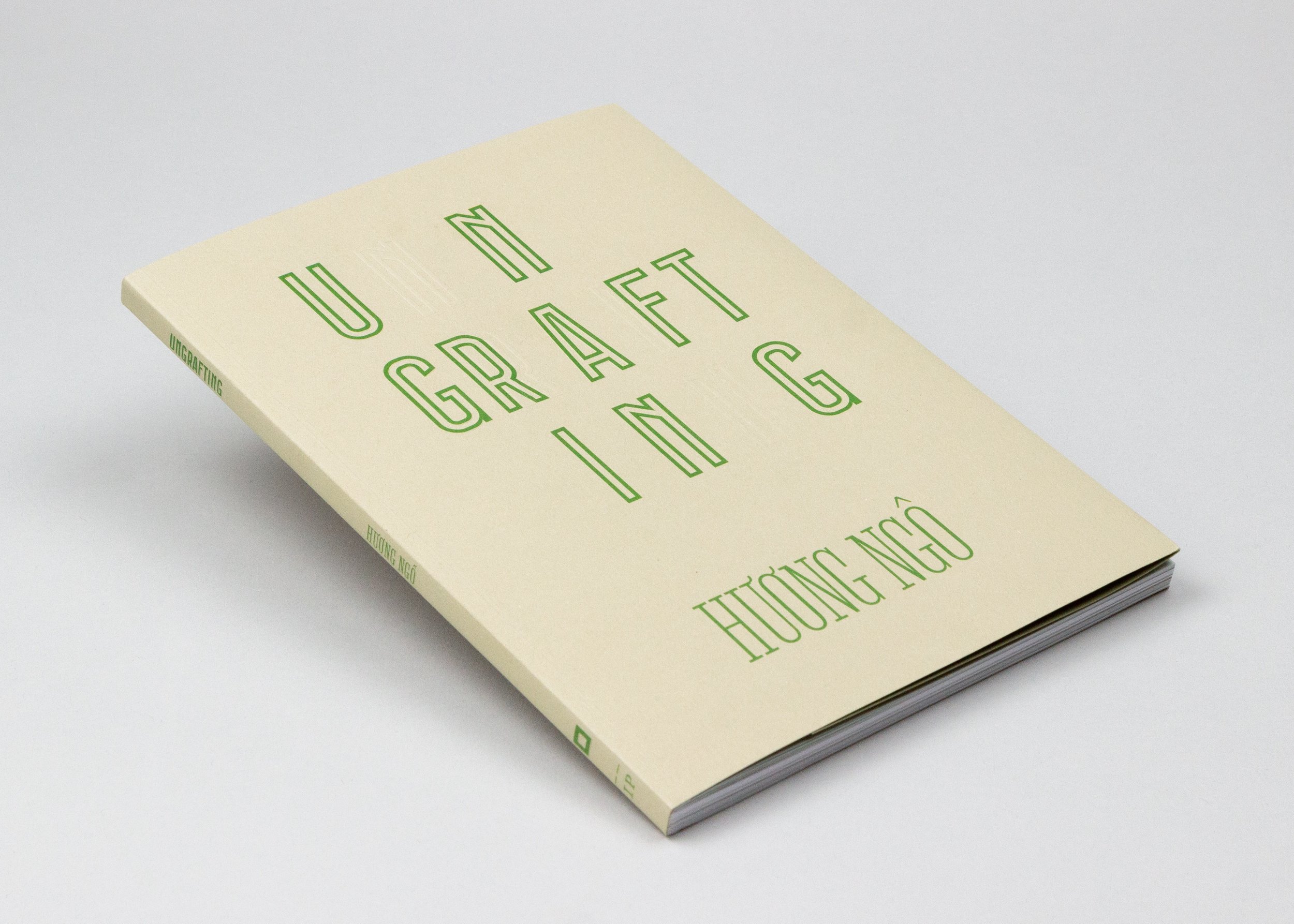
Ungrafting, Co-published by Inventory Press and the Fine Arts Center at Colorado College.

Hương Ngô's conceptual, research-based practice often takes the form of installation, printmaking and non-traditional mediums. Ungrafting looks at histories of colonial violence, specifically colonialism in French Indochina, as well as resistance movements, through image-making, translations and material investigations. Ngô turns to a series of early 20th-century photographs showing foreign trees and tree grafts planted in Vietnam by the French for the start of her project.

For the artist, grafting—a procedure that involves cutting and splicing different species into a single plant—serves as a powerful metaphor for the physical violence inherent in colonialism. An essay by Justin Quang Nguyên Phan, and conversations between Ngô and Aline Lo, and Evyn Lê Espiritu Gandhi and Chadwick Allen reflect on the connection between Ngô's exhibition and global anti-colonialism, the trans-Indigenous, and the role of the archive in artistic production.

Ungrafting, Edited by Katja Rivera, including an essay by Justin Quang Nguyên Phan, and conversations between Ngô and Aline Lo, and Evyn Lê Espiritu Gandhi and Chadwick Allen, Co-published by Inventory Press and the Colorado Springs Fine Arts Center at Colorado College.

View Event →
Motherboards, San José Museum of Art
Apr
10
to Jan 10

Motherboards, San José Museum of Art

  • Google Calendar ICS

Motherboards explores the foundational contributions of women’s work to the technology industry. From the first human computers and programmers, to the women working at electronics factories in Silicon Valley and beyond, to today’s global network of ghost workers, women have been deeply involved with the technologies that undergird our daily lives. Yet their contributions are often left out of official histories of technology.

Featuring artists from California and beyond, the exhibition maps an extensive network of women’s work in technology, connecting Silicon Valley’s laboratories and garages to vital work performed at looms, desks, kitchens, and assembly lines across the globe. Motherboards features installations, videos, textiles, and more by Sarah Buckius, Tania Candiani, Priyageetha Dia, Rhonda Holberton, Charlotte Johannesson, Ahree Lee, Amor Muñoz, Hương Ngô, Mimi Ọnụọha (with Charlene Eigen-Vasquez), Sonya Rapoport, Cara Romero, Sarah Rosalena, Analia Saban, Marilou Schultz, the Superkilogirls (Camila Galaz, Ana Meisel, and Lua Vollaard), and Mika Tajima, as well as archival objects from the Computer History Museum.
Motherboards, San José Museum of Art, San Jose, CA (curated by Lauren Schell Dickens and Juan Omar Rodriguez)

View Event →
A Plot of One’s Own, CAMOC
Sep
19
to Aug 29

A Plot of One’s Own, CAMOC

  • Google Calendar ICS

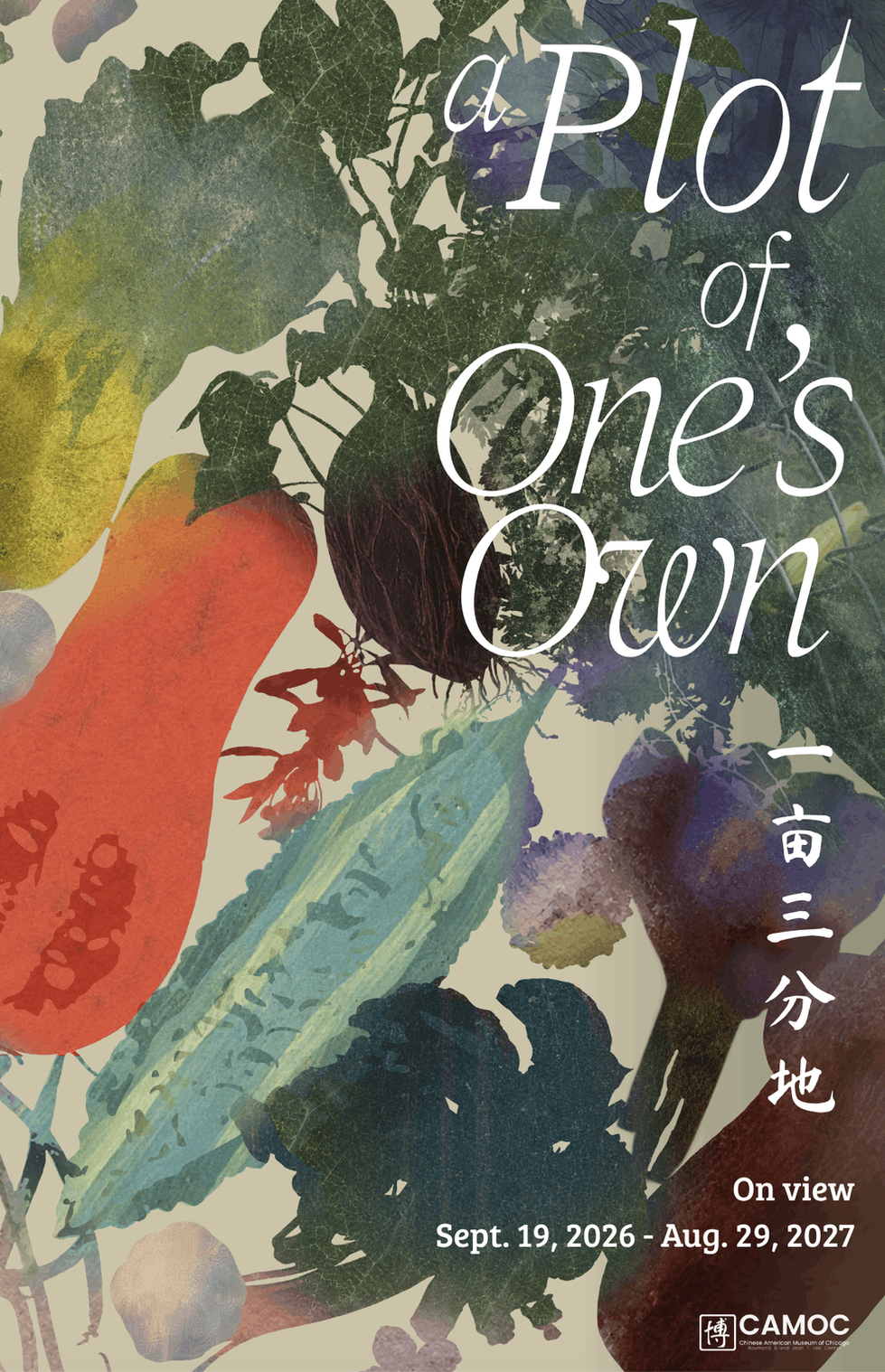
A Plot of One’s Own 一亩三分地, opens on September 19, 2026. This exhibition on the “farm-gardens” of Chinatown will take a deeper look at the urban landscape to showcase the creativity and resourcefulness beneath the surface. The unique ways Chinese Americans have used and shared domestic yard space to grow food, stay connected to their heritage, and care for one another expand into explorations of Chicago’s urban planning & industrial history, and relationships between gardening, food sovereignty, orientalism, and American identity. 

A Plot of One’s Own, Chinese American Museum of Chicago, Chicago, IL (curated by Caroline Ng, Riley Ren, and Leo Wang)

View Event →
Creative Rebellion, Chicago Cultural Center
Oct
2
to Mar 7

Creative Rebellion, Chicago Cultural Center

I am convinced that if we are to get on the right side of the world revolution, we as a nation must undergo a radical revolution of values.

—Martin Luther King Jr., “Beyond Vietnam,” 1967

In April 1967, Martin Luther King Jr. delivered his “Beyond Vietnam” speech, condemning the war in Vietnam and calling for a radical reordering of US political and moral life. Days later, Vietnam veterans marched with Dr. King to the United Nations under the banner of Vietnam Veterans Against the War, making visible a powerful truth: those who have been ordered to fight a war can become central figures in the struggle to end it.

Creative Rebellion builds on this legacy of refusal by tracing expressions of war resistance across Chicago and beyond. Anchored in the city’s histories of antiwar organizing, abolitionist struggle, immigrant justice, and radical public culture, the exhibition positions Chicago not as a backdrop but as an active site in the international struggle for peace and justice. Archival materials from the legendary Chicago antiwar veteran organizer Barry Romo appear alongside contemporary artworks—from quilts and soft sculptures to family videos, prints, and public art—that reveal how artists craft solidarity, build counter-memory, and defy colonial power.

The exhibition understands rebellion not only as protest, but also as making: creating images, solidarities, counter-archives, kinship networks, public memory, and collective futures. Across diverse geographies and political histories, the featured artists expose the intimate and planetary consequences of war while crafting forms of resistance that are tender, insurgent, and imaginative. Their works insist that art can interrupt the spectacle of militarism, honor the lives it renders disposable, and summon publics capable of acting otherwise.

Featuring artists Ismail Abu Hatab, Jamiah Calvin, June Carpenter (Osage/Shawnee), Cog•nate Collective, Jose deVera, Sabba Elahi, William Estrada, Floating Museum, Chitra Ganesh, Jose Garza, Leon Golub, John Hitchcock (Kiowa Tribe of Oklahoma, Comanche, and Northern European), Emily Jacir, Ruth Tomoe Leinani Kaneko (Kanaka Wahine), Josh MacPhee, Hương Ngô, Amanda Raquel Dorval (Nuyorican-Dominican), Charlie Reynolds, Gregory Rick, Nancy Spero, chip thomas, Hồng-Ân Trương, and archival materials from Vietnam Veterans Against the War and the Albert Goodman Collection.

Creative Rebellion, 2026 Veteran Art Triennial, Resisting the Long War, Chicago Cultural Center, Chicago, IL (in collaboration with Hồng-Ân Trương) (curated by Aaron Hughes and Amber Zora)

View Event →

Sydney Asian Art Series, Art Gallery of New South Wales
Aug
19
6:00 PM18:00

Sydney Asian Art Series, Art Gallery of New South Wales

The Sydney Asian Art Series, which was established in 2017, invites leading researchers from across the world to share their research on critical issues in early, modern and contemporary Asian art.

This year’s theme What/where/when is Asian art? tackles a central tension: how can the term ‘Asian art’ adequately encompass a vast diversity of peoples, geographies and cultural practices?

Over the past 30 years, artists and scholars have proposed various answers to this question, from the diasporic and postcolonial frameworks of the 1990s to today’s distinct yet intersectional concepts of the transcultural, culturally hybrid, Indigenous and decolonial. This series examines why the question of Asian art continues to provoke debate and how the stakes of defining it shift across nations and contexts.

Convened by art historian Dr Yvonne Low, University of Sydney, and the Art Gallery’s curator of Asian art, Dr Natalie Seiz, this year’s Sydney Asian Art Series engages with ideas explored in the exhibition And Still I Rise.

More information on this year’s series and scholars, and recordings from previous lectures are available on the Sydney Asian Art Series website.

Artist Talk, Sydney Asian Art Series, The Power Institute and the Art Gallery of New South Wales, Sydney, Australia (organized by Yvonne Low and Natalie Seiz)

View Event →
Blue Collar Crime, DMST Atelier
May
2
to Jun 6

Blue Collar Crime, DMST Atelier

If the law can be effortlessly bent with money and power—then we, as working class people, need to imagine new ways of subterfuge. BLUE COLLAR CRIME presents 25 artists whose works exemplify working class solidarity by wielding humor, invention, pleasure, and irreverence in the face of instability. This exhibition is borne out of a recognition that white collar crime has produced an increasingly precarious world with which our only response can be blue collar crime. Corporate interests operate by a different set of rules, and profit at the expense of our collective well being. Private industry refuses to contribute their share of taxes while destroying the environment, stagnating wages, and monopolizing business. BLUE COLLAR CRIME distinguishes itself from the existing connotations of blue-collar crime as less sophisticated or more violent than white collar crime. BLUE COLLAR CRIME learns its lessons as the bastard step-child of white collar crime; it is subversive, furtive, unpredictable, conspiratorial, and fugitive. It delights, confuses, and surprises. It is the absurd born from the absurd. Through the exhibition, we redefine BLUE COLLAR CRIME as a language of possibility from a place of uncertainty. We reject money, power, control and cruelty as tenants of conservatism. Instead we harness humor, criticality, solidarity, vulnerability in the face of corruption and stand firm within the wealth of connection, acceptance, tolerance, imagination, and care.

Acme Theory Alexander Valdez Jr. Alisa Yang Angelo and Temporary Services Eliseo Ortiz Eunsoo Jeong Evan Apodaca Gabe Life 100 Gemma Jimenez Hương Ngô June Sanders Keith Ballard Kent Sheely Martin Alexander Maura Brewer Megan Tatem Monica Juarez Noa Taylor Noah Ray Numa Perrier Public Collectors Rebecca Rose Riley Pettitt Sam Lavigne Virginia Yearick

Blue Collar Crime, DMST Atelier, Los Angeles, CA (curated by Lauren Kim)

View Event →
Womb of Fire, Gallery Medium and Vin Gallery
Dec
13
to Jan 23

Womb of Fire, Gallery Medium and Vin Gallery

  • Google Calendar ICS

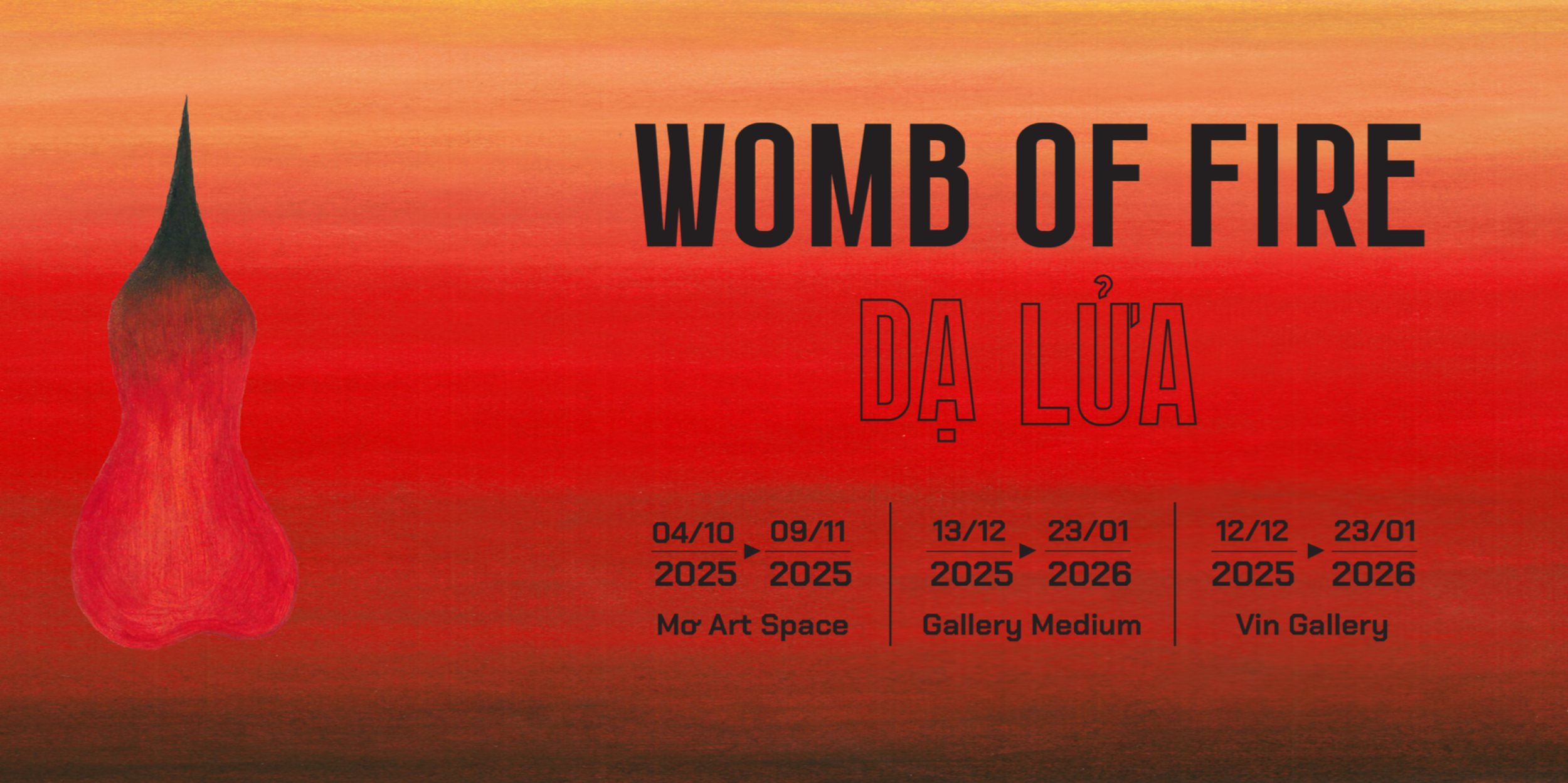
Mo Art Space (Hanoi), in collaboration with Vin Gallery and Gallery Medium (Ho Chi Minh City), is pleased to present the exhibition “Dạ Lửa – Womb of Fire”, featuring 100 works by Vietnamese and diasporic Vietnamese women and non-binary artists. Initiated by curator Đỗ Tường Linh, with the support of Nguyễn Vũ Thiên An and Carmen Cortizas, the project focuses on researching, archiving, and presenting diverse artistic practices, and is realized through the joint efforts of three art spaces in Hanoi and Ho Chi Minh City. Opening in Hanoi before traveling to Ho Chi Minh City, the exhibition offers audiences in both cities the opportunity to encounter and engage with a rich constellation of creativity. Credit: 'Womb of Fire' exhibition titles use the ‘Đanh Đá Bold’ typeface, created by Hương Ngô, in collaboration with Giang Nguyen of Republish Project.

Womb of Fire, Gallery Medium and Vin Gallery, Ho Chi Minh City, Vietnam (curated by Đỗ Tường Linh, Carmen Cortizas, and Vu Thien An Nguyen) (digital catalog forthcoming)

View Event →
Womb of Fire, Mơ Art Space
Oct
4
to Nov 9

Womb of Fire, Mơ Art Space

“Across the curve of the earth, there are women getting up before dawn, in the blackness before the point of light, in the twilight before sunrise; there are women rising earlier than men and children to break the ice, to start the stove, to put up the pap, the coffee, the rice, to iron the pants, to boil water for tea, to wash the children for school, to pull the vegetables and start the walk to market, to run to catch the bus for the work that is paid. I don’t know when most women sleep. In big cities at dawn women are traveling home after cleaning offices all night, or waxing the halls of hospitals, or sitting up with the old and sick and frightened at the hour when death is supposed to do its work.

In minimal light I see her, over and over, her inner clock pushing her out of bed with her heavy and maybe painful limbs, her breath breathing life into her stove, her house, her family, taking the last cold swatch of night on her body, meeting the sudden leap of the rising sun.

Womb of Fire, Mơ Art Space, Hanoi, Vietnam (curated by Đỗ Tường Linh, Carmen Cortizas, and Vu Thien An Nguyen) (digital catalog forthcoming)

View Event →
Core Memory, MCA Santa Barbara Satellite
Sep
27
to Dec 6

Core Memory, MCA Santa Barbara Satellite

  • Google Calendar ICS

Hương Ngô: Core Memory is an exhibition that synthesizes the artist’s reflections on her family's time in refugee camps in Hong Kong and their experiences as new immigrants in the US. Woven throughout the exhibition is a series of cyanotypes created solely from sunlight and water at the edge of a body of water. An image of the weather and waves of the day, they are also stand-ins for the refugee body, battered by the elements and an artifact of their resilience. 

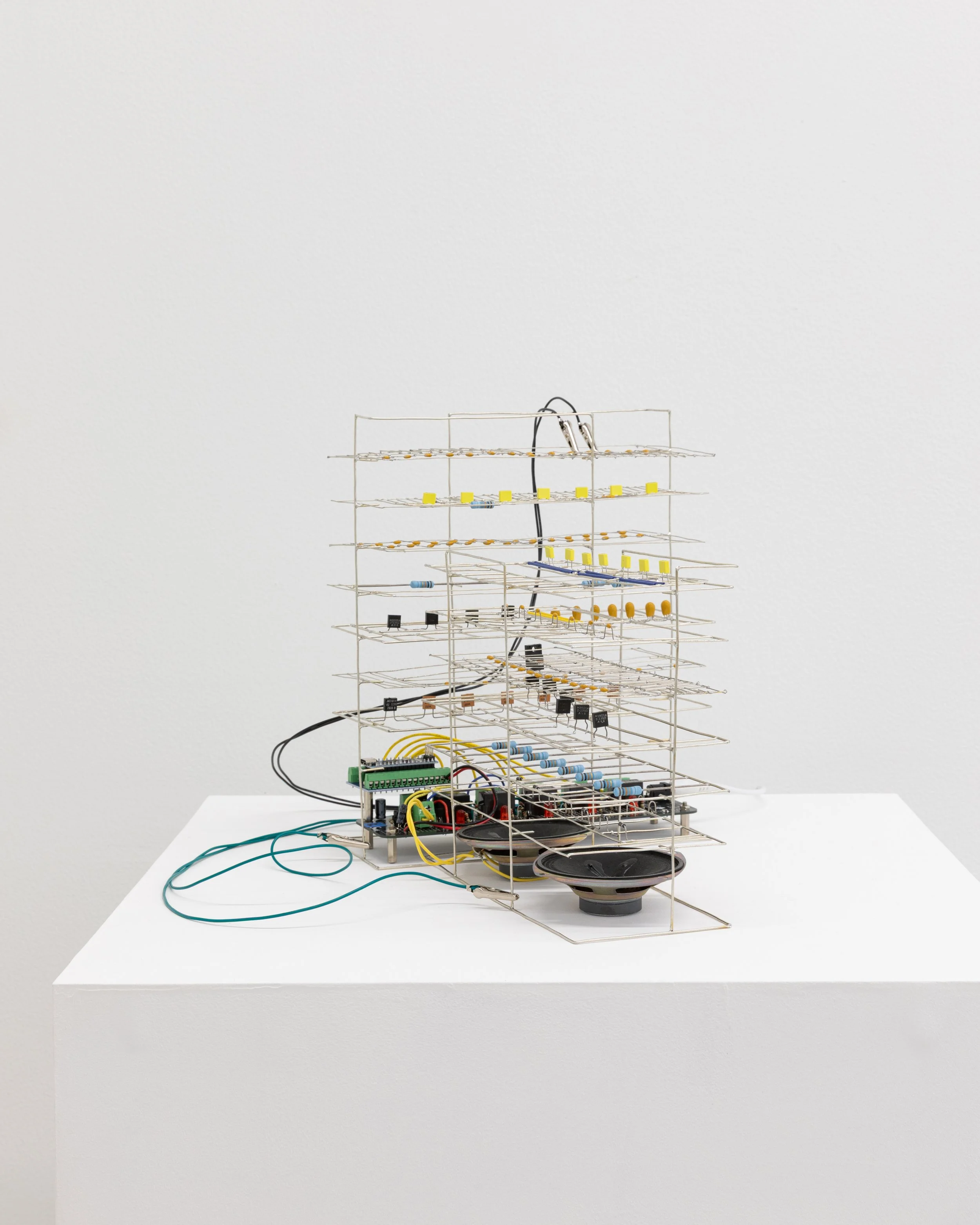
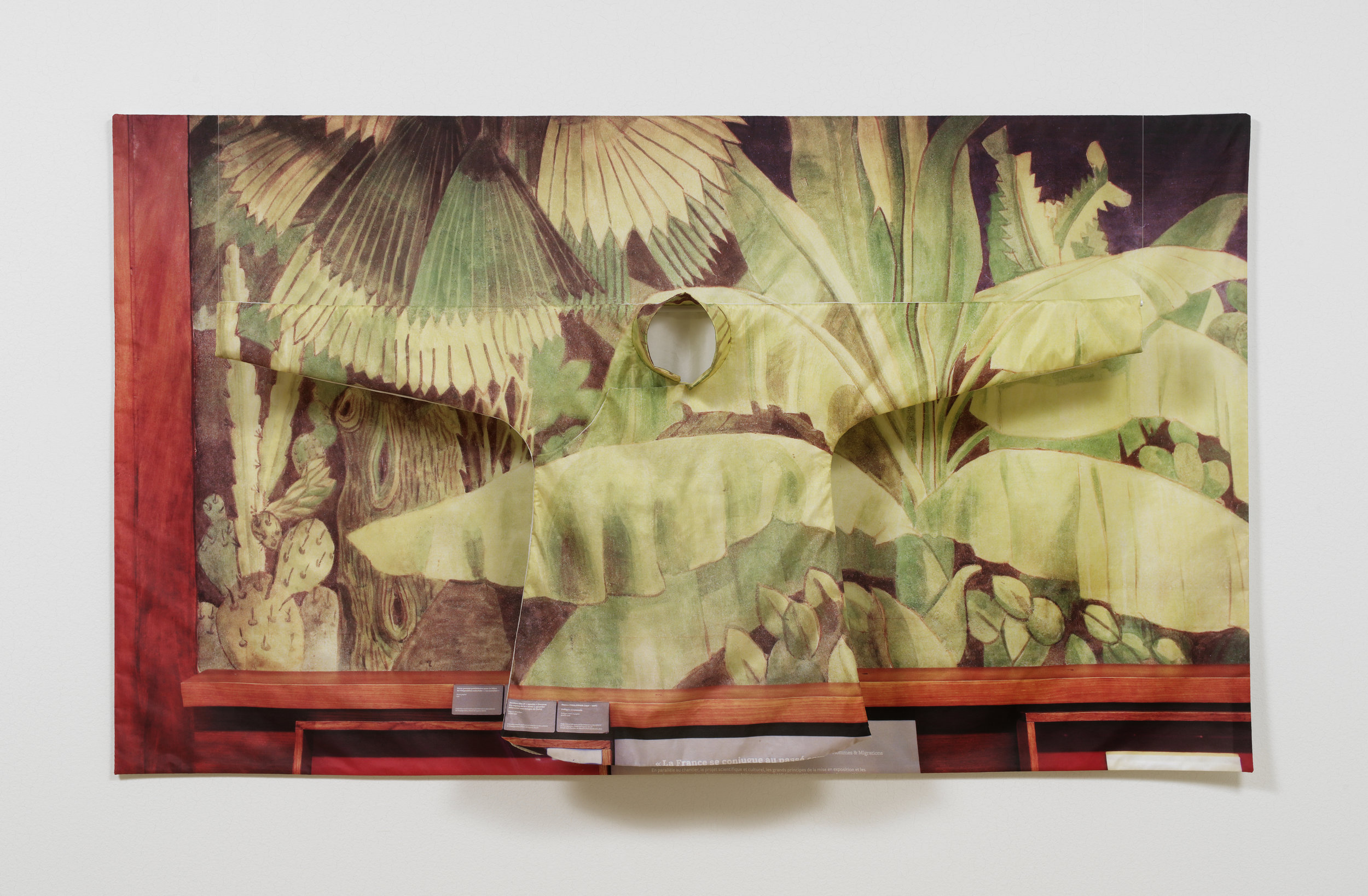
These cyanotypes lead to the most recent body of work that is inspired by the artist's desire to learn about her parents’ labor as assembly line workers in electronics factories, a common occupation amongst this demographic of Southeast Asian Refugees. At these factories, her parents created capacitors, resistors, and motherboards – components which modulate tempo, pitch, and memory in electronics. Using these vintage components, she creates circuits as sculptures that gesture towards her parents' creativity, efforts not legible in the output of their wage labor.

Elsewhere, Ngô includes embroidered core memory using ferrite core and conductive thread and copper on diaphanous silk organza. Core memory, the method of binary memory storage before semiconductors, is transformed through embroidery, taught to Ngô by her mother as her first art form. Here, memory is physical, bodily, deeply resonate, and difficult to forget.

These works were made with the support of the Camargo Foundation, Lucas Artists Residency Program, 3Arts Chicago, Artist Communities Alliance, and Tiger Strikes Asteroid - Chicago.

Core Memory, MCA Santa Barbara Satellite, Santa Barbara, CA

View Event →
The Speaking Place, Gate Gate Gallery
Jul
30
to Aug 31

The Speaking Place, Gate Gate Gallery

  • Google Calendar ICS

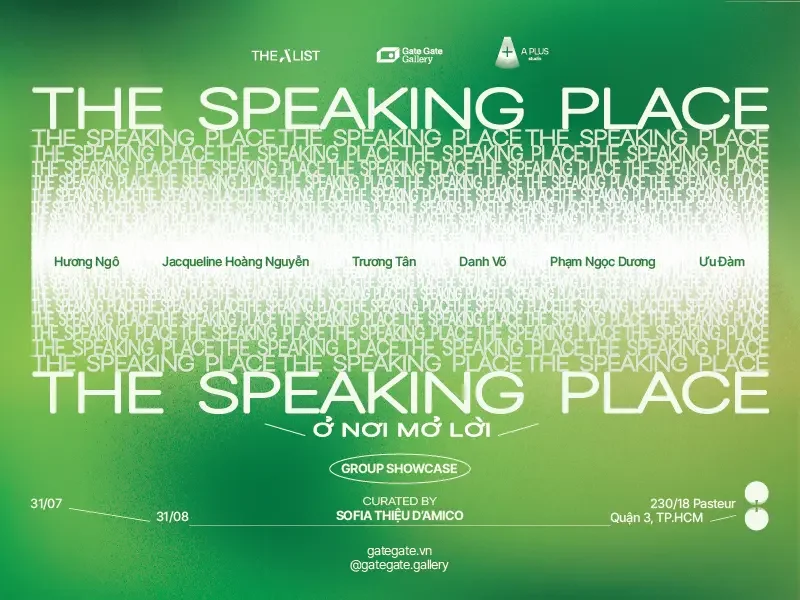
In Poetics of Relation, philosopher Édouard Glissant argues for a "right to opacity" as a challenge to the dominance of transparency and legibility, suggesting the right to not be fully understood and defined, embracing the complexity and unknowability of global human experiences. In Vietnamese linguistics, how might we locate forms of speaking and writing that do not define, taxonomize, or claim, but rather that we live in and inhabit? Where do we locate a space in which the Vietnamese language can evade capture, and instead, rustle and wander?

The Speaking Place embraces the decolonial, ontological turn towards the right to linguistic opacity, or as Gilles Deleuze might encourage, to “set the word aflame,” especially in a postcolonial condition where he and Guattari note: “... there is no mother tongue, only a power takeover by a dominant language.” Through the works of Danh Võ, Hương Ngô, Jacqueline Hoàng Nguyễn, Phạm Ngọc Dương, Trương Tân, Ưu Đàm Trần Nguyễn, this exhibition proposes the unknowability and untranslatability of Vietnamese cultural and linguistic histories—written, oral, and poetic. With works spanning across temporalities, geographies, and media, each channeling insurgent linguistic histories, The Speaking Place finds generative space within obscurity, refusal, and encryption, positing the visual languages of Vietnamese artists as an alternative mode of communication, connection, and understanding.

Ưu Đàm Trần Nguyễn, Phạm Ngọc Dương, Huong Ngo, Jacqueline Hoàng Nguyễn, Danh Vo

The Speaking Place, Gate Gate Gallery, Ho Chi Minh City, Vietnam (curated by Sofia Thiệu D'Amico)

View Event →
Vico’s Spiral, Center for Book Arts
Sep
26
to Dec 14

Vico’s Spiral, Center for Book Arts

  • Google Calendar ICS

Fifty years after Center for Book Arts was founded in 1974, we are celebrating this milestone with a landmark exhibition focused on its own exhibition history. The overarching theme is the innovative nature of the range & diversity of artists’ books concepts & practices through the lens of Vico’s Spiral: his nonlinear vision of history has proved to be a very useful tool when approaching the recurring ideas and breadth of methodologies presented these past fifty years.

Vico’s Spiral, Center for Book Arts, New York City, NY

View Event →
This Space Is for Lost Time, TSA Chicago
Aug
10
to Oct 3

This Space Is for Lost Time, TSA Chicago

  • Google Calendar ICS

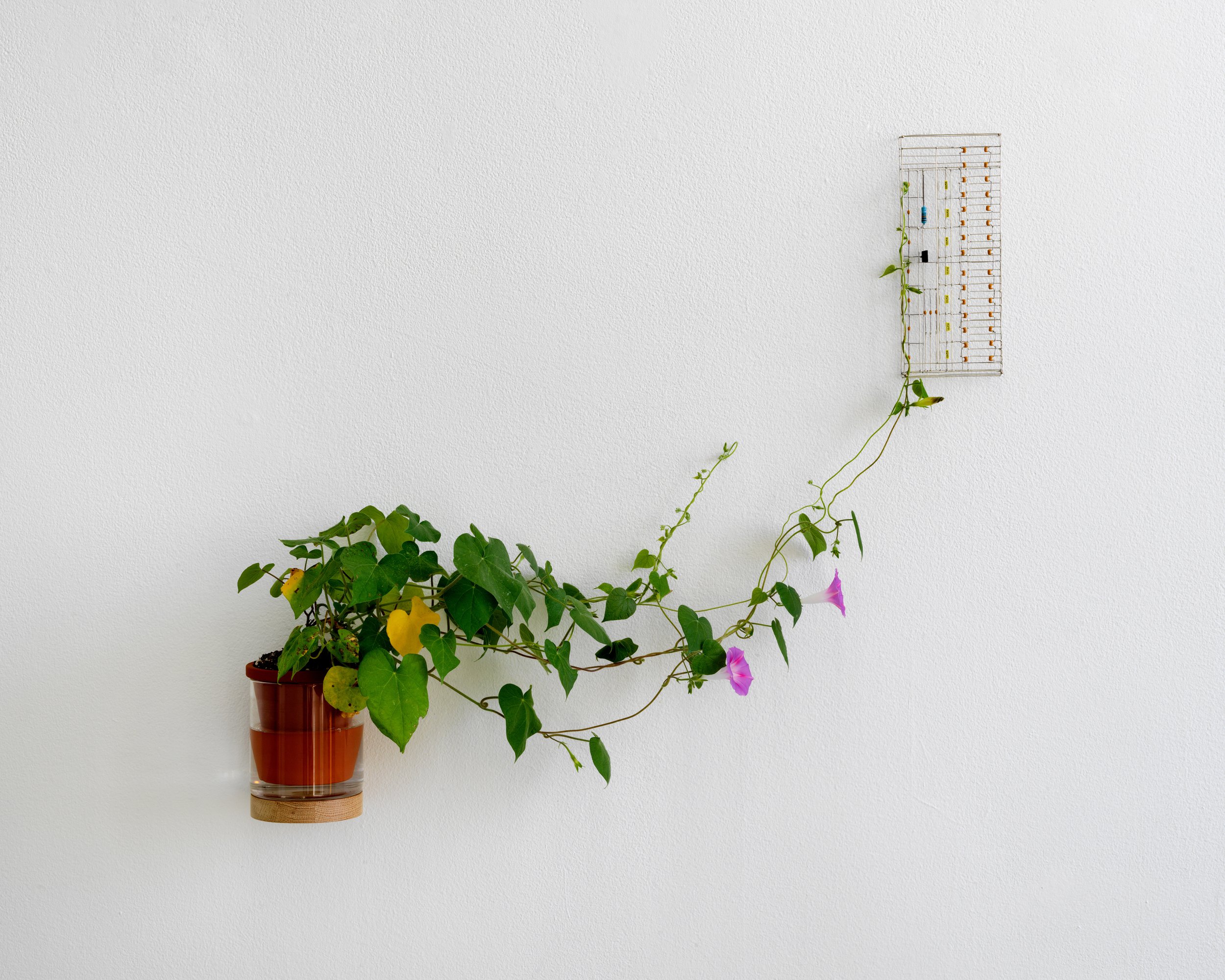
This Space Is for Lost Time marks a return to Hương Ngô’s early art practice of working with technology as subject and medium as she engages the history of her parents’ labor as assembly line workers in electronics factories during the 1980s–2000’s. At these factories, Ngô's parents, like many other Southeast Asian refugees, created capacitors, resistors, and motherboards – components which modulate tempo, pitch, and memory. Using vintage components from these very factories, Ngô creates delicate, free-form sculptures that uplift the labor and creativity of her parents, while also gesturing towards the complex and non-linear relationships amongst time, trauma, and futurity.

Outside of work, Ngô's family gardened, providing them access to the flavors and smells that reminded them of the home they left behind. For Ngô, it created: “a different timescale that didn’t require them to clock in. It asked for an awareness of the weather, a remembrance of last year’s harvest and failures, and patience to push past the present.” Ngô intertwines these very different keepers of time–the electronic components and plants–as potent symbols of labor, resilience, and care. Unruly vines disrupt gridded circuits, which now function as supports for a new tenderness to thrive.

Elsewhere in the exhibition, Ngô elaborates on intergenerational transmission of knowledge through collaborations with her young child, Khải. Recesses for creativity and criticality are woven into the gallery, physically carving out space for time to be lost: productively and beautifully.  

This Space Is for Lost Time, TSA, Chicago, IL (curated by Noah Hanna) *solo exhibition

View Event →
Seeing Through Stone, Institute of Arts and Sciences (IAS) at University of California, Santa Cruz
Apr
12
to Jan 5

Seeing Through Stone, Institute of Arts and Sciences (IAS) at University of California, Santa Cruz

  • Google Calendar ICS

Prisons are so ingrained in history and the cultural imagination as to appear inevitable. From current structures of prisons, jails, and immigrant detention centers to past manifestations, such as Native American boarding schools and American chattel slavery, our world is bound together by carceral structures that equate punishment with justice. Yet as long as prisons have existed, alternatives to prison have also flourished. When poet Etheridge Knight (1931–1991) wrote from Indiana State Prison in 1968 of “seeing through stone,” he evoked the secret eyes of those able to see beyond the realities of prison to a world otherwise.

The eighty-five artists and collectives in Seeing through Stone see otherwise. Sharing a capacity for radical sight, they include currently and formerly incarcerated artists alongside those without that lived experience from different sociopolitical contexts around the globe. Their projects include supporting creative networks in Guantanamo, educating youth in Rio de Janeiro, and organizing landless farmers in the Philippines, as well as more poetic and conceptual projects engaging an aesthetics of abolition. Their work brings into view a world where people seek safety with, rather than from, one another; where medicine grows from prison manure and land is cultivated for food, not capital; where blue finally means sky. 

In sixteen newly commissioned projects, alongside other works of video, painting, sculpture, installation, sound, and performance, across three exhibition sites, Seeing through Stone provides a model of hope in practice. The exhibition is a celebration of the expanding constellation of abolition: the organizing, dreaming, world-making, and creative activism around the globe that offers ways to see—and live– differently. 

Seeing Through Stone, Institute of Arts and Sciences (IAS) at University of California, Santa Cruz, CA (curated by Gina Dent, Lauren Schell Dickens, and Rachel Nelson) (catalog)

View Event →
Ungrafting, Fine Arts Center at Colorado College
Mar
1
to Jul 27

Ungrafting, Fine Arts Center at Colorado College

  • Google Calendar ICS

Time is crucial to Hương Ngô, who investigates the resonances of colonial histories in the present day. She explores various aspects of Vietnamese resistance to French colonialism through archival research, and activates the historical record via imagery, language, and material matter.

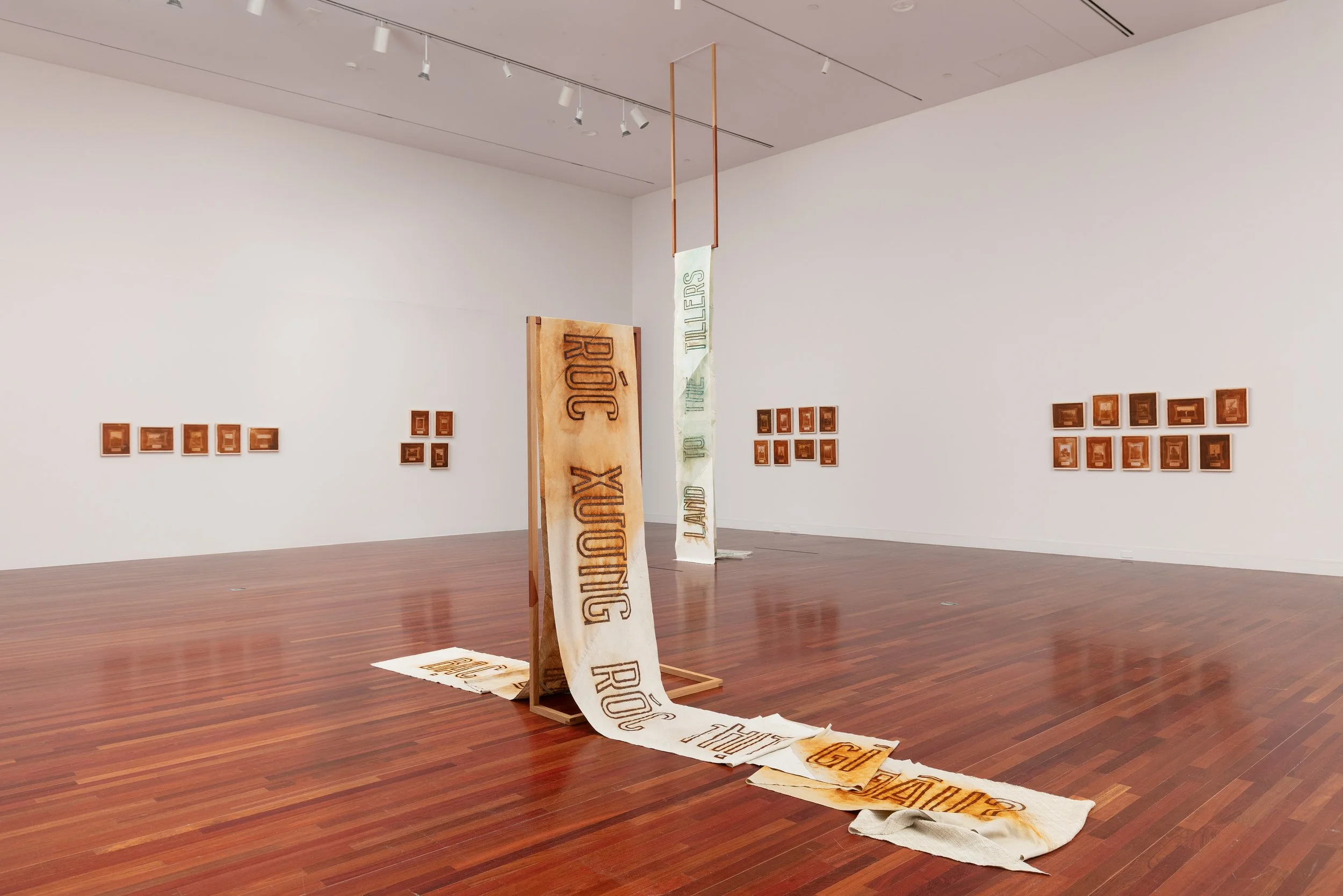
For her first solo exhibition in Colorado, Ngô turns to a series of early twentieth-century photographs showing foreign trees and tree grafts planted in Vietnam by the French. For the artist, grafting—a procedure that involves cutting and splicing different species into a single plant—serves as a powerful metaphor for the physical violence inherent in colonialism. Ngô reproduces the archival photographs using the Van Dyke method, which was common at the time the original pictures were made, but alters the fixing process so that the new images will gradually deteriorate and darken.

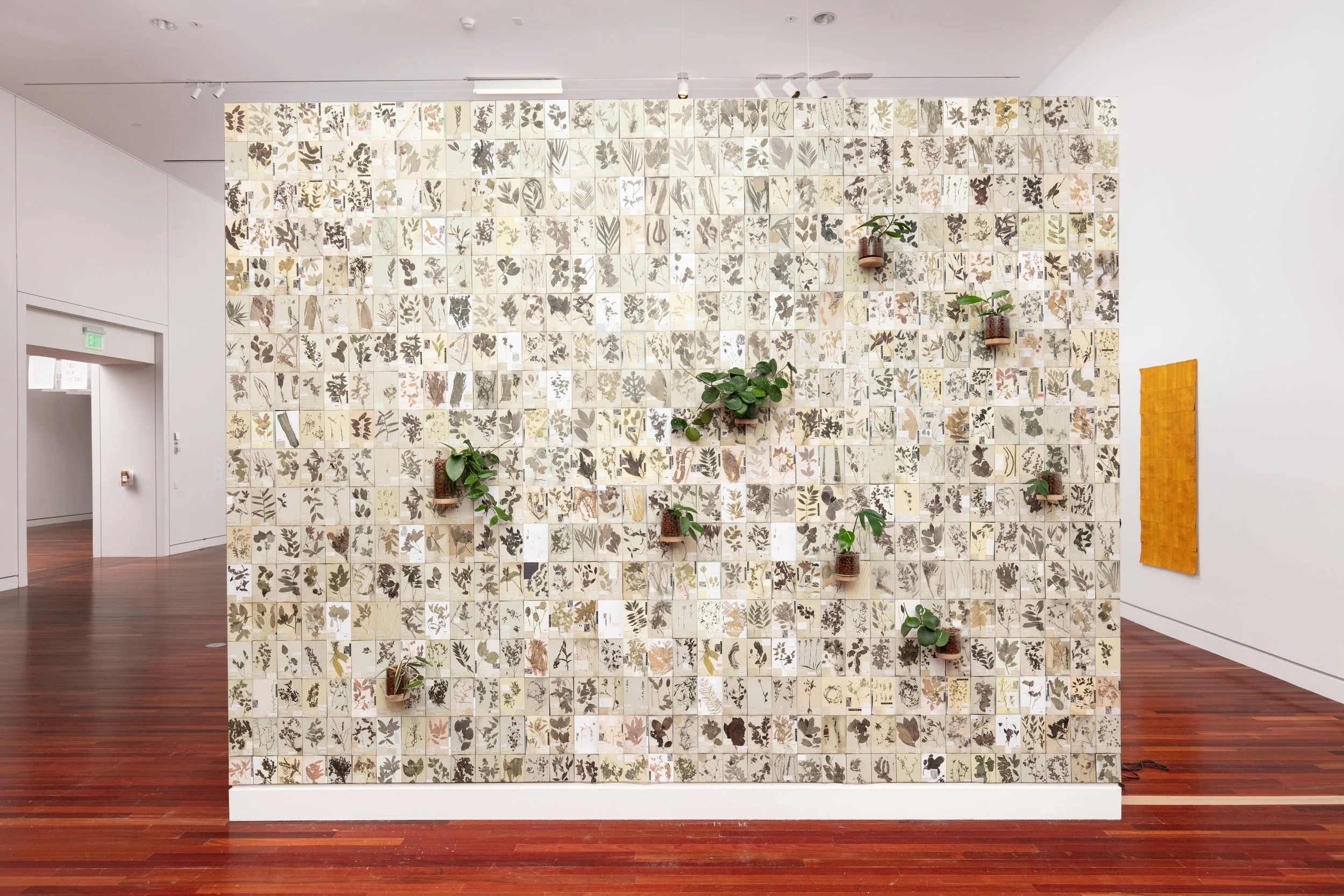
Accompanying the photographs are other new works by Ngô: altered reproductions of plants that were catalogued in 1919 for a French herbarium (a collection of systematically organized dried plants) and hanging fabric works with visible sutures that are treated with iron, copper, and other materials, many of which carry particular significance in the Southwest region of the United States. Like tree grafts, the tears in these works serve as a reminder of the violence of agricultural and mineral extraction; control of land, the artist proposes, is often accompanied by control over the land’s inhabitants. At the same time, the mends make visible the resistance and repair that may emerge in response to such violence.

To expand on this idea, the artist will bring into the exhibition a selection of cultural heritage items from our Fine Arts Center’s permanent collection that further speak to the history of the region and its cultural intersections. Collectively, the works in the show offer a gesture of what the artist has termed “ungrafting”: a poetic decolonial methodology that weaves together networks of care across time.

Hương Ngô: Ungrafting is curated by Katja Rivera, Curator of Contemporary Art, in collaboration with the artist. Support of the exhibition is generously provided by The Anschutz Foundation and Colorado Creative Industries.

View Event →
Open Secret: Colonial Pasts and Presence, Hessel Museum of Bard College
Apr
1
to May 28

Open Secret: Colonial Pasts and Presence, Hessel Museum of Bard College

Participants: Nina Valerie Kolowratnik and Hương Ngô

An effective secret is not necessarily fully hidden.

Open Secret exhibits the research-driven work of artist Hương Ngô and architect Nina Valerie Kolowratnik. Following in a rich legacy of artists exploring secrecy and surveillance, Ngô and Kolowratnik investigate secrecy as a tool to advocate for more equitable distributions of power. Their work reveals strategies of concealment deployed by governments to maintain control while presenting how similar clandestine strategies can be harnessed to reclaim one’s agency.

Ngô’s installation displays a portion of her ongoing research into French colonial records. Here, the artist resurfaces mid-twentieth-century surveillance documents and creates multimedia works surrounding Vietnamese revolutionary leader Nguyễn Thị Minh Khai. Mediums such as invisible ink honor strategies of countersurveillance that Nguyễn and her fellow revolutionaries adopted to evade French authorities.

The second room exhibits Kolowratnik’s experimental spatial mappings of Indigenous territories alongside audio recordings, photographs, and governmental records. Working with the Pueblo of Jemez, Kolowratnik charted spiritually and culturally significant areas within Yǽp’ē p’êta nôonū, known to settlers as Valles Caldera, New Mexico, to support the nation’s recent land claim. Meanwhile, her project with the Tohono O’odham Nation shows areas where surveillance and its infrastructures along Arizona-Mexico borderlands disrupt the nation’s sovereignty and land.

Ngô’s and Kolowratnik’s projects render these protected narratives visible yet undisclosed. Each marks a shared effort to safeguard and empower the histories and current cultures of the communities involved.

With support from the OSUN Center for Human Rights & the Arts at Bard.

View Event →
To See Oneself at a Distance, MASS MoCA
Mar
25
to Jun 30

To See Oneself at a Distance, MASS MoCA

  • Google Calendar ICS

o see oneself at a distance proposes a kind of looking against the grain that focuses on revolutionary moments throughout the 20th century while complicating their over-romanticization. To see these histories at a distance is to reckon with their complexities, afterlifes, and the varying scales of their implications (from the individual to the global). The four artists in the exhibition employ rigorous archival research to create artworks that explore decolonization not as an event horizon, but as a series of gestures, ruptures, and fragments that might ripple across time and space. Together, the artists in to see oneself at a distance demonstrate how once-triumphant histories of liberation are (mis)remembered, instrumentalized, negotiated, and endure into the present.

In a trilogy of short films shown in a new installation, Suneil Sanzgiri probes the intersection between his family’s history in Goa, India, and stories of global solidarity, freedom fighters, and neocolonial extractive forces. Kapwani Kiwanga locates botanical elements in the photographic and video records of independence ceremonies, treaty signings, and the official events in newly independent African nations. She has invited designers Tu Le of 328North (Williamstown, MA) and Steffany Trần of Vy Voi Studio (New York, NY) to study and recreate these arrangements, which will dry and wither over the course of the exhibition. Hương Ngô will exhibit new works on paper investigating Marxist writings attributed to the Vietnamese anti-colonial organizer Nguyễn Thị Minh Khai and asking how feminist struggles, sitting at the intersections of patriarchy and colonial surveillance, have been effaced and deferred for the sake of national narratives. And in an investigation of what she calls “digital colonialism,” Maryam Jafri’s two installations examine how archival photographs from key moments in the histories of certain African and Middle Eastern nations have been acquired and edited by multinational stock photo agencies, suggesting that some archives obscure as much as they reveal. 

View Event →
We Are Beside Ourselves, James Gallery CUNY Graduate Center
Sep
13
to Nov 18

We Are Beside Ourselves, James Gallery CUNY Graduate Center

  • Google Calendar ICS

With intensifying systemic inequalities around the world materializing as global pandemics, accelerating climate change, food and energy bottlenecks, escalating refugee crises and rising race and religion-based violence, the idea of any singular, national “we” has never been more contested. And yet is there the possibility of another we?

“We Are Beside Ourselves” is a collaborative exhibition that brings together a group of artists who explore new ways to form a “we.” They look at our most intimate and most political rifts up close: where we sleep, whom we love, whom we create with, and spend leisure time with. Can working with instances of misunderstanding and contradiction transform injury and pain? If our bodies are living archives, how do we make selves, communities, and legacies by bringing heritages forward to build futures through lived experience? How do these practices open doors for visibility and legibility, affinity and connection, and furthermore offer methods for protective boundaries and navigating consent?

This exhibition is part of the The Racial Imaginary Institute multi-year residency collaboration with the James Gallery CUNY Graduate Center, which also include public discussions, performances, seminar, and publications. Founded in 2016 by the author Claudia Rankine, The Racial Imaginary Institute seeks to change the way we imagine race in the United States and internationally by lifting up and connecting the work of artists, writers, knowledge producers, and activists with audiences seeking thoughtful, innovative conversations and experiences. The members of TRII believe that “the work of defining and changing culture is all of ours.”

Artists

Jacki Apple
Elliott Jerome Brown Jr.
Maria Hupfield
Huong Ngo
Claudia Rankine and John Lucas
Kimberly Tate
Mercedes Teixedo
Hong-An Truong
Mariana Valencia

We Are Beside Ourselves, James Gallery CUNY Graduate Center, New York, NY (in collaboration with Hồng-Ân Trương) (curated by the Racial Imaginary Institute)

View Event →
Performing Documents: Modes of Assembling, Center for Book Arts
Jul
15
to Sep 24

Performing Documents: Modes of Assembling, Center for Book Arts

  • Google Calendar ICS

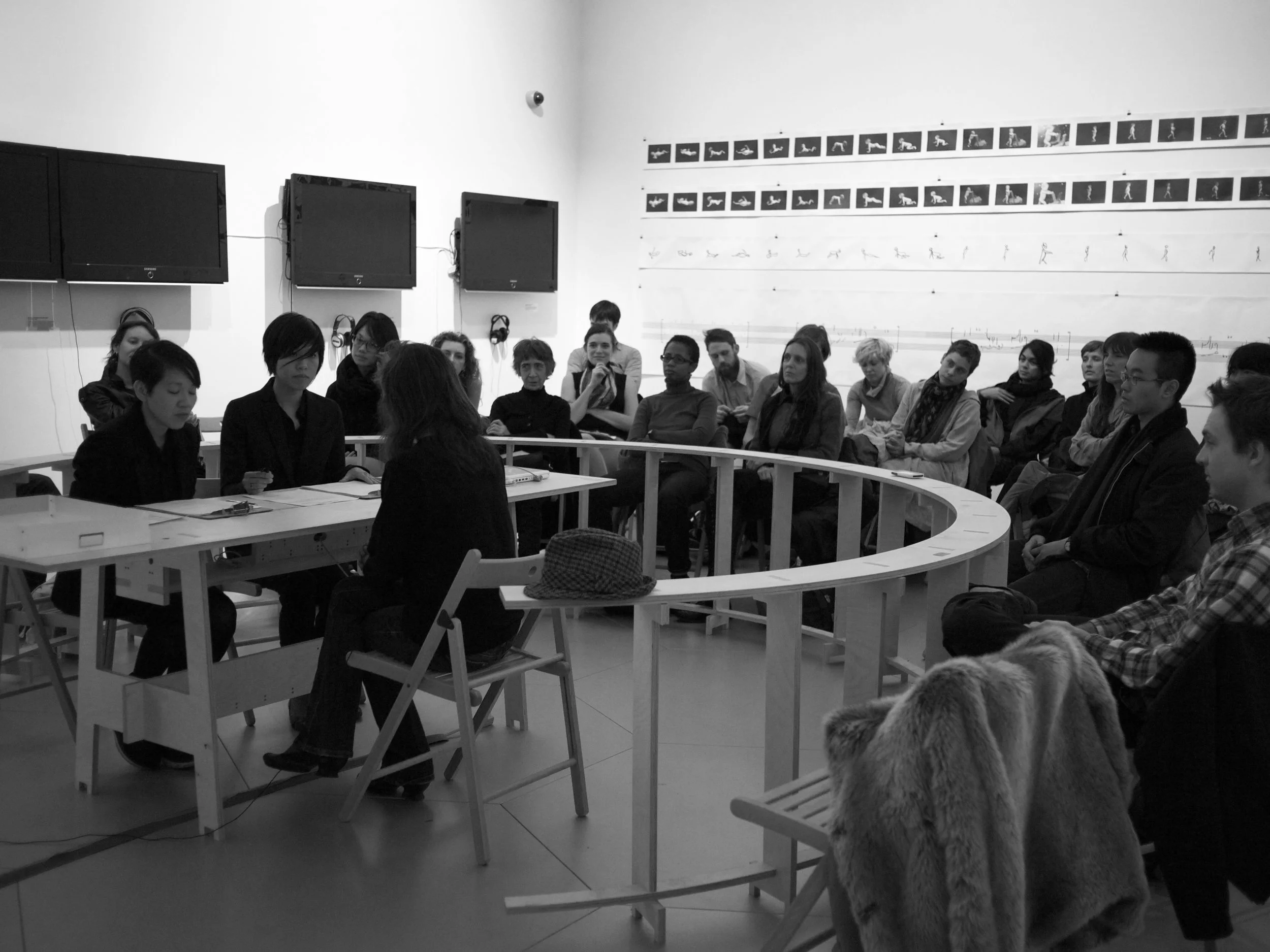
Performing Documents: Modes of Assembling, curated by Paige Landesberg, highlights artists who are collecting and publishing calculated excerpts of primary research, existing data, and archival documents as a practice. Through the act of interrogating (and sometimes altering) fragments of living archives–such as old family photographs, real estate listings, and public records of funding–these artists activate complex narratives of the political, the poetic, and the personal. The method of dissemination employed in each work relates back to the original formats where the contents once circulated; establishing an unconventional criteria for publishing that is rooted in context, time and place. 

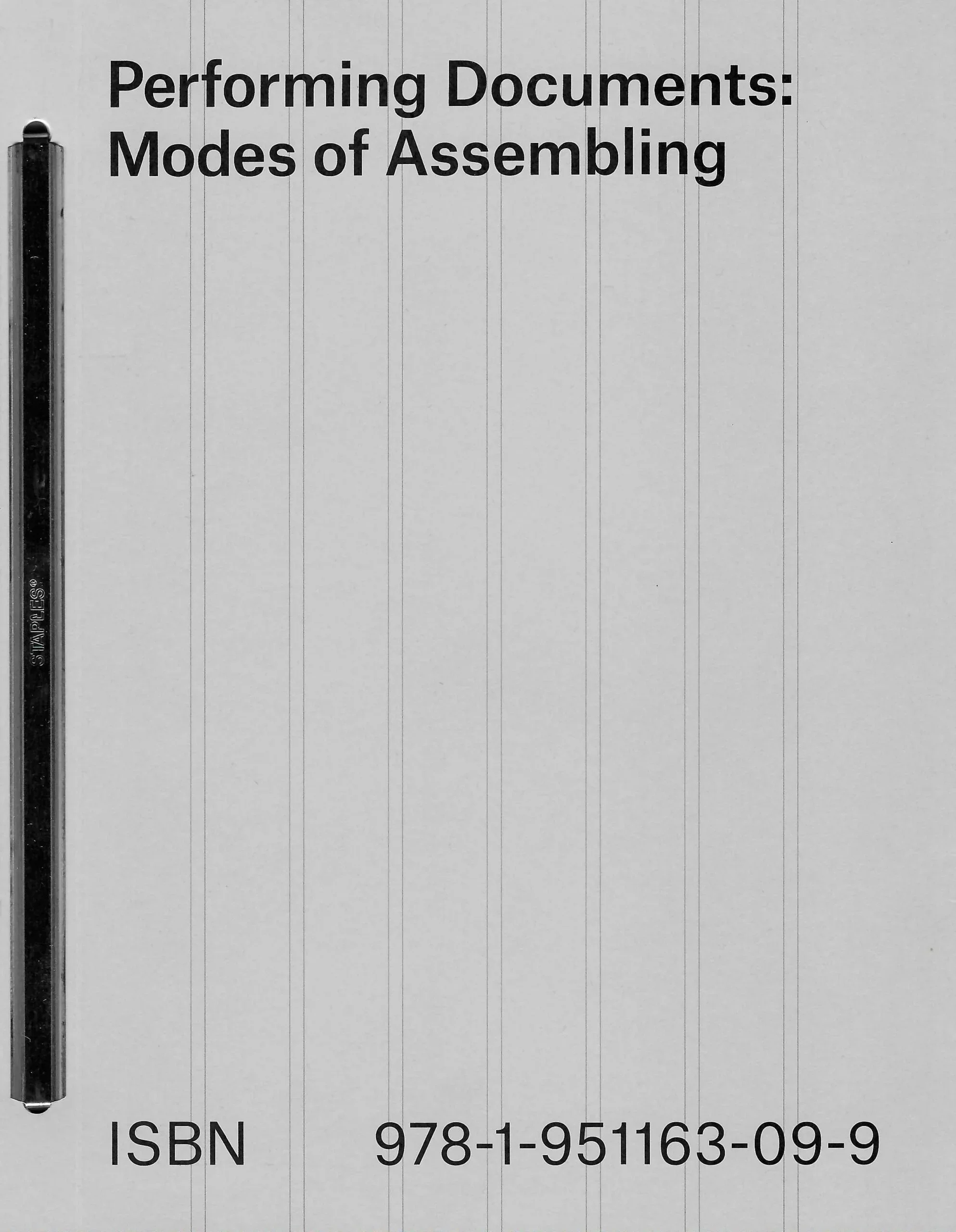
The book Performing Documents: Modes of Assembling, edited by Paige Landesberg and designed by Brian Paul Lamott, accompanies the exhibition of the same name and includes contributions by Aarati Akkapeddi, Yusuf Hassan (BlackMass Publishing), Sam Lavigne and Tega Brain, Sarah Cook, Andrea Fraser, Paige Landesberg, Huong Ngo, and Adam Pendleton, Kameelah Janan Rasheed, Corina Reynolds, Paul Souellis. This book introduces the reader to key ideas surrounding the document within contemporary art.

Aarati Akkapeddi

Adam Pendleton

Andrea Fraser 

BlackMass Publishing

Hương Ngô

Sam Lavigne and Tega Brain

Performing Documents: Modes of Assembling, Center for Book Arts, New York, NY (curated by Paige Landesberg)

View Event →
The Regional, The Kemper Museum of Contemporary Art
Jun
3
to Sep 11

The Regional, The Kemper Museum of Contemporary Art

The first major multi-museum survey dedicated to contemporary artists based in the Midwest, The Regional brought together work by 23 artists working across painting, photography, installation, and performance. The artists came from a variety of backgrounds and were based across the region in cities like Detroit, Cincinnati, Chicago, Cleveland, Columbus, Indianapolis, Kansas City, Madison, Minneapolis, and St. Louis, among others. Celebrating the artistic and cultural complexity of the region, the exhibition provided a platform for a generation of artists who are shaping the current and future discourses of contemporary art and culture.

The Regional was co-organized by the Contemporary Arts Center, Cincinnati and Kemper Museum of Contemporary Art. The exhibition was accompanied by a digital catalogue and a parallel program of conversations and performances.

The Regional, The Kemper Museum of Contemporary Art, Kansas City, MO (curated by Jade Powers and Amara Antilla)

View Event →
To The People Of That Future We Leave That Legacy, SPACES
Apr
22
to Jun 3

To The People Of That Future We Leave That Legacy, SPACES

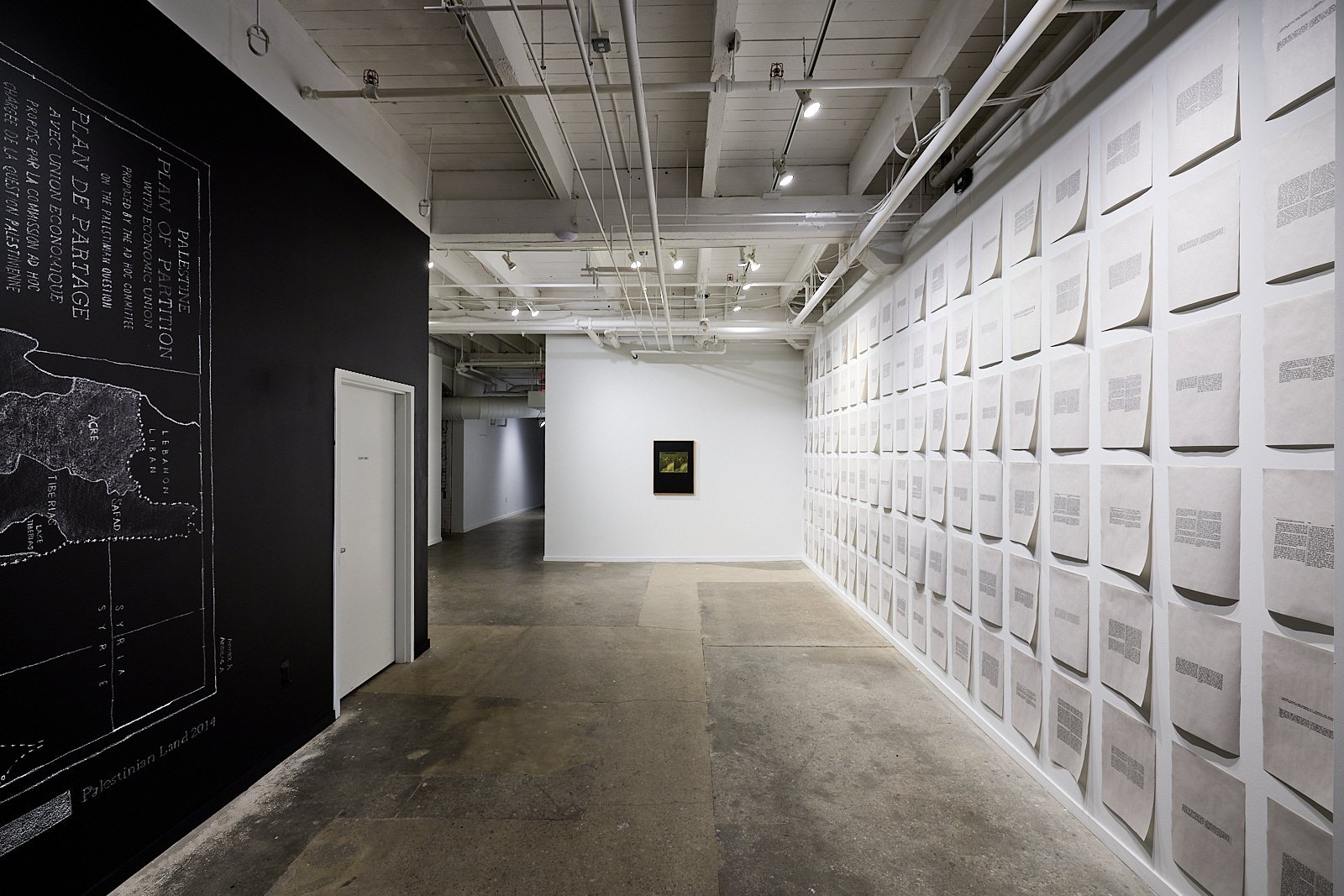
Pivoting around the restaging of two historical events – the 1947 UN debates over Resolution 181 which partitioned Palestine into a Jewish and an Arab state; and scenes from a fictional film, The Middleton Family, made for the 1939 World’s Fair – this project excavates the seeds of destructive forces of Western diplomacy based on the twin powers of colonialism and capitalism. Examining this fraught moment in time, where the politics of democracy and the concept of the “common good” became bound up with the language and violent imperatives of capitalism and colonialism, this project imagines the past as our dystopic, violent present.

To The People Of That Future We Leave That Legacy, SPACES, Cleveland, OH (in collaboration with Hồng-Ân Trương)

View Event →
Nations by Artists, Art Museum at the University of Toronto
Feb
8
to Apr 22

Nations by Artists, Art Museum at the University of Toronto

Nations by Artists explores how artists have engaged the trappings of the nation-state as a material for protest, parody, or collective utopian wish, dreaming counter-realities that exceed and resist prevalent paradigms of nationalism. The title builds from the historical precedent of Art Metropole’s landmark publishing series that explored the potentialities of artist-led culture. The exhibition looks at critical interventions in the performance of nation/nationalism, and artists’ capacities to complicate and make fissures through standing notions of territory, belonging, authenticity, citizenship, and borders. The works included offer possibilities to disrupt colonial power structures, exhume suppressed histories, and create new political scripts. Timely subjects explored in the exhibition include contestations of public monuments, counter-archival research into suppressed historical memory, the assertion of otherwise marginalized knowledge nodes and histories of resistance. Other works place into sharp focus mechanisms of state suppression, bringing into visibility forms of erasure that are structurally persistent to upholding state power. Numerous works also address histories of dispossession and make claims for the return of land and the centering of Indigenous knowledge and cultural survivance. Together, the works assembled in this exhibition point to possible political futures as imagined by artists, offering rich provocations to challenge existing paradigms of nationhood.

Works by

Ruanne Abou-Rahme & Basel Abbas, Sadie Barnette, Yael Bartana, Walter Battiss, Jasmina Cibic, Decolonize This Place, Shawna Dempsey and Lorri Millan, Demian DinéYazhi’/R.I.S.E. (Radical Indigenous Survivance and Empowerment), Pablo Helguera, Greg Hill, IRWIN, Iman Issa, Christopher Kulendran Thomas, Will Kwan, Zoe Leonard, Life of a Craphead, Divya Mehra, Alan Michelson, Native Art Department International, Majdulin Nasrallah, Hương Ngô, Emma Wolukau-Wanambwa

Nations by Artists, Art Museum at the University of Toronto, Toronto, CA (curated by Mikinaak Migwans & Sarah Robayo Sheridan) (podcast)

View Event →
The Regional, CAC Cincinatti
Dec
10
to Mar 20

The Regional, CAC Cincinatti

The Regional is the first major multi-museum survey dedicated to contemporary artists based in the Midwest and will feature new and recent work, including several site-responsive commissions, by approximately 25 artists working across painting, photography, installation, and performance. The artists come from a variety of backgrounds and are currently based in Detroit, Cincinnati, Chicago, Cleveland, Columbus, Indianapolis, Kansas City, Madison, Minneapolis, and Saint Louis, among other locales throughout the Midwest. Celebrating the artistic and cultural complexity of the region, the exhibition provides a platform for a generation of artists who are shaping the current and future discourses of contemporary art and culture.

The Regional is co-organized by the Contemporary Arts Center, Cincinnati and the Kemper Museum of Contemporary Art, Kansas City. View the digital catalog.

The Regional, CAC, Cincinatti, OH (curated by Jade Powers and Amara Antilla)

View Event →
Prospect 5, Contemporary Art Center, New Orleans
Oct
23
to Jan 23

Prospect 5, Contemporary Art Center, New Orleans

Prospect New Orleans is a citywide contemporary art triennial and the only exhibition of its kind in the US with a decade-long history. Every three years, we bring new art to an old city by inviting artists from all over the world to create projects in a wide variety of venues spread throughout New Orleans. Each iteration of Prospect is organized by a leading voice in the curatorial field. For residents and visitors alike, Prospect is an invitation to experience the city through the eyes of artists.

P.5: AN OVERVIEW

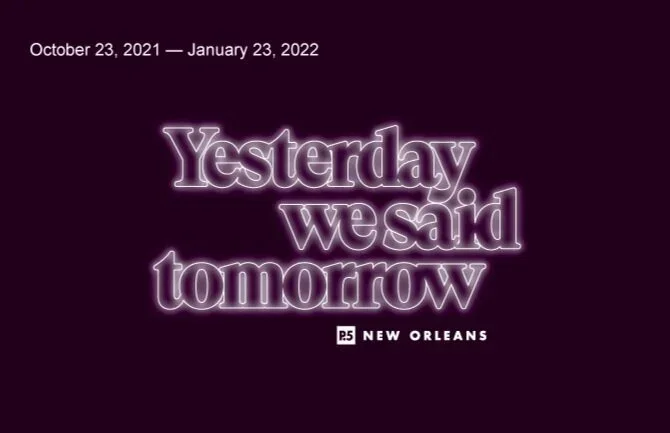
Yesterday we said tomorrow, curated by Artistic Directors Naima J. Keith and Diana Nawi, is the fifth iteration of Prospect New Orleans. This citywide contemporary art triennial will feature more than fifty artists in over fifteen venues throughout New Orleans and will include newly commissioned works alongside the work of historically significant artists. P.5 will investigate how history informs the present––particularly in relation to New Orleans, a uniquely American city that embodies so many urgent issues of today, but which remains deeply invested in and subject to its recent and historical past. Taking the city as a mandate, this exhibition will examine history as both document and fiction, exploring the idea that our moment feels both unprecedented and familiar.

Prospect 5, Contemporary Art Center, New Orleans, LA (curated by Diana Nawi and Naima J. Keith)

View Event →
The Wall Between Us, Museo MA*GA
Oct
17
to Jan 9

The Wall Between Us, Museo MA*GA

  • Google Calendar ICS

From 16 October 2021 to 9 January 2022, MA*GA in Gallarate (VA) hosts the exhibition The wall between us, the result of a lengthy research process that artists Ottonella Mocellin and Nicola Pellegrini carried out for years, and in 2020 won the eighth edition of the Italian Council, the program for the promotion of contemporary art worldwide by the Directorate General for Contemporary Creativity of the Ministry of Culture.

The work stems from a reflection on some of the most intricate legacies of the Cold War and involves communities of the Asian, namely Vietnamese, diaspora in Europe and North America, while interrogating the artists' personal relationship with their stories.

In collaboration with artists, writers and activists, Mocellin and Pellegrini analyse their position as Italian adoptive parents with a daughter and a son born in Vietnam, reflecting on the intersection between belonging, kinship, history, memory, identity-based politics, as well as the links between them and the different movements of memory that mark Berlin, the city in which they live. 

That of the Berlin Wall, or rather its ghost, thus becomes a recurring image that serves as a narrative tool from which their visual story develops. 

The publication is intended as a gift for readers of the future and as a tool to encourage dialogue, looking back and forth through the lens of the present moment.

The Wall Between Us, Museo MA*GA, Gallarate, IT (in collaboration with Hồng-Ân Trương) (a project of Ottonella Mocellin and Nicola Pellegrini, curated by Elena Agudio)

View Event →
What Flies But Never Lands? Chicago Cultural Center
Jun
2
to Sep 5

What Flies But Never Lands? Chicago Cultural Center

what flies but never lands? presents works that, through their own logics and affects, resist the recollective slipstreams of the present. Staged in the Michigan Avenue galleries, what flies but never lands? is gently organized into three concepts, one for each room: swirl, light, and ground. Swirl proposes an imaging of history that, unlike a linear Western teleology of time, is embodied by the concentric, helical, and dual-directional form of the spiral. Light evokes the relationship between time and technology, namely the promise of technology as a font of modern progress and mastery over nature. Ground considers earthly materials as tools for record-keeping, and the mutability of these materials’ associations over time.

Curated by Minh Nguyen, the exhibition features works by Ana Garcia Jacome, Cathy Hsiao, SaraNoa Mark, Jacobo Zambrano-Rangel, Huong Ngo, Max Guy, Imani Elizabeth Jackson and S*an D. Henry-Smith.

Support for what flies but never lands? has been provided by the City of Chicago Department of Cultural Affairs and Special Events, Illinois Arts Council, Graham Foundation, Foundation for Contemporary Art and Luminarts Foundation.

What Flies But Never Lands? Chicago Cultural Center, Chicago, IL (curated by Minh Nguyen)

View Event →
We Are Still Here: Presence In Absence, University of Toronto
Nov
18
10:00 AM10:00

We Are Still Here: Presence In Absence, University of Toronto

In this talk, Ngô will introduce her archive-based practice, particularly a body of work that unpacks the intersectional effects of women operating within a political resistance, based on colonial surveillance documents from France and Vietnam. She will elaborate on her process of working in the archives, how she translates her research into installations in art contexts, and speak to connections that her work has to current global conversations related to censorship, agency, and authoritarianism.

This event is organized in conjunction with ANTD15, an upper-level Anthropology seminar that is currently being taught by Prof. Katie Kilroy-Marac under the title of “Engaging the Archive.” It is generously co-sponsored by the Department of Anthropology and The Department of Arts, Culture and Media.

Artist Talk, We Are Still Here: Presence In Absence. The Centre for Ethnography at University of Toronto, co-sponsored by the Department of Anthropology and the Department of Arts, Culture and Media, Toronto, CA

View Event →
3Arts Next Level Award
Oct
19
6:30 PM18:30

3Arts Next Level Award

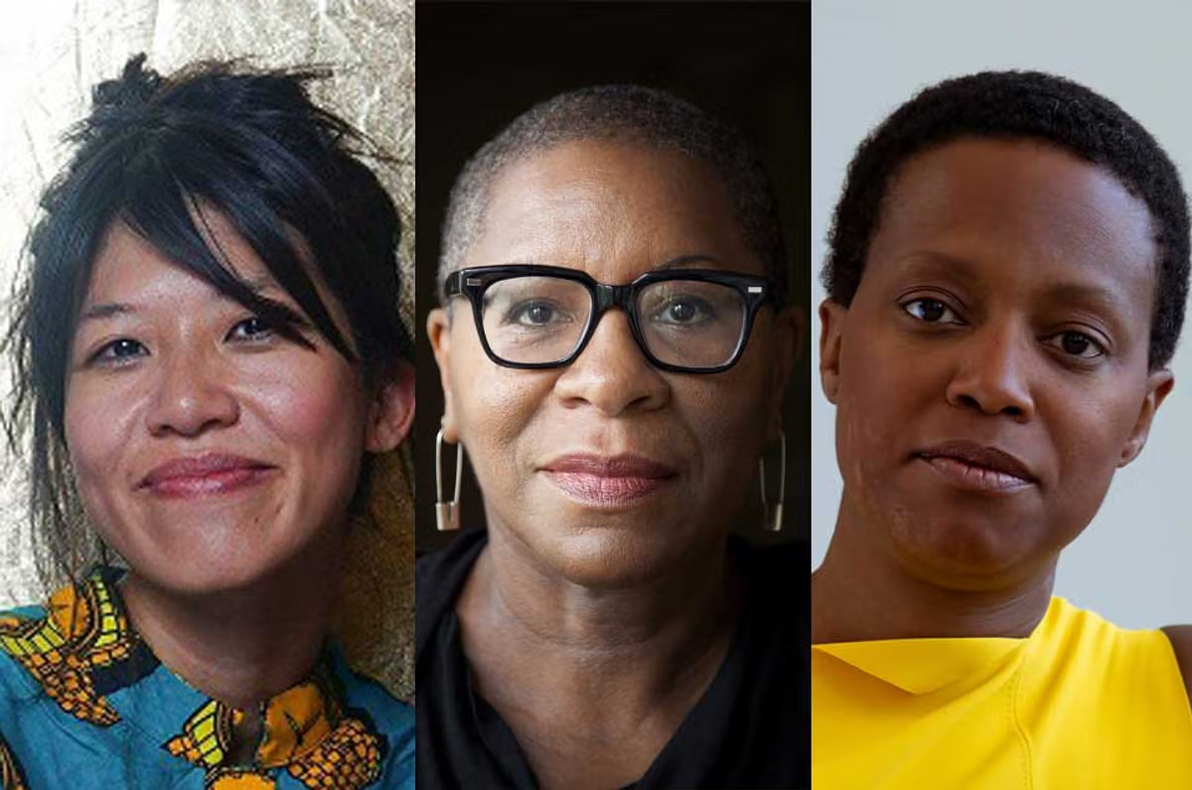
The Chicago-based non-profit 3Arts has issued its largest round of grants this year, awarding $470,000 to Chicago artists. During its online award ceremony Monday night, it also announced its new $50,000 Next Level/Spare Room Award, an unrestricted cash prize, made possible by an anonymous donor, that will be given to three women visual artists: Hương Ngô, Folayemi Wilson, and Amanda Williams.

View Event →
Material Intimacies, NXTHVN
Oct
18
to Jan 18

Material Intimacies, NXTHVN

  • Google Calendar ICS

NXTHVN is thrilled to announce the opening of Material Intimacies, organized by 2020-2021 Curatorial Fellows Michelle Phương Ting and Claire Kim. The exhibition features eight contemporary artists: Wesley Chavis, Natalie Diaz, Candice Lin, Stephanie A. Lindquist, Yvette Mayorga, Hương Ngô, Natani Notah, and Zina Saro-Wiwa. Their work makes tangible the intimacies forged and ruptured by colonialism in order to put forth radical associations with desire, kinship, vulnerability, land, and touch.

Through installation, video, sound, textile, and print, the exhibition examines intimacy as an encounter shaped by the globalizing forces of colonization, whereby white European settlers forced violent contact with Indigenous, Black, Latinx, and Asian peoples and severed sacred ties to land and kin. Within this horrific web of enslavement, exploitation, and commodification, intimacy became structured around the desires of white people. For those colonized and their descendants, the possibilities of intimacy remain restricted or out of reach.

Located on Quinnipiac land, NXTHVN acknowledges what Layli Long Soldier calls “the break.” Colonialism’s ruptures are not distant, but here—felt within our bodies, families, and communities. As a means to subvert this constricting power, the work in the exhibition prompts us to ask: How can the very materials commodified for the colonial project (e.g. land, bodies, sugar, and porcelain) enact beauty, while disrupting the violence of bondage, exotification, and displacement? How do artists use materials to assert new terms of being seen, wanted, and touched? What might liberatory intimacy look like, one that frees us from racist, capitalist, and misogynistic structures of communal life?

A full-color catalogue will accompany the exhibition and include essays from the curators, in addition to a note from NXTHVN’s founders and an introduction by curatorial advisor Kalia Brooks Nelson.

digital catalog

Material Intimacies, NXTHVN, New Haven, CT (curated by Michelle Phương Ting and Claire Kim)

View Event →
Nine Lives, Renaissance Society
Sep
12
to Nov 15

Nine Lives, Renaissance Society

  • Google Calendar ICS

Nine Lives takes shape around a diverse set of protagonists, as if this exhibition were a collection of short stories or personal essays told from different points of view. These figures—whether real or imagined—come forward in the artworks, which offer intimate but imperfect access to their respective lives. Each work holds the residual impression of a moment, a journey, an effort, or a thought, with varying degrees of legibility. As these individuals quietly occupy everyday settings or navigate more extraordinary circumstances, larger dimensions also begin to emerge. While a notion of the self remains central to the exhibition, this self always moves in relation to society and history, with an ongoing tension between public and private experience. Everyone is the main character in their own life story, but any single story overlaps with those being written or maintained by other people.

Motifs of reading, writing, and translating appear throughout the exhibition. These take familiar forms, such as books, newspapers, and documents from archives, but the artists are also thinking about these kinds of activities in more expansive ways: how textiles can also be texts, for example, or how a musical score is waiting to be enacted. In bringing the work of eleven artists together, Nine Lives is weighing how stories are told, where they can be found, and what their effects might be, both on a collective scale and within individual lives. Not all stories are told in the present tense and many follow us from the past, infusing daily life, as they are carried on through language and held in our bodies. As such, some of the artists in Nine Lives, or their protagonists, also consider how traces of the past are interpreted or understood; they are developing new appraisals of history, as it is felt here and now, and how it can be re-examined or rewritten.

This exhibition is part of the Feminist Art Coalition, an expansive platform for projects inspired by feminist thought, experience, and action that will unfold at dozens of museums around the country beginning in the fall of 2020. Informed by this backdrop, Nine Lives echoes various feminist legacies, especially artists and filmmakers who have explored what it is for women to tell their own stories or to make space for narratives otherwise obstructed or unwritten. As feminist dialogues continue to evolve, Nine Lives embraces how these efforts have expanded to include greater multiplicities, geographies, and gender identities.

digital catalog

Nine Lives, Renaissance Society, Chicago, IL (curated by Karsten Lund and Caroline Picard)

View Event →
Alien vs Citizen, MCA Chicago
Jul
17
to Feb 14

Alien vs Citizen, MCA Chicago

  • Google Calendar ICS

How do you know what you are worth?

Inspired by conversations about the visas awarded to “aliens of extraordinary ability” and other merit-based immigration policies, Alien vs. Citizen considers how an individual’s value is understood in relationship to community. The exhibition asks us to think about the way a person’s value is determined in the United States, through mechanisms including citizenship, work, and personal relationships. The artworks are organized around these three ways of estimating worth, inviting us to consider the cultural biases embedded in each.

View Event →
Within Global Isolation: Asian Artists in America, Brooklyn Rail
Jul
1
to Aug 31

Within Global Isolation: Asian Artists in America, Brooklyn Rail

Within Global Isolation, the online exhibition curated by Han Hongzheng and Chandler Allen, was covered by the Brooklyn Rail by Sahar Khraibani in Within Global Isolation: Asian Artists in America.

Within Global Isolation: Asian Artists in America is a virtual exhibition, organized by curators Han Hongzheng and Chandler Allen, and fueled by a spike in anti-Asian sentiments, xenophobia, and discrimination as a result of COVID-19. The exhibition brings together work by ten Asian artists living across the country: Hương Ngô, Ying Zhu, Guanyu Xu, Damien Ding, Tinwai Wong, Leonard Suryajaya, Zhen Guo, Toby Zeng, Weina Li, and Siyuan Tan. It contextualizes work within the current social, political, and physical circumstances while examining coexistence within stark global disparities. Within Global Isolation also features substantial conversations with the artists, who detail the discrimination they’ve faced since the pandemic started, as well as the hardships brought on by this massive economic halt.

For Chicago-based Asian American multidisciplinary artist and SAIC assistant professor Hương Ngô—who is particularly attuned to histories of colonialism and migration having lived in the US, Hong Kong, France, and Vietnam—ethnography is an important factor in understanding the long-term effects of colonialism, her personal experiences of migration, and how the two are deeply enmeshed. In an interview with Allen, she shares: “a critical gaze at ethnography might help us understand histories of thought and ideologies that have enabled colonialism and spurred migration.” On view here is Ngô’s film ESCAPE (2004–06), made during the Iraq war, but ringing eerily familiar today. The piece chronicles two protagonists as one puts on a white Hazmat suit, and the other spends an afternoon outdoors in an orange one. The 7-minute video is marked by two sections: “SUGGESTED USES FOR YOUR NEW ESCAPE POD,” and “PREPARING FOR THE NEAR NEAR DISASTER.” The screen itself functions as an isolation pod, with one person occupying it at a time. In one particularly arresting scene, the protagonist sits at the opposite end of a park bench from another person. Though the work was created in response to the claims of biological warfare, it takes on new meanings and valences with the COVID-19 pandemic, where distance is encouraged and at times imposed. The gestures in this project were meant to be speculative, but they’re now very real. Ngô shares: “The emotional landscape of increasing distance and distrust of one another is also real.”

View Event →
Khuất Dạng/Lost from View, The Factory
Jun
19
to Oct 4

Khuất Dạng/Lost from View, The Factory

  • Google Calendar ICS

‘Lost from View’, by artist Hương Ngô, excavates the idea, role, and perception of women, drawn to how history remembers and values their contribution to particular cause and their effect. In this exhibition, Ngô is especially inspired by the life of Vietnam’s national hero – Nguyễn Thị Minh Khai – for her strength, tenacity, resilience, and bravery in navigating the rise of the socialist era in the 1930s, specifically compelled by the many aliases she embodied in her commitment to Vietnam’s anti-colonial movement and its desire for independence. For this exhibition, Ngô refers to archival documents, literature, and photography, to give window not only onto this prominent figure, but also the lives of other women living this revolutionary period, sometimes with great tragic end. Ngô does so in order to reveal how social perspectives of sexuality, intelligence, and beauty have been (and continue to be) mired by complex cultural translations bound up in stereotypical and colonial understandings of gender, race, and power.

Khuất Dạng/Lost from View, The Factory, Ho Chi Minh City, Vietnam (curated by Zoe Butt)

View Event →
Labor at NMSU Art Museum
Feb
28
to May 28

Labor at NMSU Art Museum

  • Google Calendar ICS

As a new mother, I am particularly moved and excited to be part of this upcoming exhibition, curated by Laurel Nakadate, with work made in collaboration with Hồng-Ân Trương. This image from its last iteration at Leslie Tonkonow Gallery with our work next to Yoko Ono.

New Mexico State University Art Museum will open the very first art exhibit at its newly constructed University Art Museum in February 2020.

“Labor: Motherhood & Art in 2020” features the work of Tracey Baran, María Berrío, Patty Chang, Lenka Clayton, Amy Cutler, Joey Fauerso, Tierney Gearon, Kate Gilmore, Jessica Jackson Hutchins, Las Hermanas Iglesias, Mary Kelly, Justine Kurland, Marilyn Minter, Laurel Nakadate, Hương Ngô and Hồng- Ân Trương, Yoko Ono, Catherine Opie, Laurie Simmons, Wendy Red Star and Mickalene Thomas.

The exhibit, including a range of “planned interactive and engaging programming looks at motherhood in its various forms, from a universal truth and ubiquitous creative act to a solitary and individual experience that changes everything in a woman’s creative life,” said UAM Director Marisa Sage, who is co-curator of the exhibit along with New York-based photographer and filmmaker Laurel Nakadate.

The exhibit “addresses and challenges the documented human experiences of motherhood and the ways the mother and childrearing have been perceived and portrayed in art, both historically and in current popular culture,” Sage said. “Building upon the multitudes of conversations happening globally, Labor looks at motherhood through the lenses of empowerment, empathy, intimacy, selflessness, vulnerability, failure, anxiety and choice.”

“There have always been an abundance of artists making work about mothers and motherhood,” Nakadate said, “but until recently, many galleries and institutions have not created a space for that work. Our hope is that providing a platform for this work can create a forum for conversations to take place, and for artists ruminating within this realm to find one another.”

Labor: Motherhood & Art in 2020, New Mexico State University Art Museum, Las Cruces, NM (in collaboration with Hồng-Ân Trương) (curated by Laurel Nakadate)

View Event →
Jan
17
to Mar 8

Turn the Light at Gallery 400

  • Google Calendar ICS
NGO Huong_Who Owns the Light.jpg

The way to right wrongs is to turn the light of truth upon them.

—Ida B. Wells

Gallery 400 is pleased to announce its early 2020 exhibition Turn the Light, which features five artists whose in depth projects are representative of the most vital art practices in Chicago today. In Turn the Light artists Herman Aguirre, the Floating Museum, Jin Lee, Hương Ngô, and Jefferson Pinder examine particular histories that are crucially present in our current lives and ask critical, often confrontational questions about why these histories have not been fully scrutinized. The works presented, in painting, photography, sculptures, video, performance, and installation—though thoughtful, nuanced, and multi-faceted—derive from a sense of urgency and necessity to reckon with suppressed histories.

In the U.S. and in Chicago, contests recur over our collective historical responsibility. The question is how can decolonization and equality be pursued without addressing the ills of the past, or without following Ida B. Wells’ insistence on turning the light of truth upon the oppressions of the past and the present? Pioneer Chicago forces, from Wells to today’s Jamila Woods, from Gwendolyn Brooks to Rudy Lozano, have helped to establish what can be called a Chicago sensibility that emerges from a tradition of solidarity, protest, resistance, and nourishment. The artists in Turn the Light build on that legacy, representing, historicizing, and materializing an evolution of what can be traced as Chicago’s revolutionary ideology. Their works ask viewers to move beyond contemplation and reaction but in absorbing the artwork, to reconsider the past and engage in grappling with the complexities of today.

Read more here.

View Event →