
To Name It Is to See It
Archive-based Research and Project.
Press Release
2017
From Faye Gleisser:
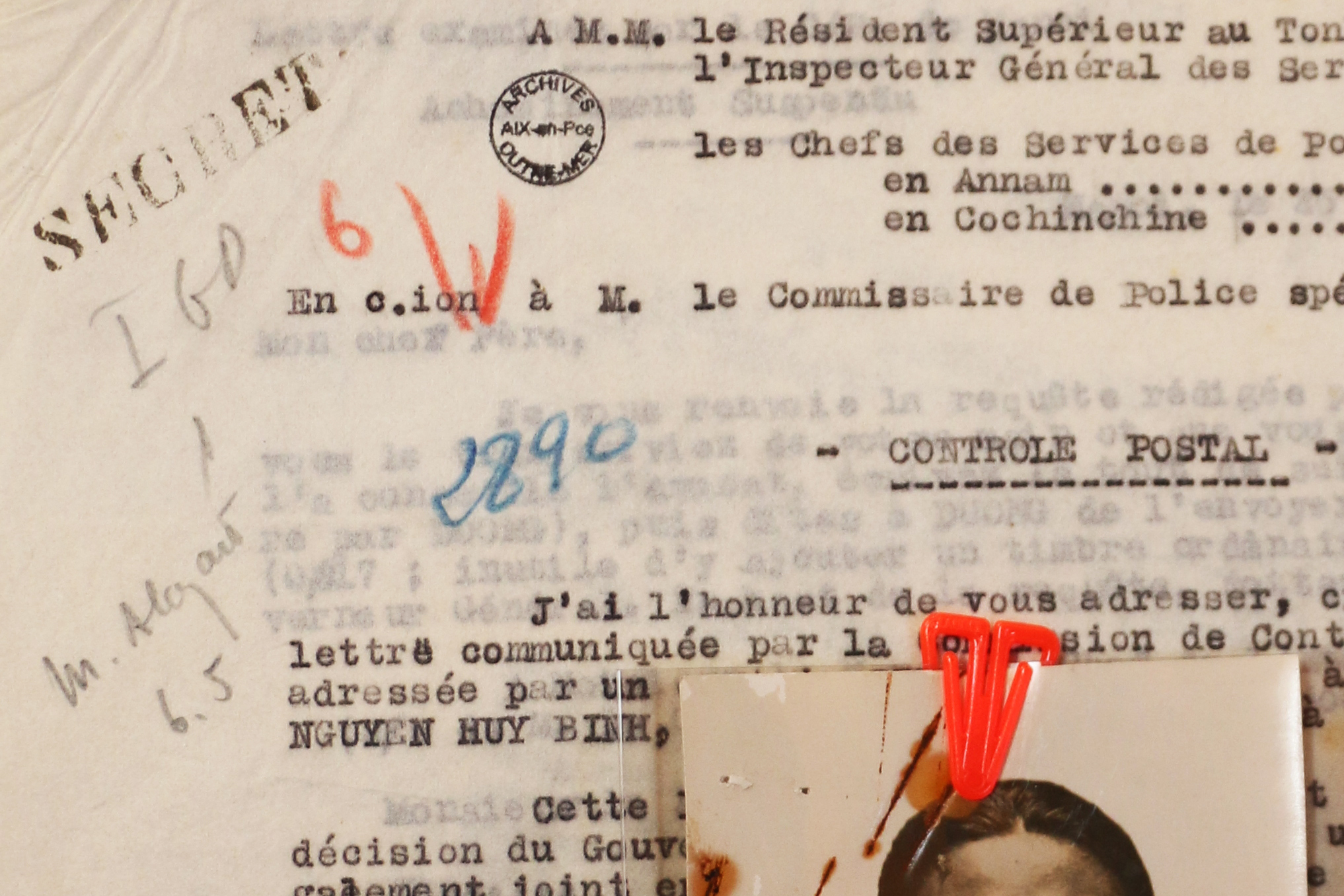
It was her handwriting that ultimately gave her away.
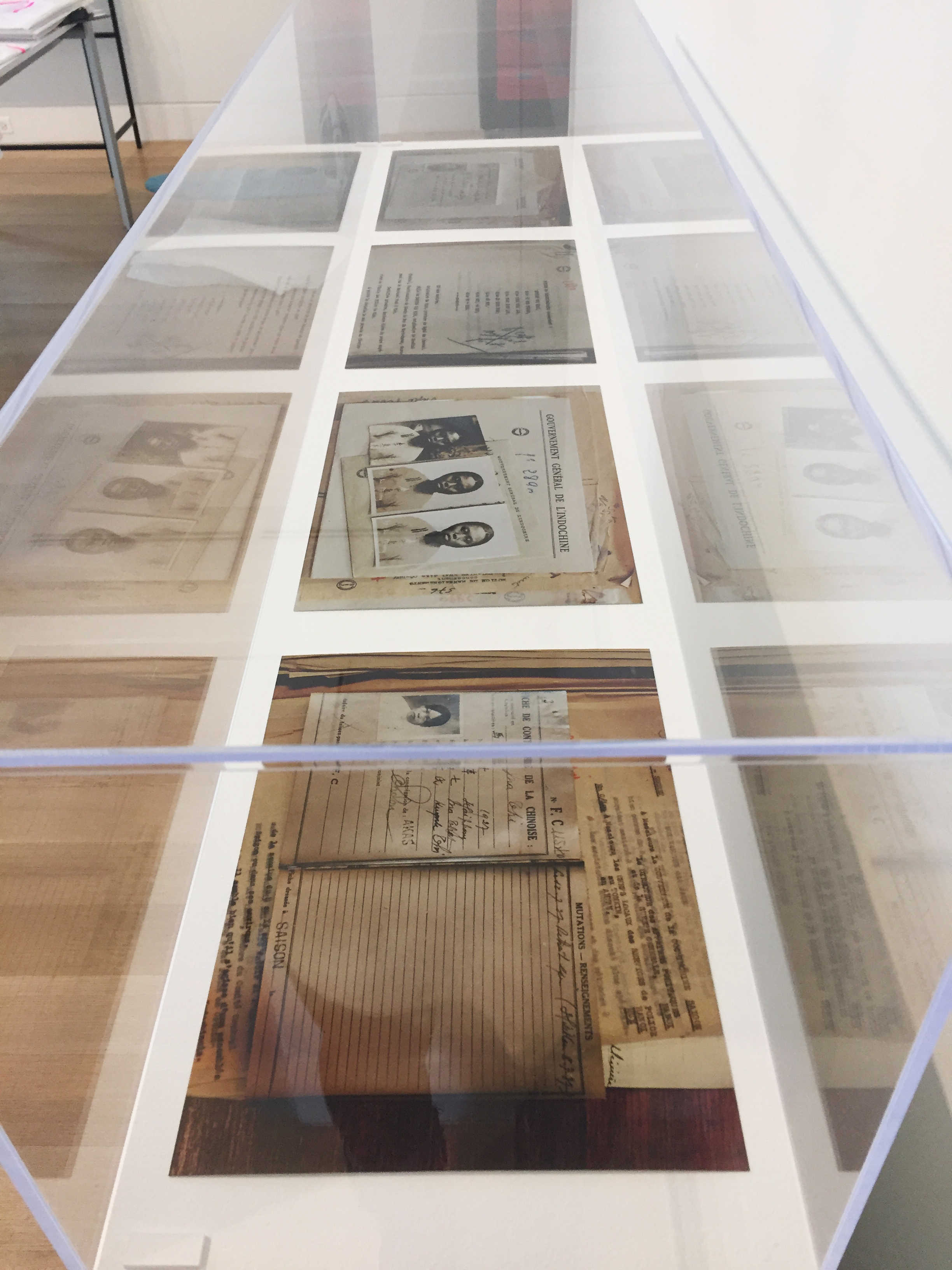
Nguyễn Thị Minh Khai, one of the most celebrated, enigmatic female figures in Vietnamese revolutionary history, was found guilty in 1940 of conspiring against the colonial government when a letter she had authored under the alias “F.L.” was intercepted and analyzed by the Sûreté, the French National Police. In August 1941, Minh Khai and several other leaders of the anticolonial movement were executed by firing squad under the aegis of the French government’s recently instituted ban of the Communist party.
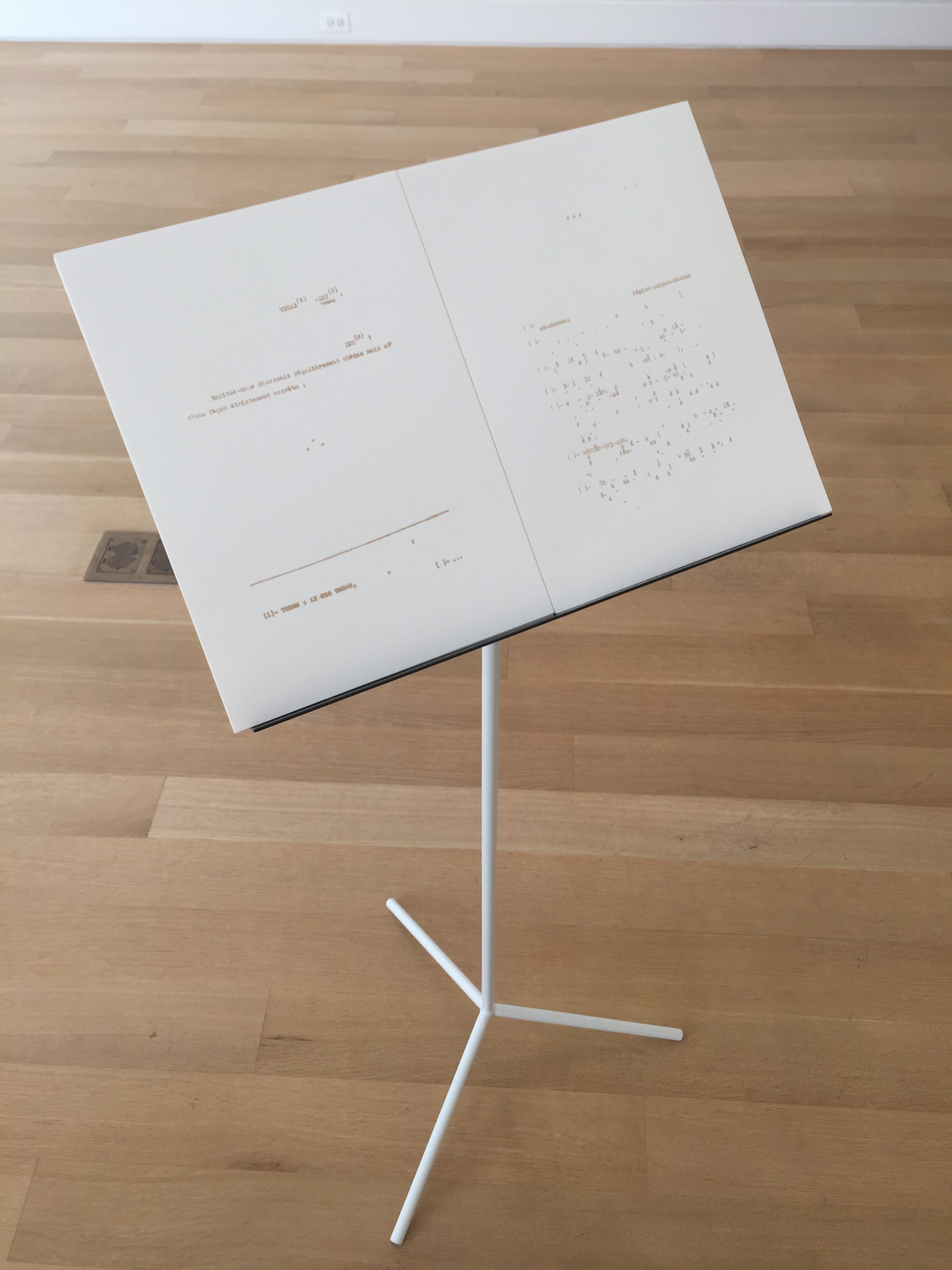
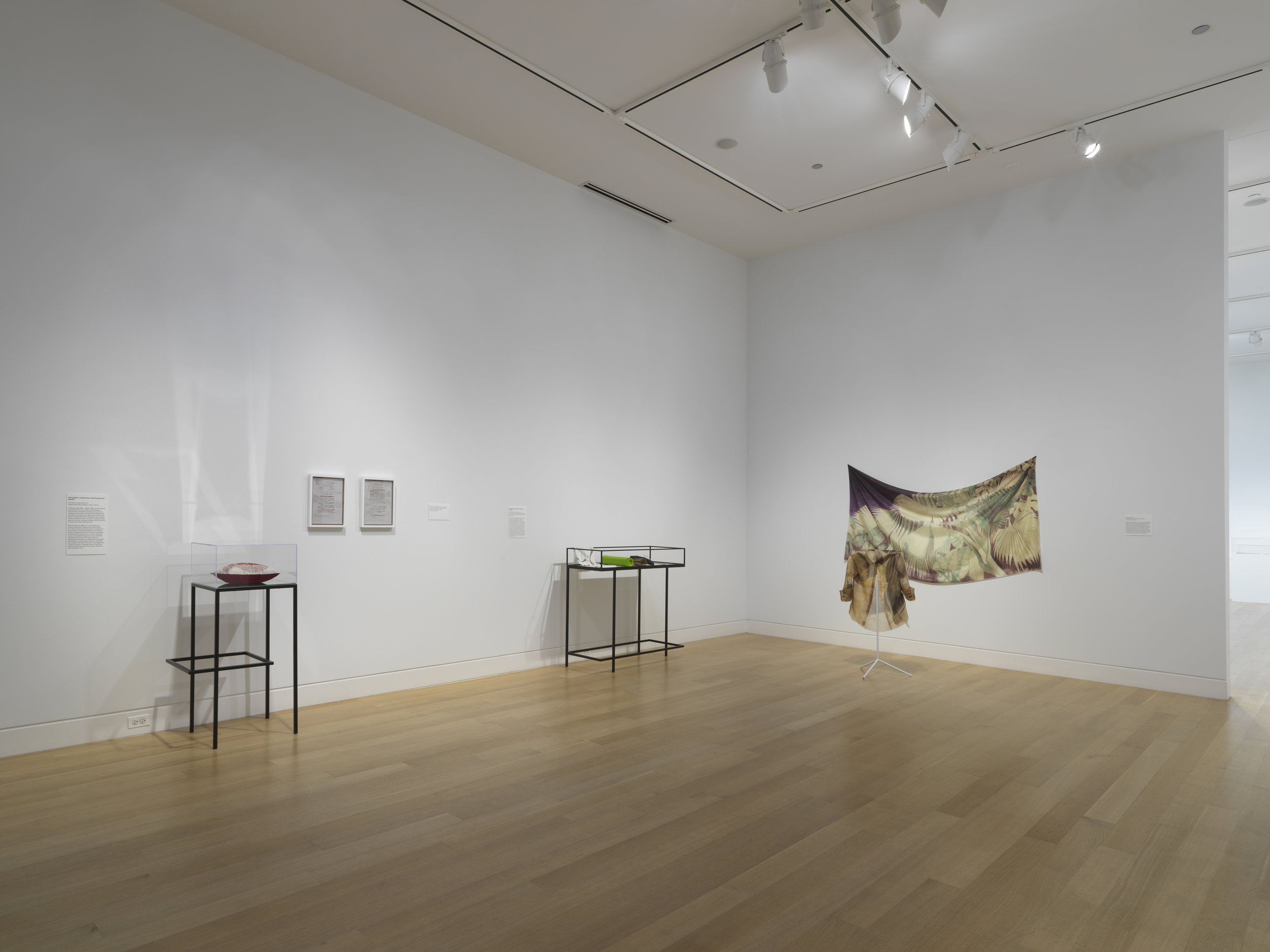
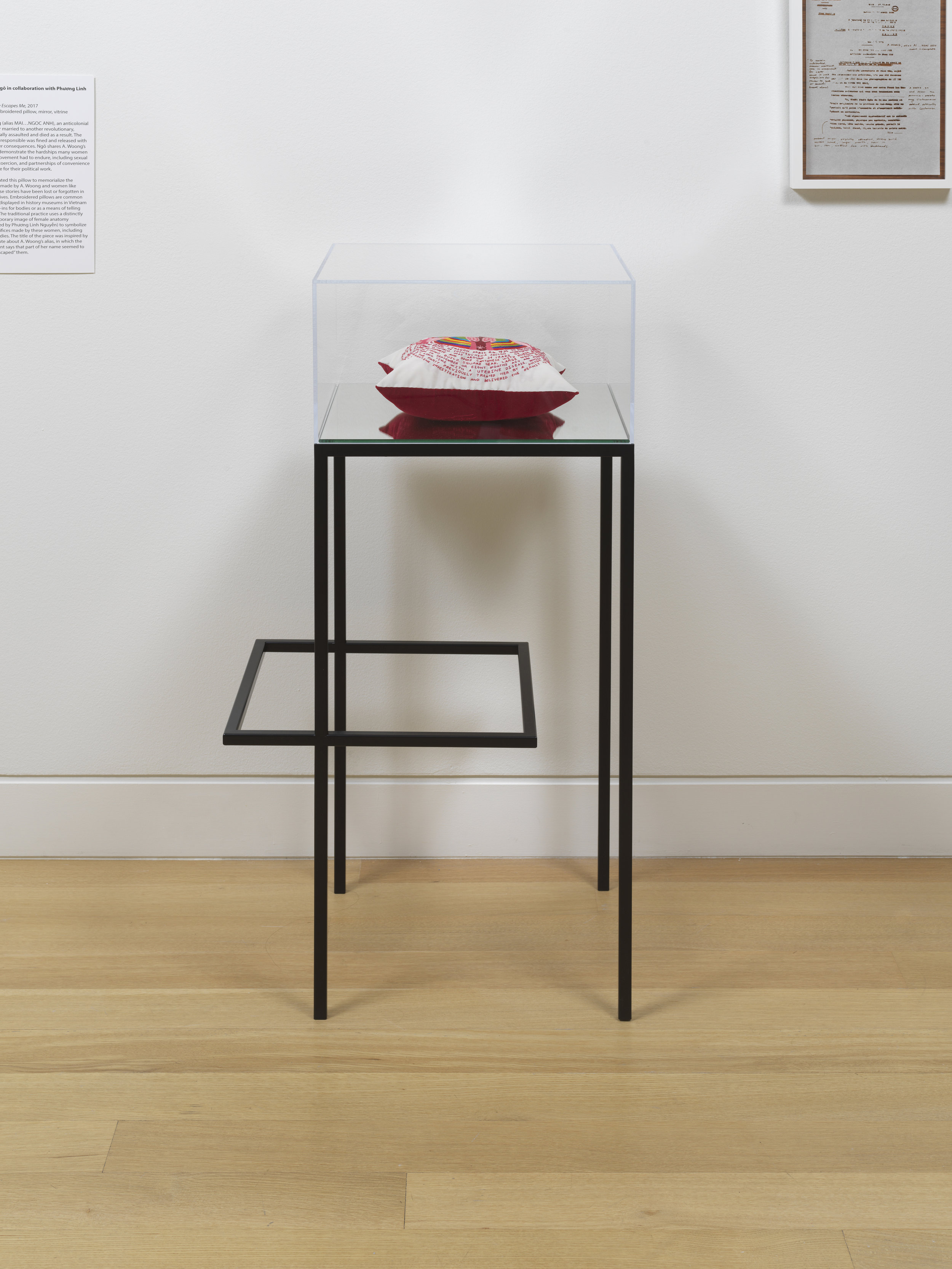
Interdisciplinary artist Hương Ngô’s newest body of research-based artwork, in the exhibition To Name It Is to See It at the DePaul Art Museum, synthesizes these absences and the politics of the colonial record. Rather than repair, and thereby efface, these gaps, her work—which spans installation, sound, video, performance, photography, and printmaking—makes materially manifest the discursive and collective historical process of ideology formation: the making and unmaking of Nguyễn Thị Minh Khai, the event.
From Lori Waxman, Chicago Tribune:
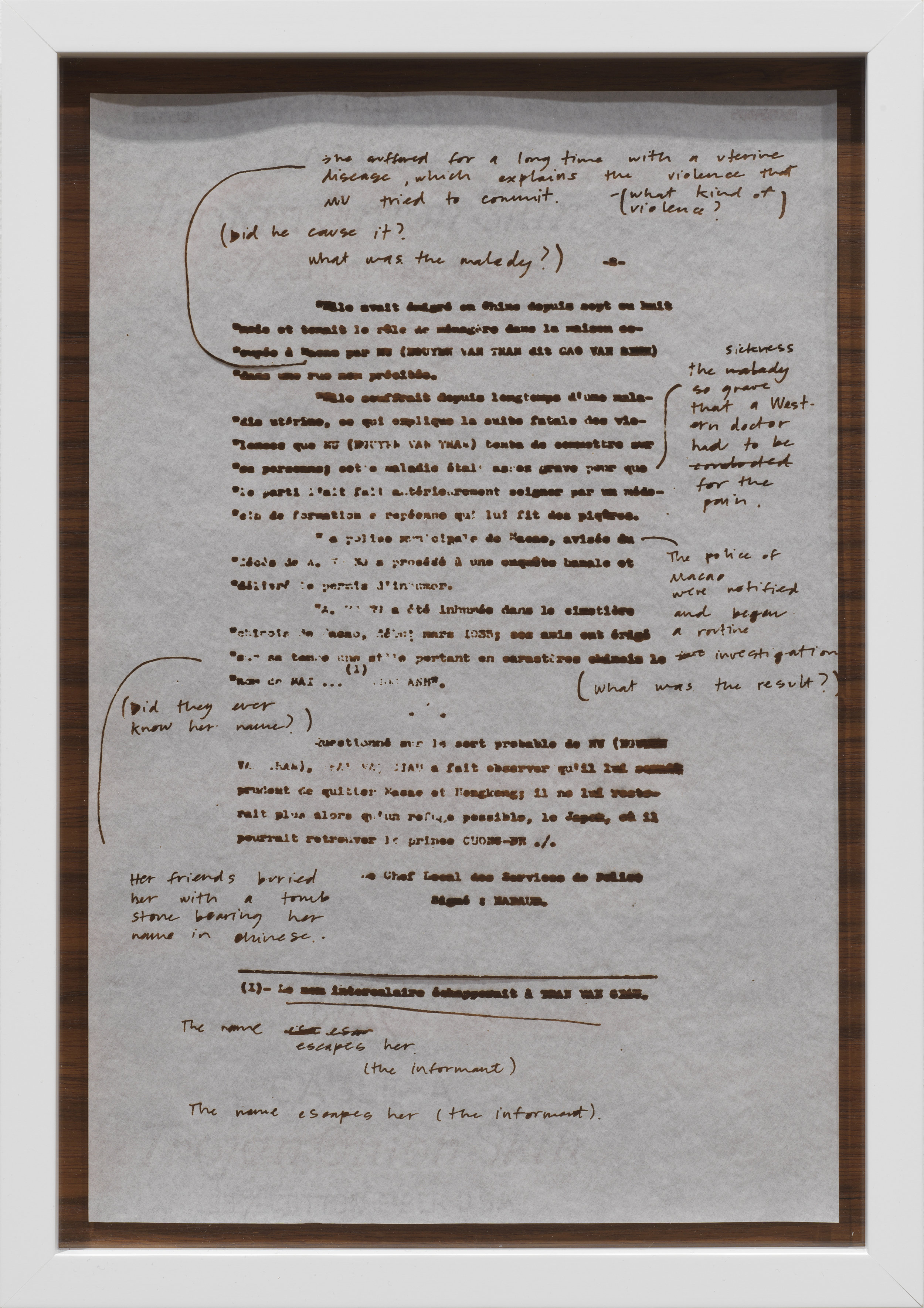
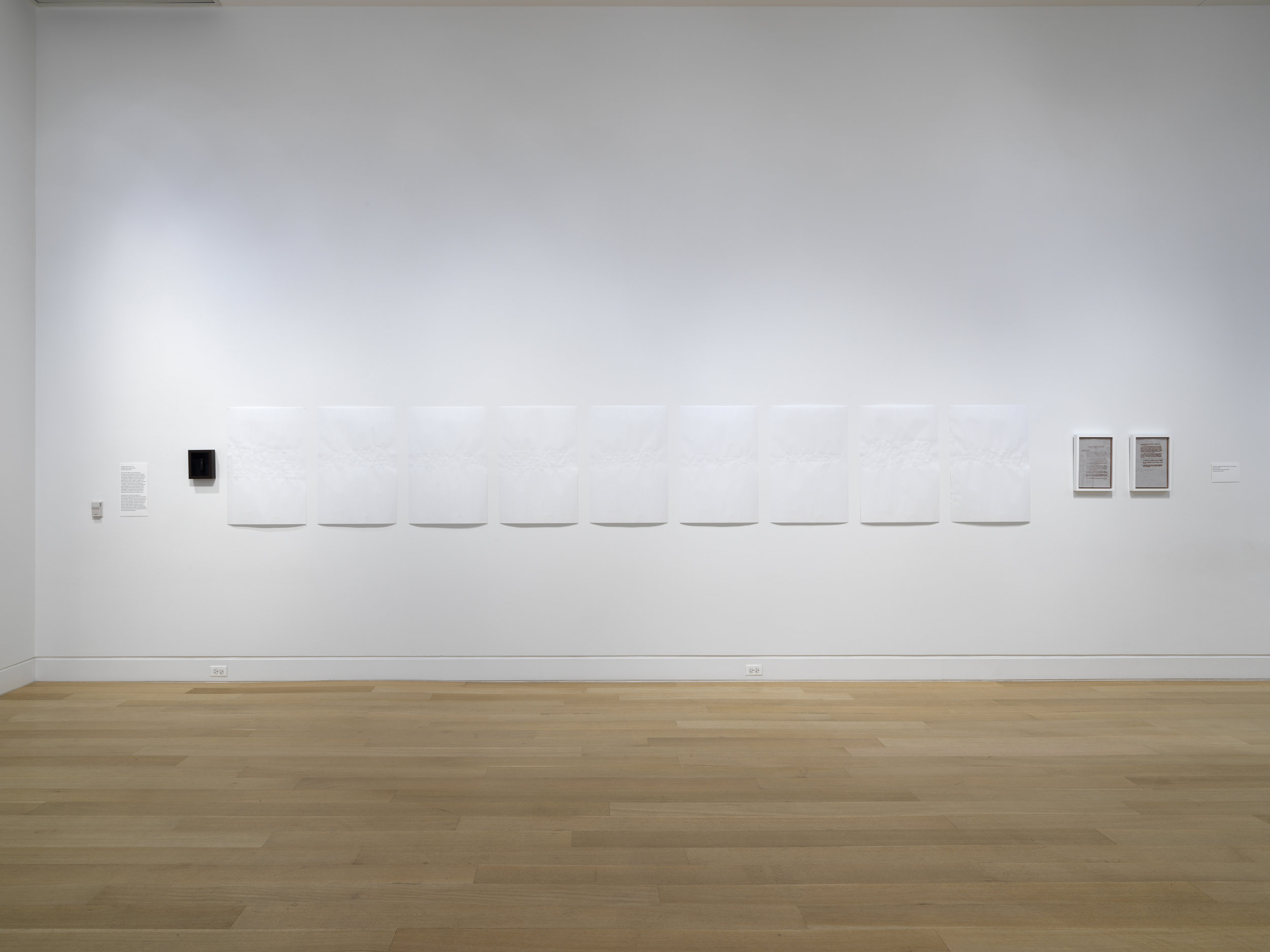
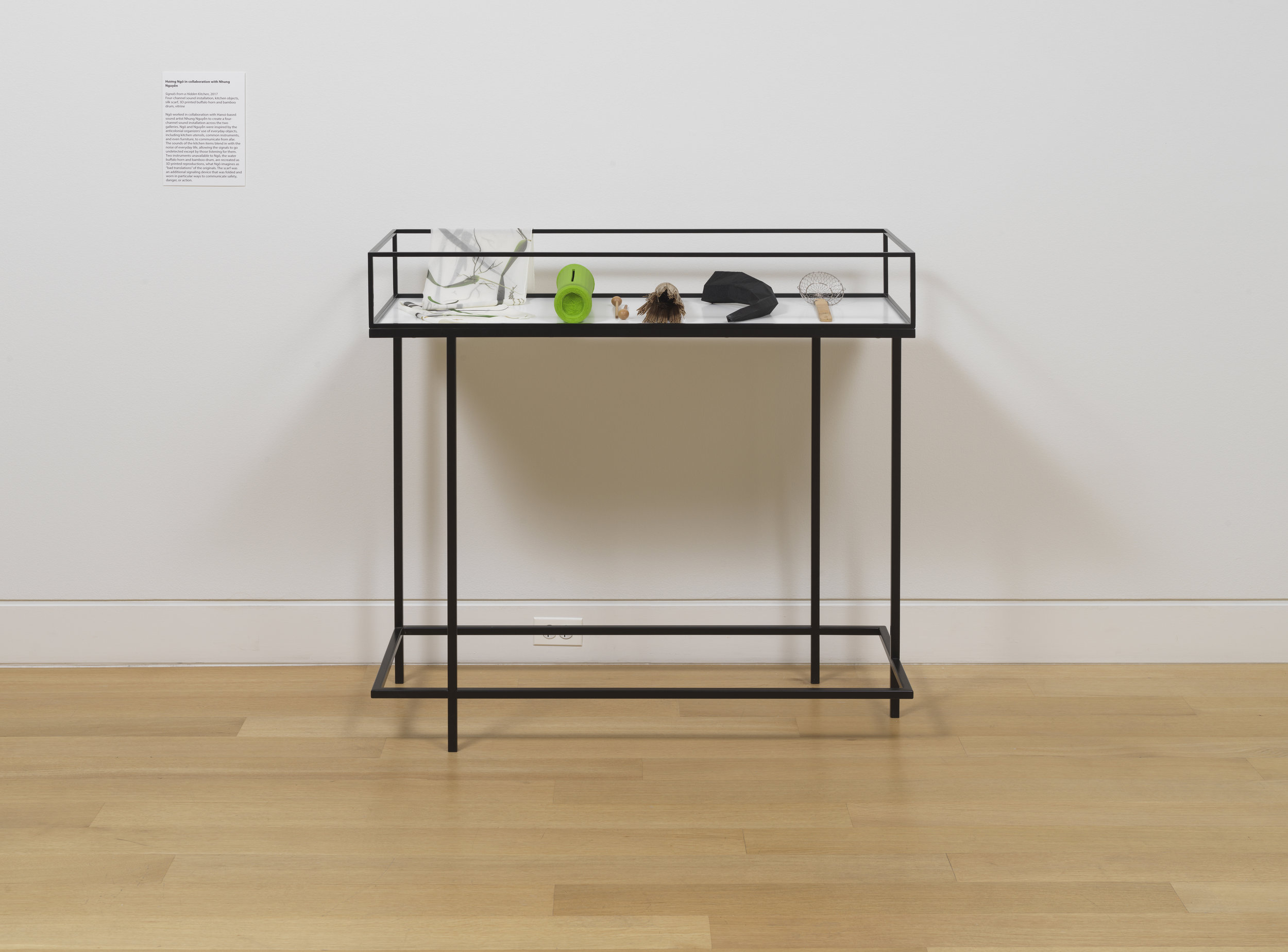
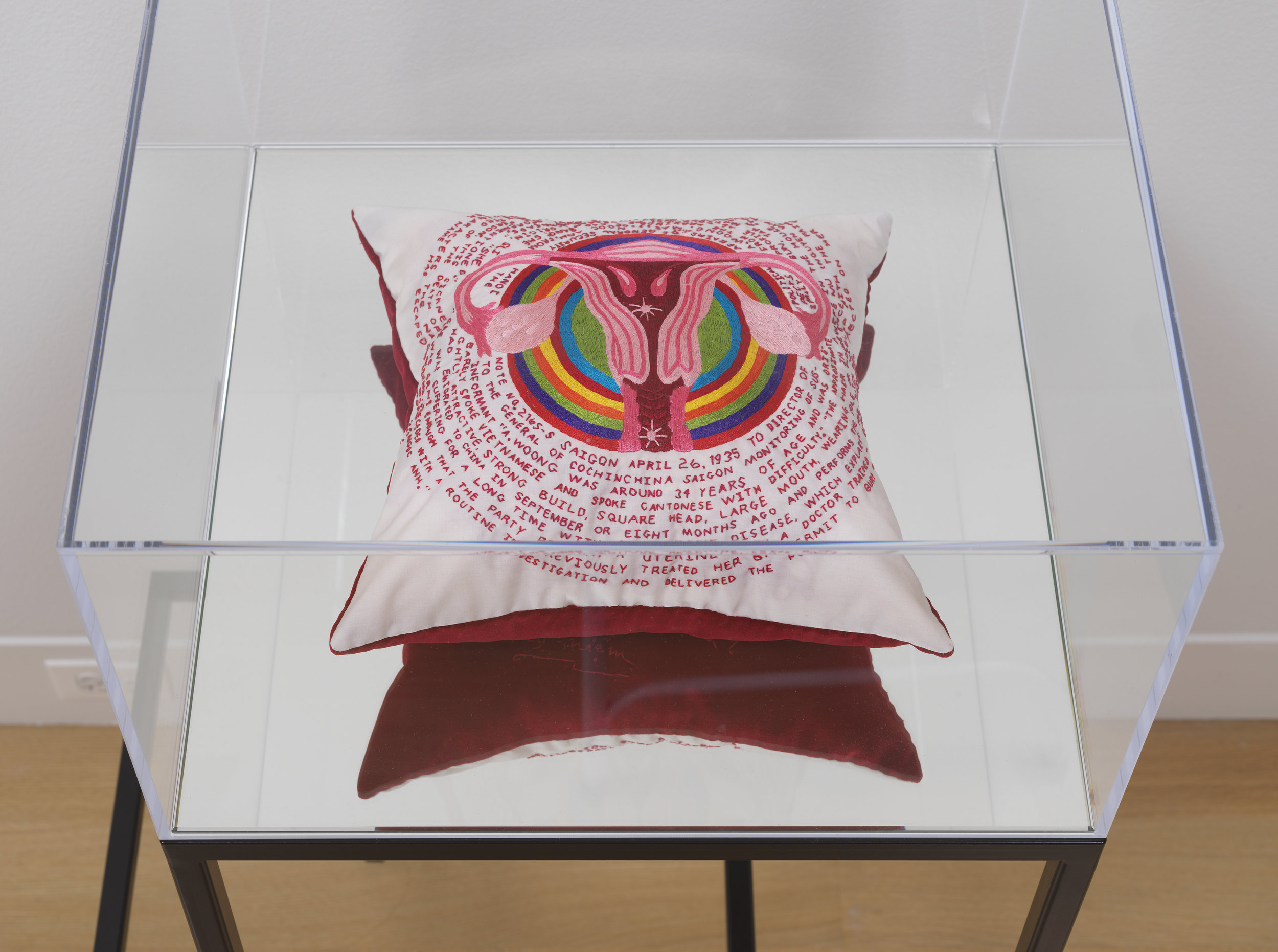
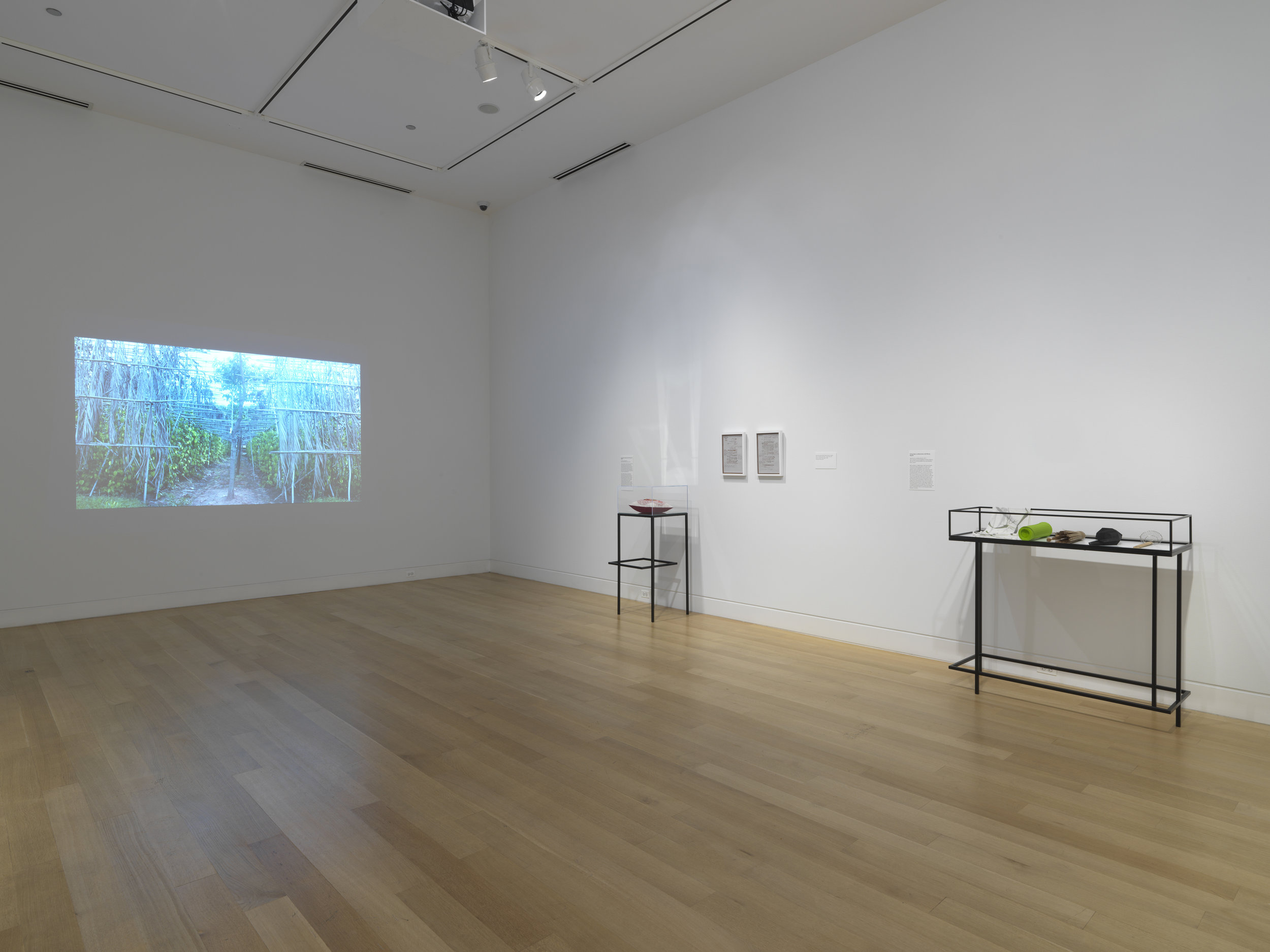
Despite having delved into archives in Vietnam and France, Ngo, whose Vietnamese-Chinese family took refuge in the U.S. a few months after she was born in 1979, can't fix the gaps in the deplorably lacking historical record of Minh Khai. Instead she makes them manifest, reproducing French translations of intercepted letters by laser-cutting them into onionskin paper. The typescript words appear as negative space against a background of teak, a wood introduced to Vietnam by the French at the turn of the last century. A series of all-white puckered drawings bear invisible marks painted with a brush dipped in boiled-rice water, a popular espionage technique of the time. (Displayed adjacent is the iodine solution that makes such transcriptions visible.) An exhibition case filled with common items that would have been used by anti-colonial organizers for coded communication includes, in addition to a scarf and a kitchen strainer, a 3-D-printed buffalo horn, since the original proved inaccessible.
From B. David Zarley, New City Chicago:
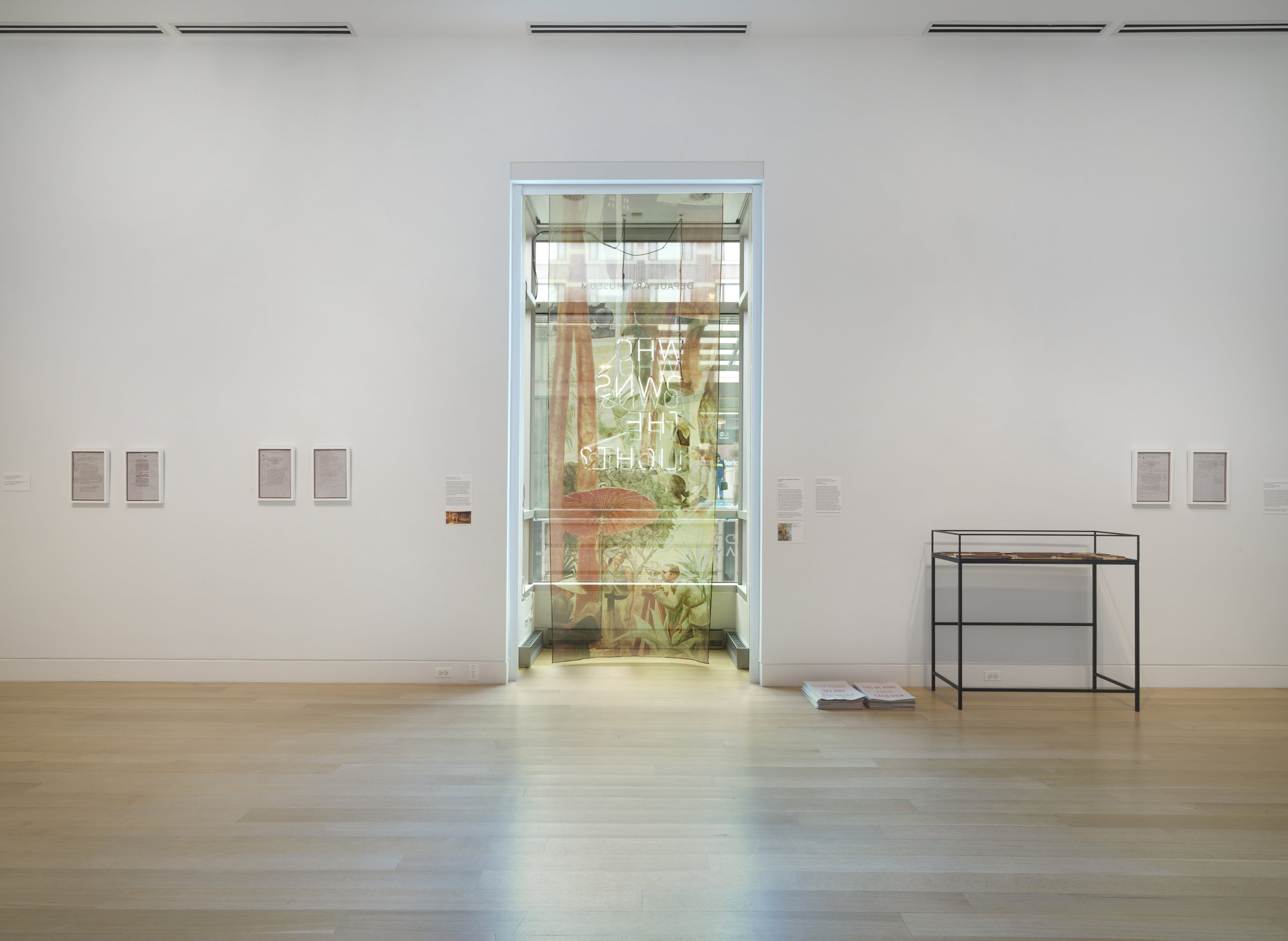
Important, heart-rending, and elucidating, Huong Ngô’s “To Name It Is To See It” feels like nothing less than conceptual magic. The artist’s largest museum presentation to date, it is a show which paradoxically manages to be both freighted with import—themes as heavy as dying stars—and suffused with information but minimal in its presentation. It is approachable and democratic in its design and delivery, a light expression of unbearable being, a funeral shroud or flag. A materially rich distillation of Ngô’s research into the life of 1930s Vietnamese anti-colonial activist Nguyen Thi Minh Khai—done in France and Vietnam—the show both presents the challenges faced by Minh Khai, whipsawed by the colonial government and by the sexism of her rebellious peers, as well as echoes, via themes of spying and surveillance, colonialism and feminism, issues which continue to suffuse the global atmosphere today.
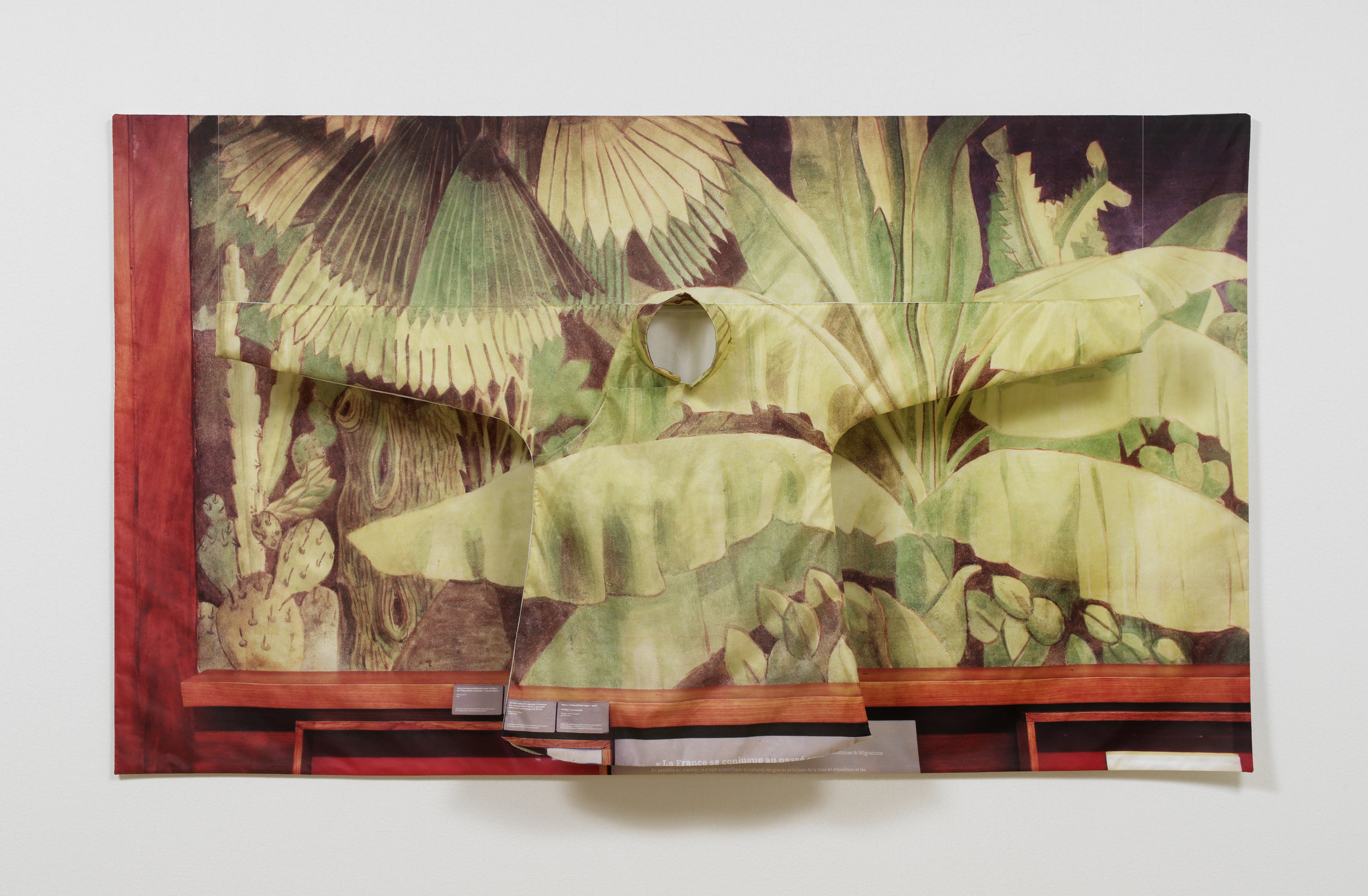
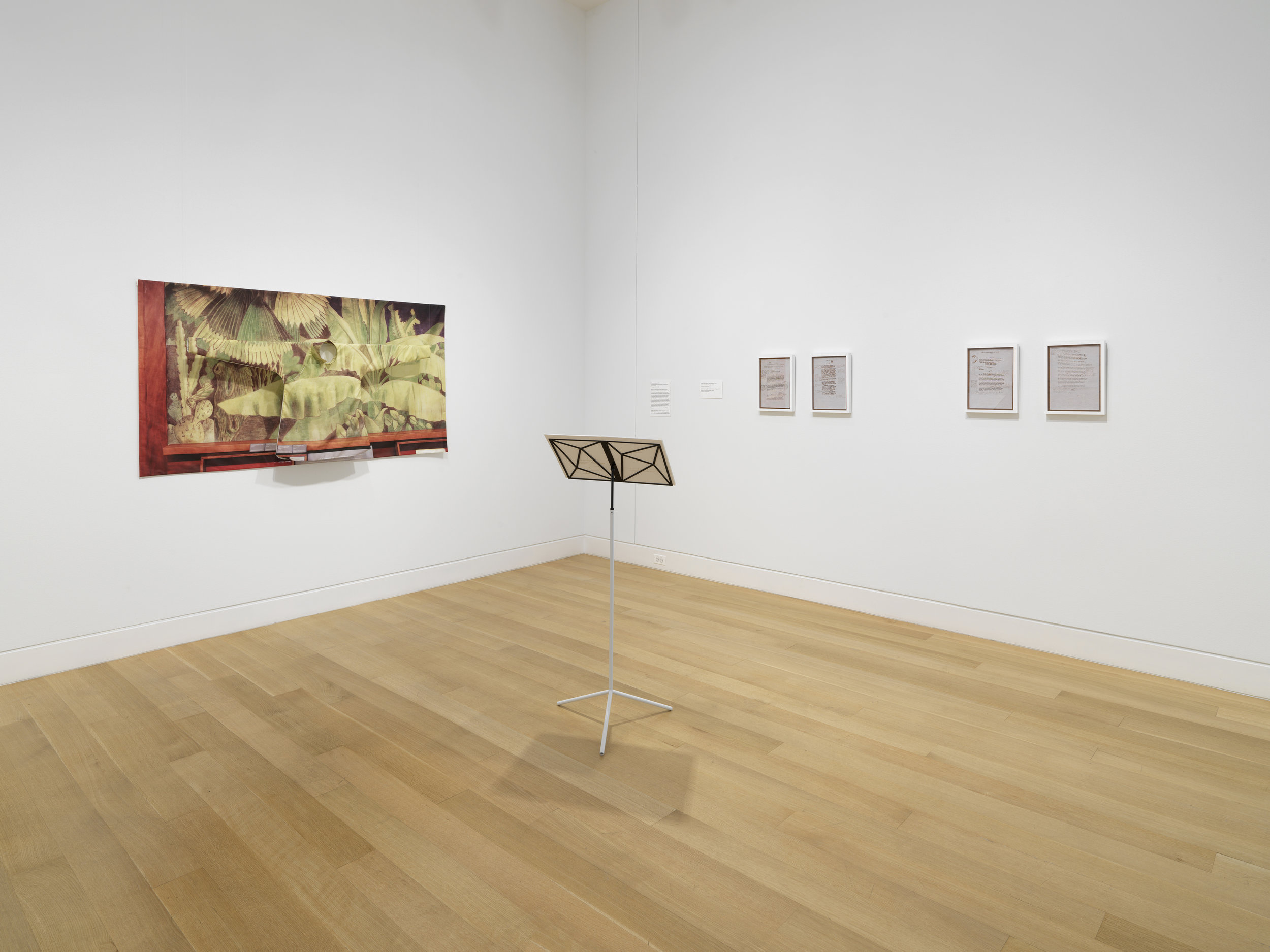
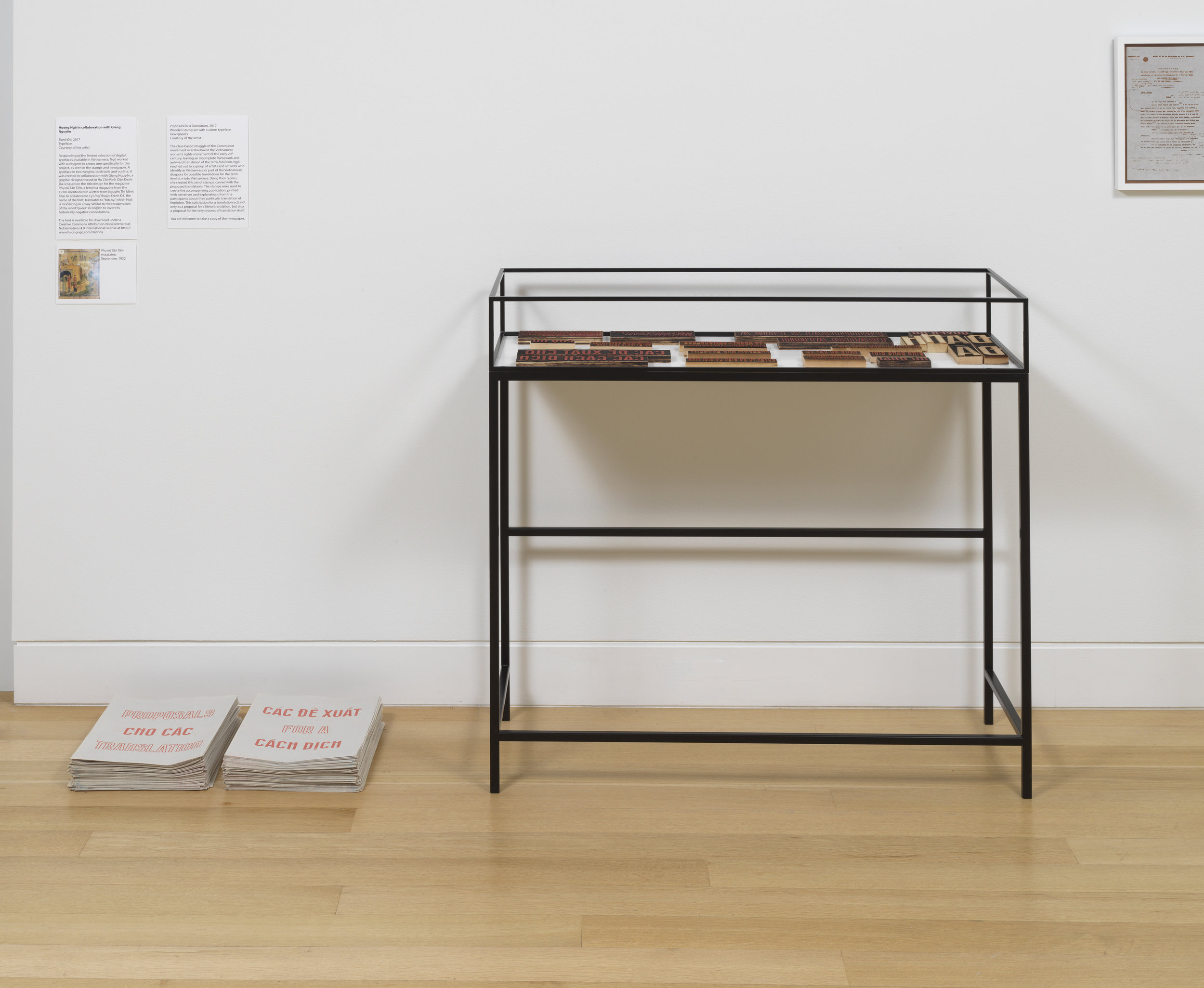
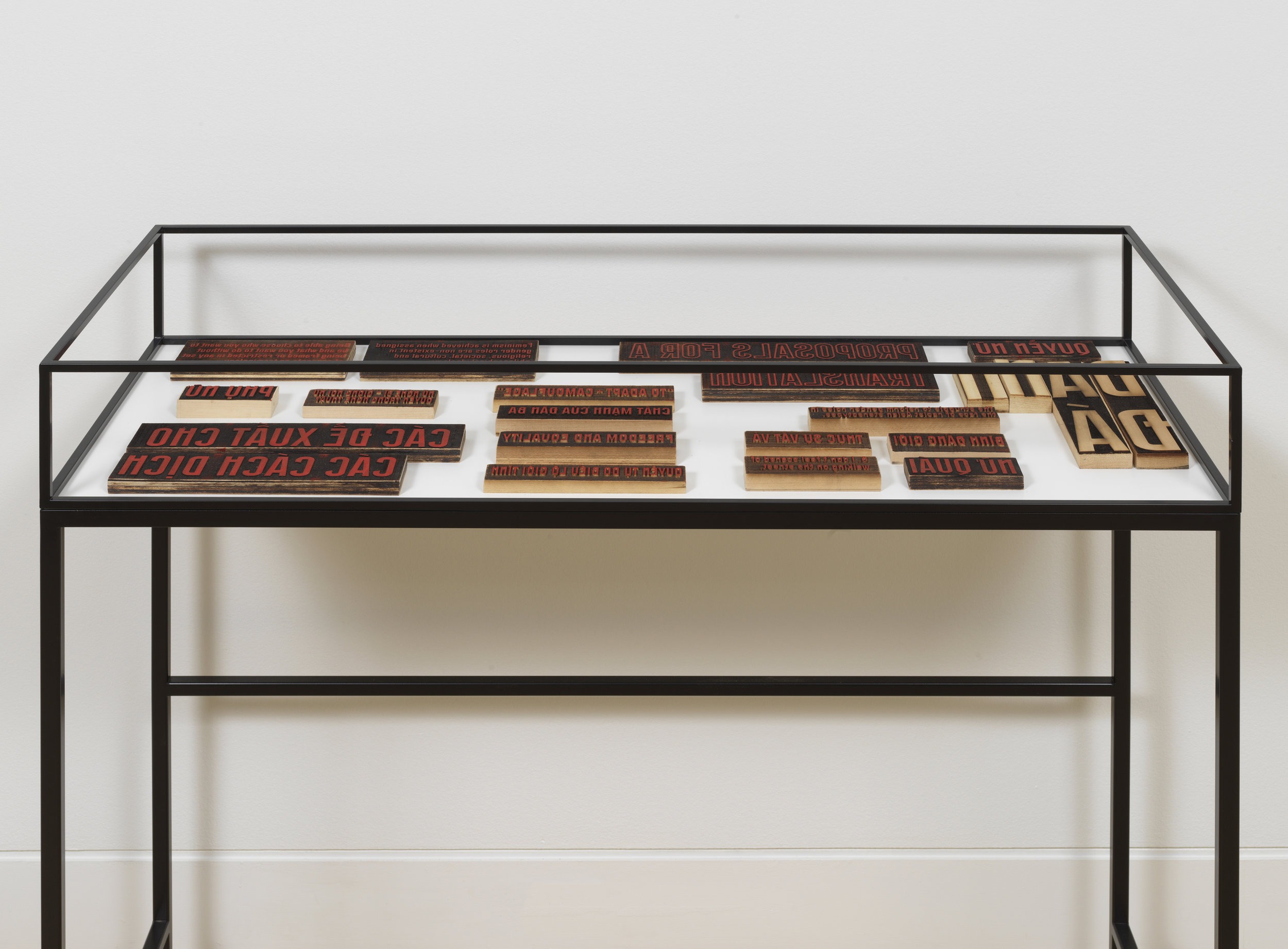
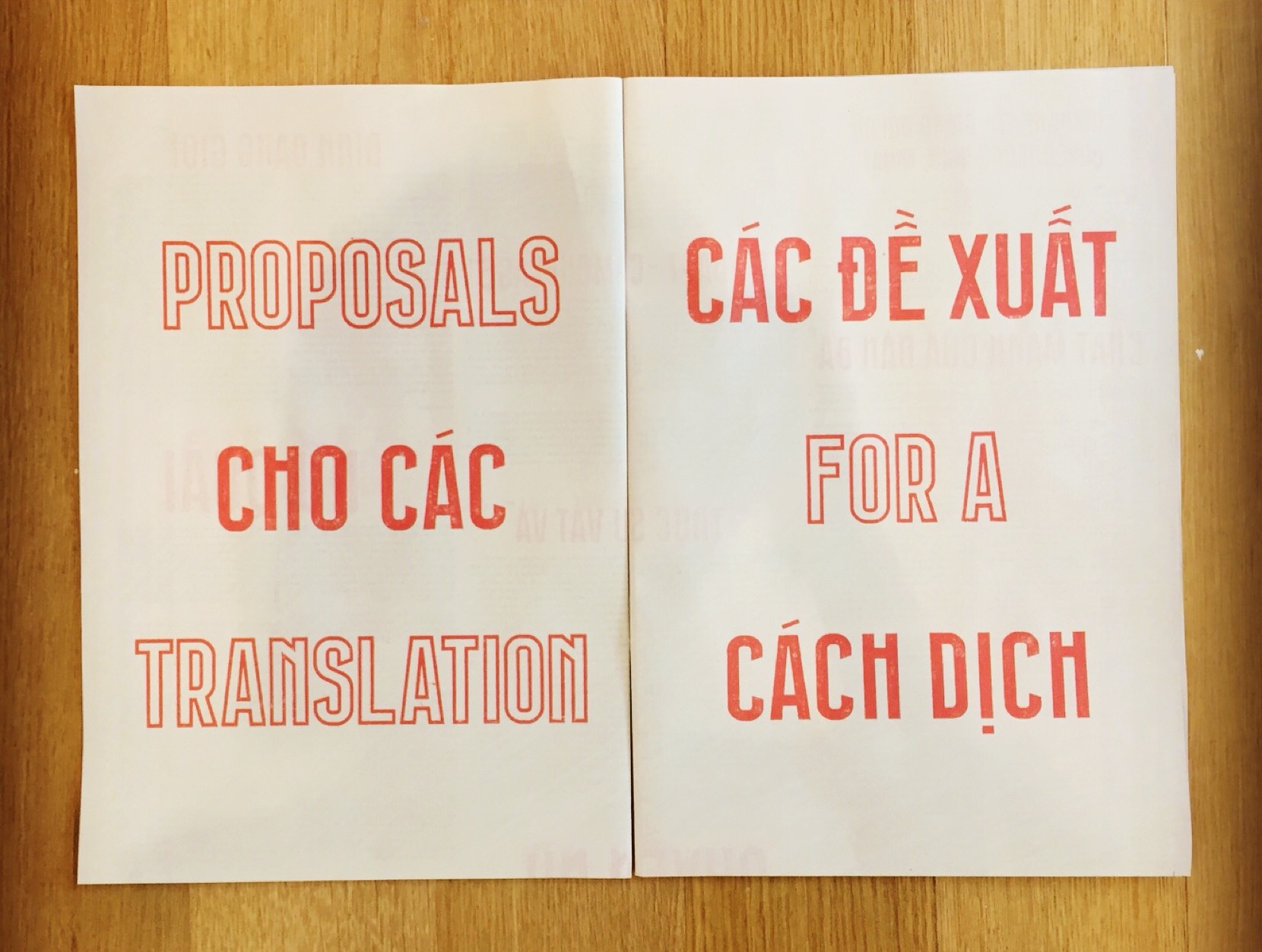
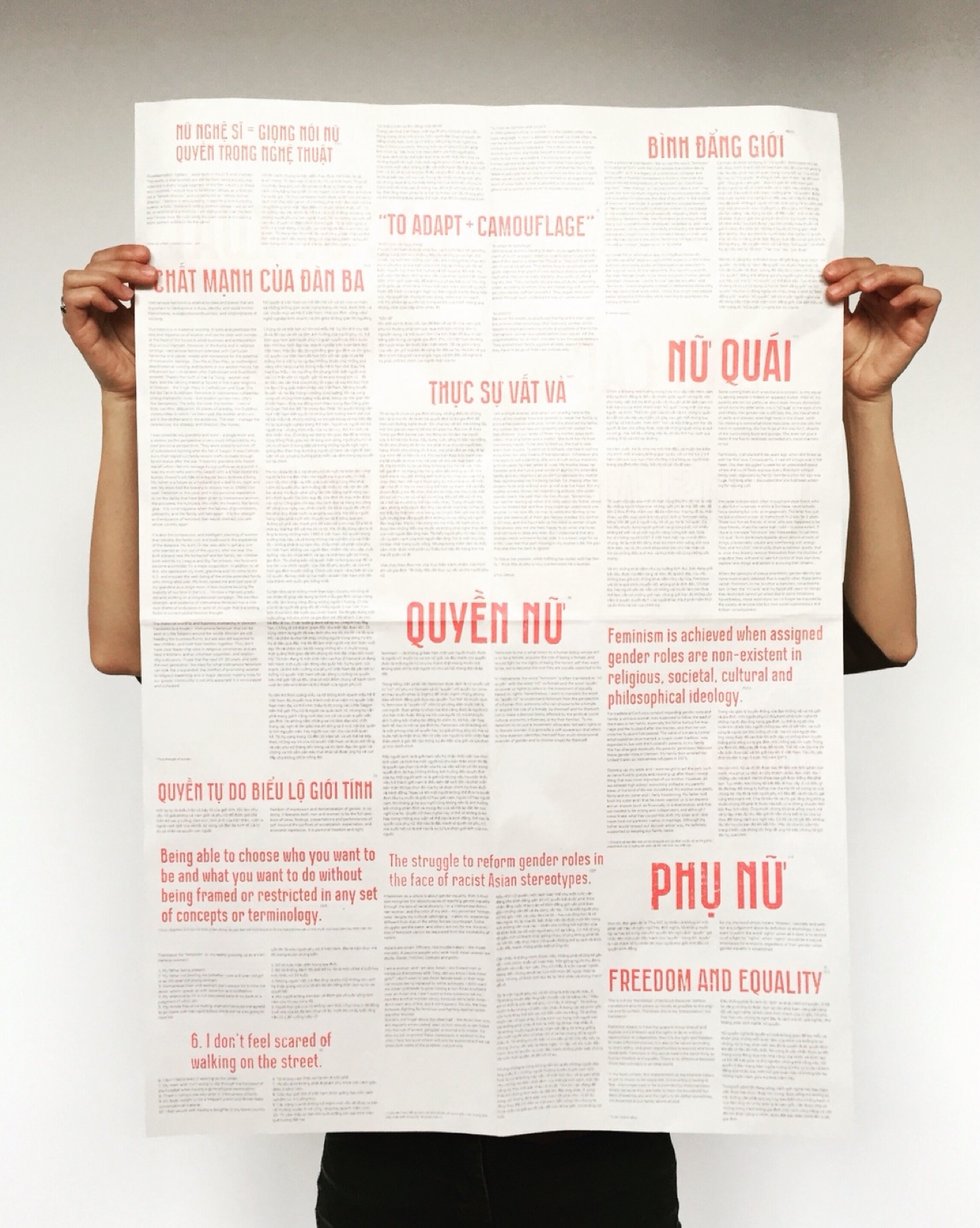
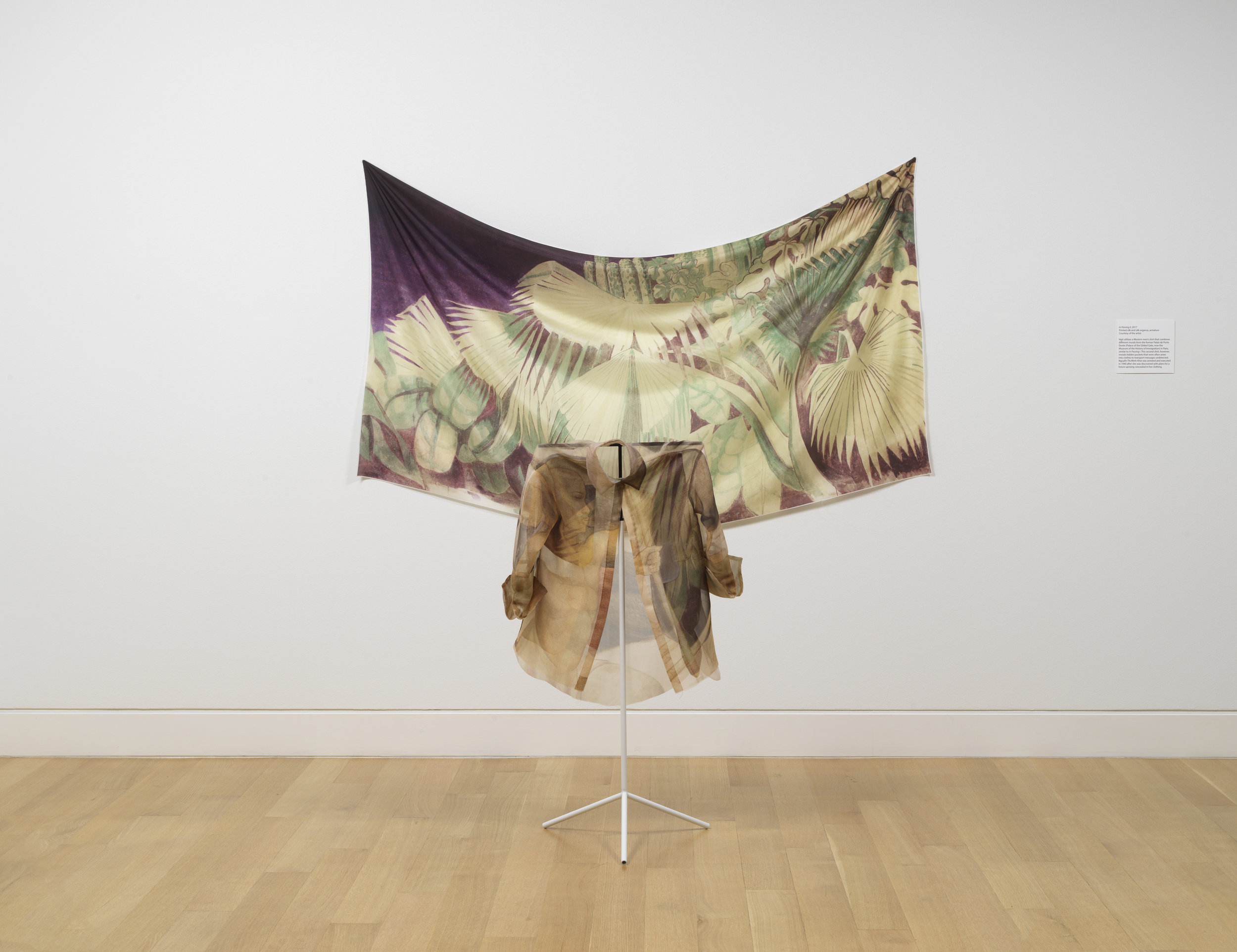
There is a kind of visual reportage to this thoroughly researched and immaculately presented exhibition, with meaning and knowledge infused in every work. The type used in “Proposal for a Translation,” specially designed by Giang Nguyen for the printing of specially commissioned translations of “feminism,” make the very language of the show bespoke. The “In Passing” series consists of two shirts which share their pattern with a mural from the Palace de Porte Dorée, now the Museum of the History of Immigration in Paris. One, a reproduction of a mandarin shirt of the kind Minh Khai wore in photographs circulated by the authorities, blends perfectly into its background, just as the revolutionary did when she subsumed herself in the colonial fabric of Vietnam, hiding as a male skirt maker. The other, set further from the camouflage, has its hidden pockets on view in the light of the gallery; the discovery of plans in such pockets were what led to Minh Khai’s execution.
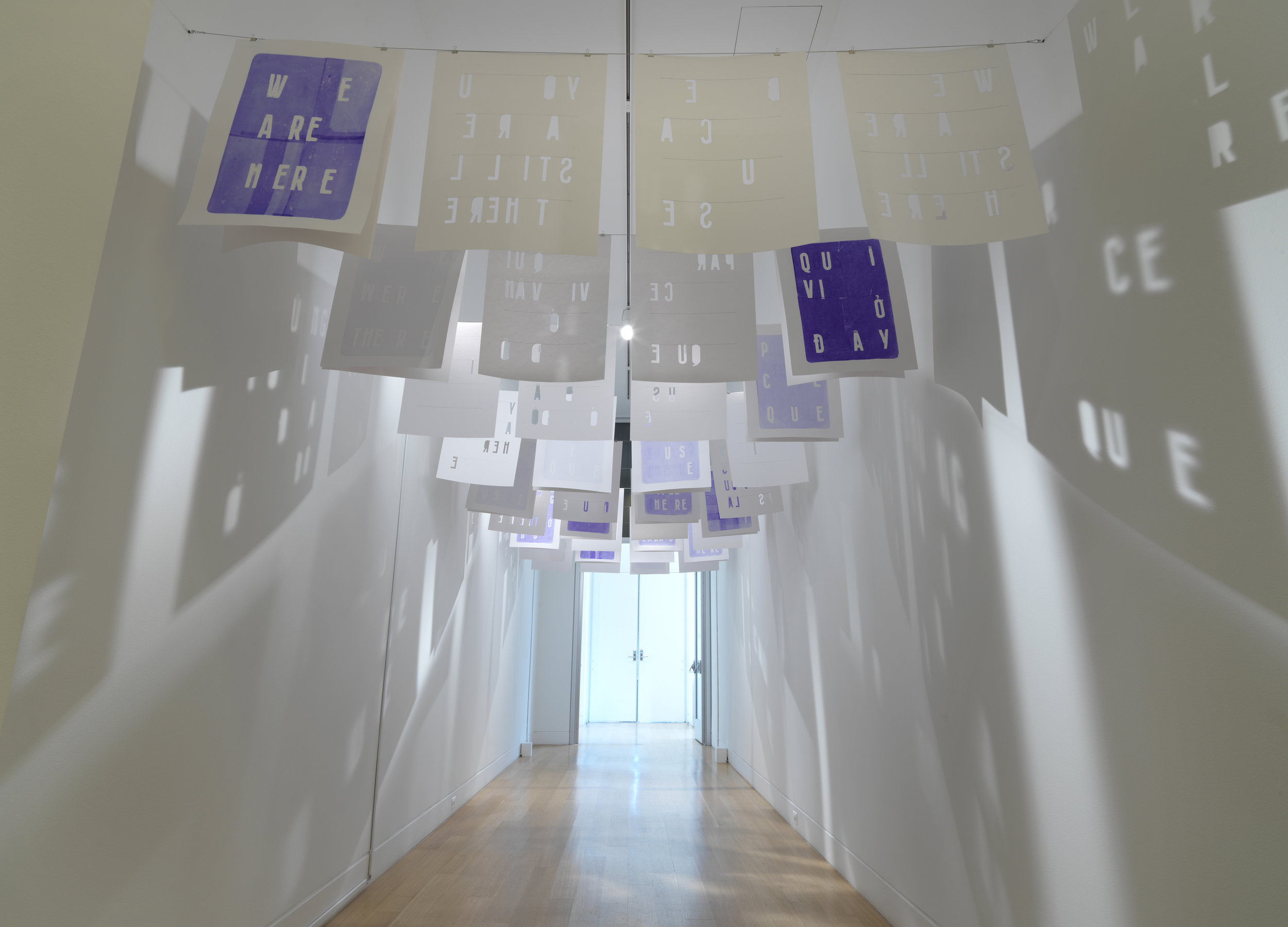
In the thin hallway gallery adjacent to the bulk of the show, prints made with the obsolete hectographic method—the kind used by the anti-colonial activists—use agar-agar, a common Asian dessert ingredient, to display English, Vietnamese and French iterations of the pro-immigration rallying cry “We are here because you were there.” The artist’s royal purple agitprop hangs over the observer’s heads like Damocles’ sword, a powerful reminder that history is written in blood and spoken through the gnashing of teeth. One leaves the show with eyes open, but blurred by now-knowing tears.
Exhibition Publication:
Artist Writings:
Ngô, Hương and Ngọc Nâu. “Future Loops.” Artifact Journal, no. 2. Vietnam Art Collection, 2026.
Ngô, Hương. “Nói Lái.” Performing Documents: Modes of Assembling, edited by Paige Landesberg, 2023.
Press & Scholarly Texts:
Pham, Vinh Phu. “Language and the Right of Refusal.” Art & Market, 22 Aug. 2025.
Nga, Kiều. “Words Set Aflame At ‘The Speaking Place’.” Vietcetera, 19 Aug. 2025.
Behar, Ionit. “Principles, Protest, & Power.” Bridge Journal, vol. 21, no. 1, 2021, pp. 108-109.
Hoang, Quyen. “Lost from View, Hương Ngô.” ArtAsiaPacific, 1 Nov. 2020.
Thụy, Mai. “Cuộc đào xới những phụ nữ 'khuất dạng'.” Tuổi Trẻ, 9 July 2020.
Lane, Nicole. “Art in the Age of Surveillance.” Exhibitions on the Cusp, 22 June 2018.
Waxman, Lori. "This is what intersectional feminist art looks like." Chicago Tribune, 21 June 2017.