
Her Name Escapes Me
Archive-based research, installation, textile, photography, works on paper, performance, artist’s book
2017–ongoing
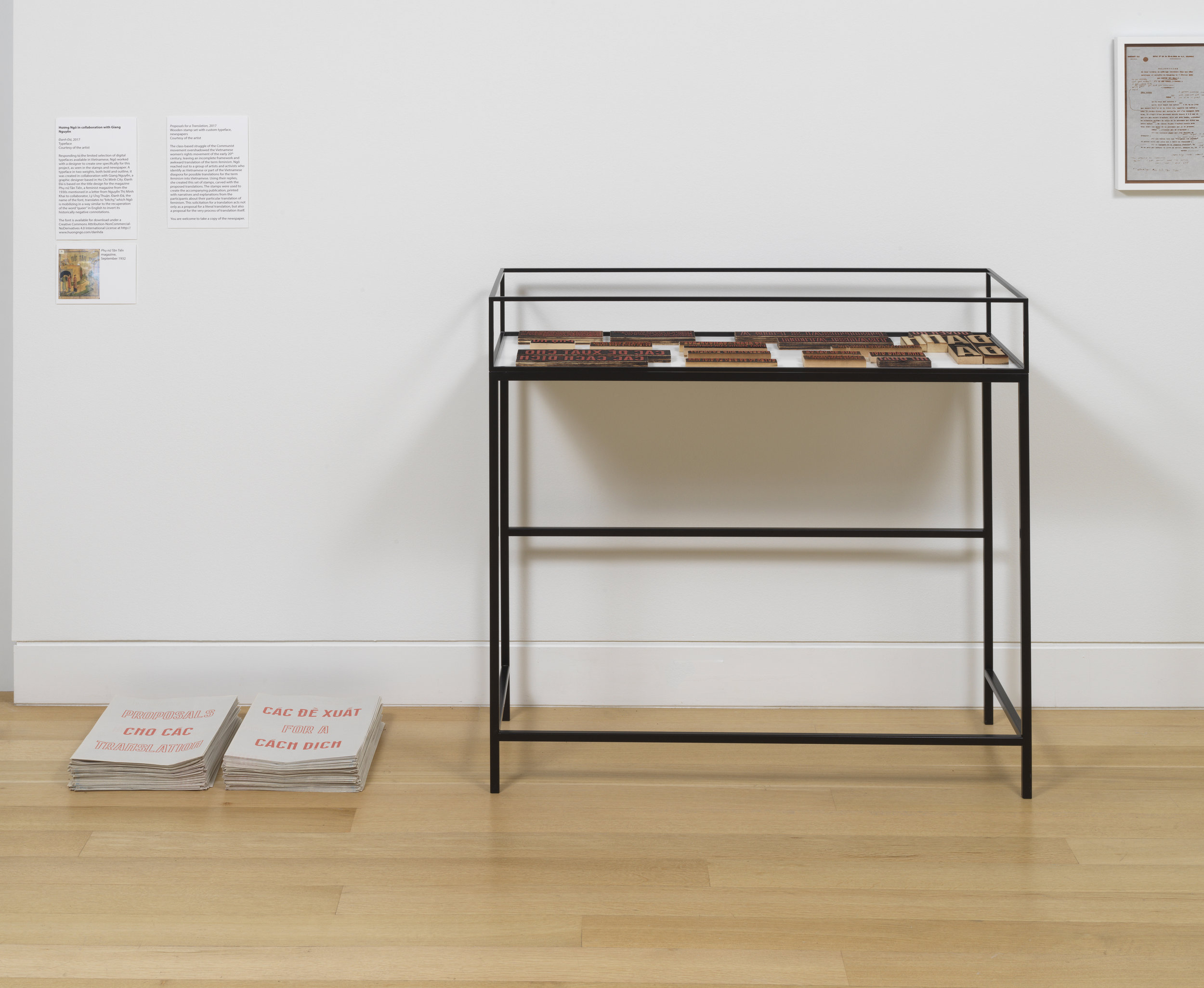
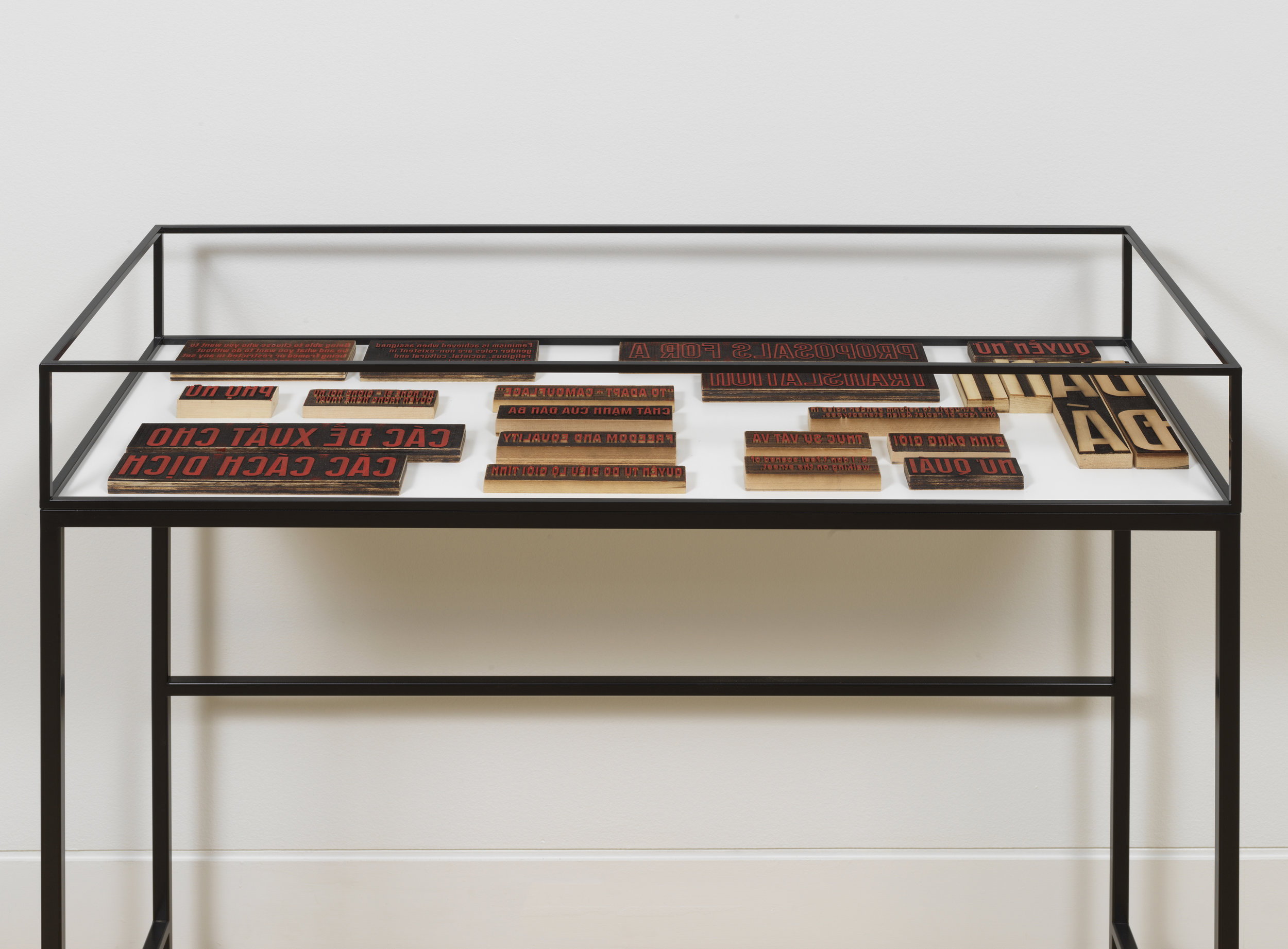
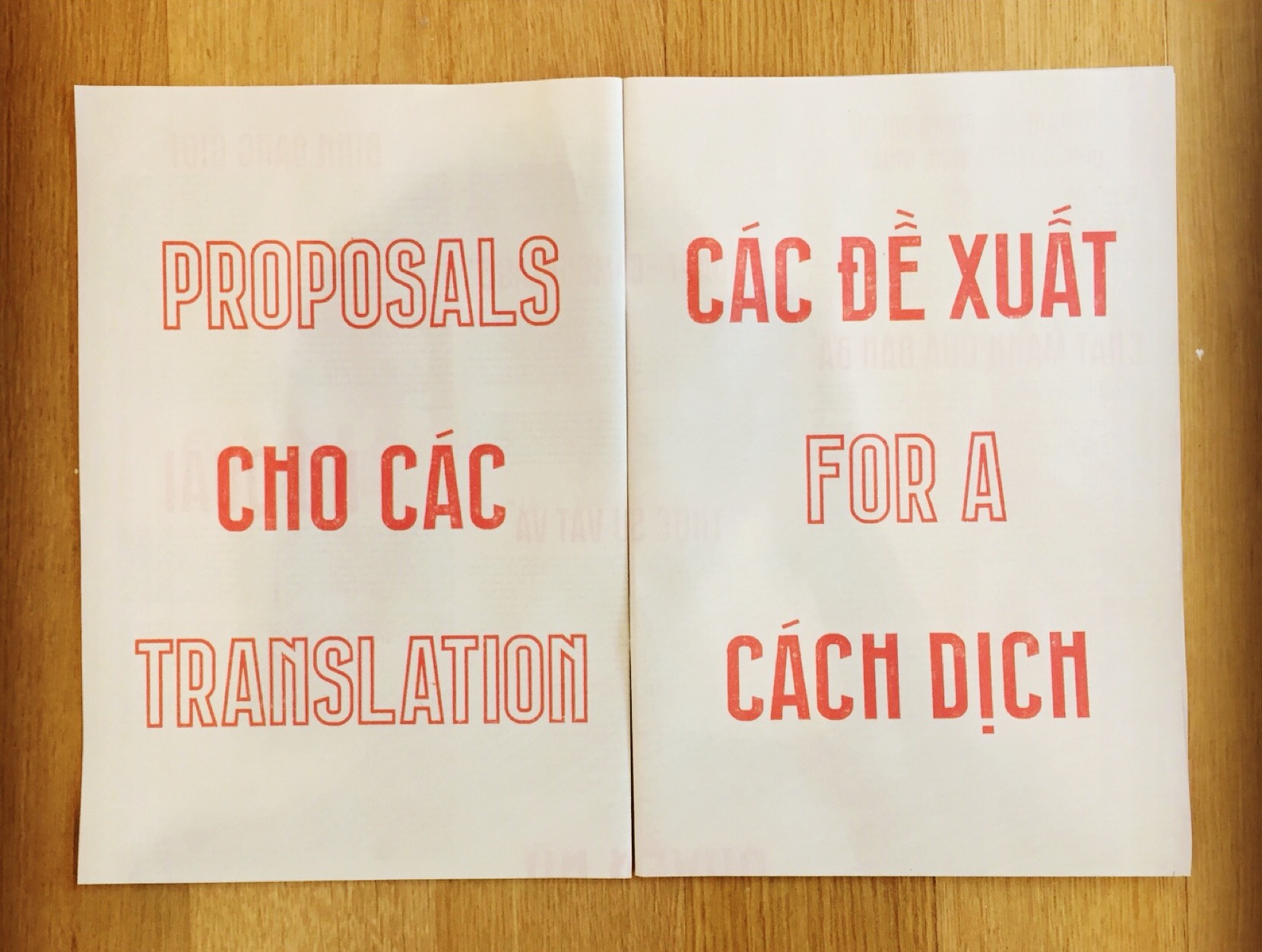
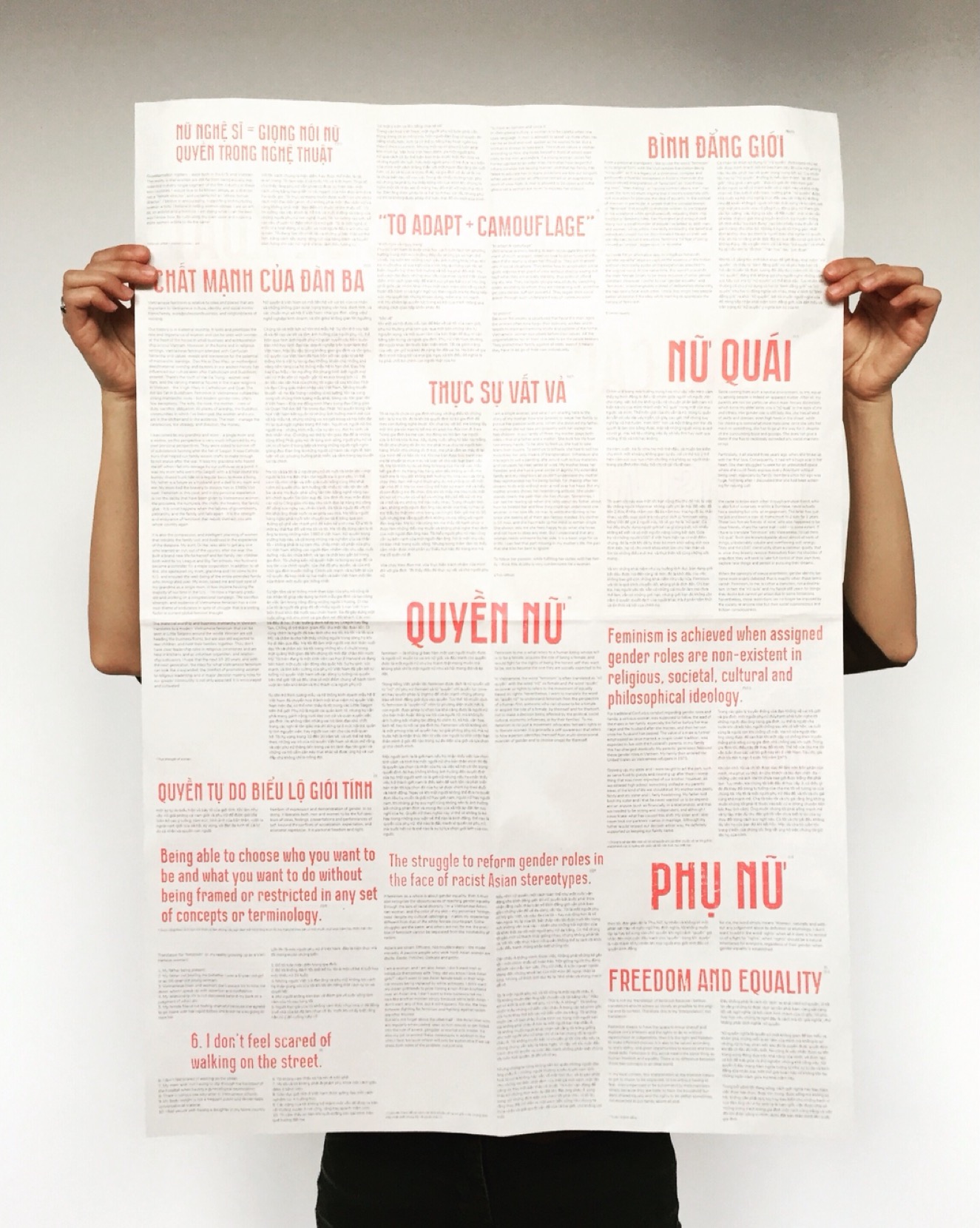
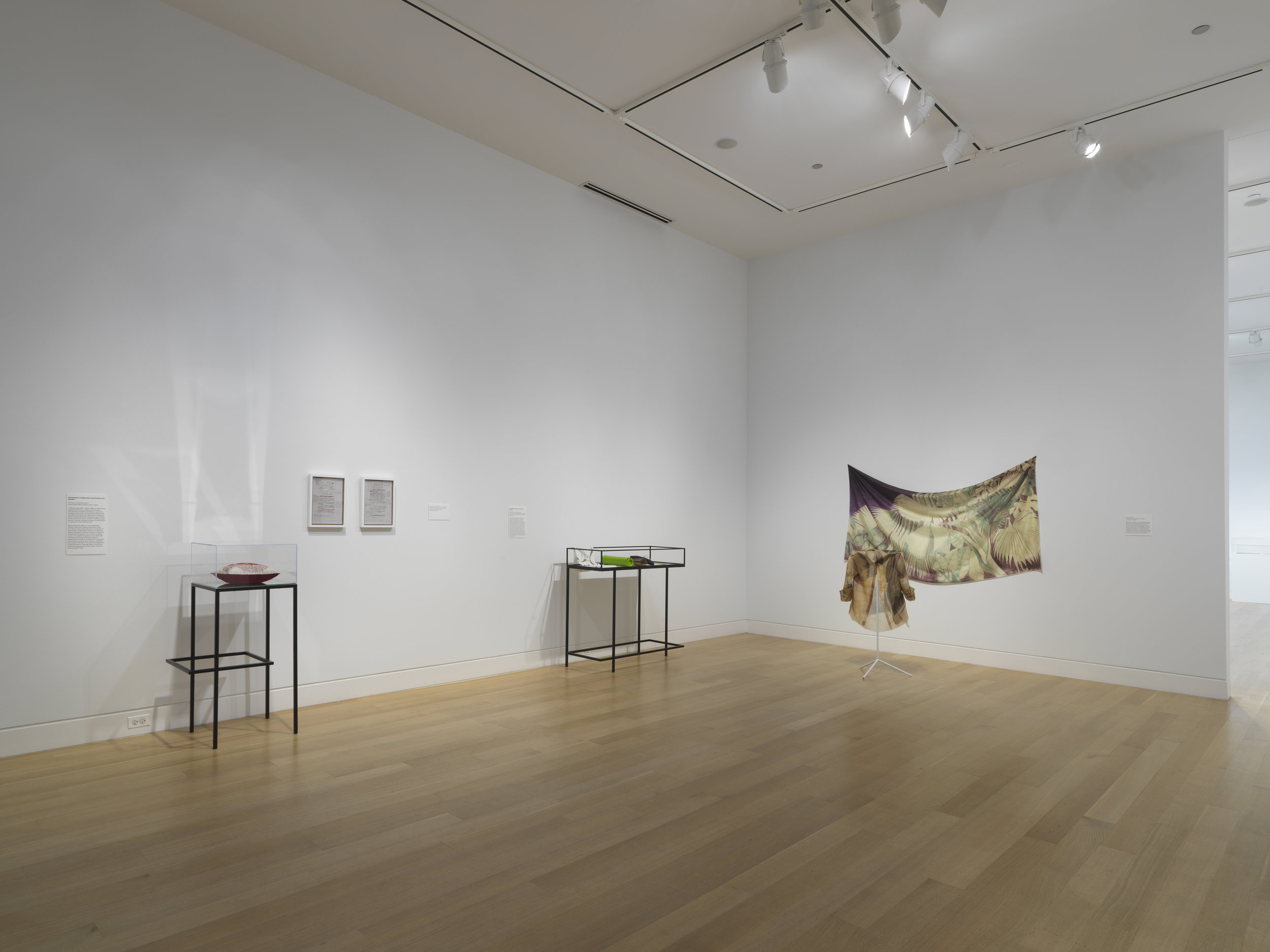
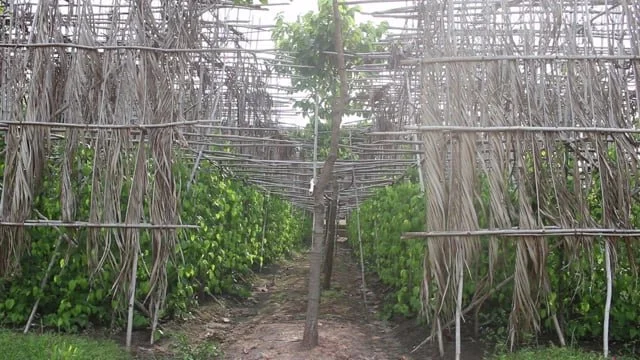
To Name It Is to See It
Press Release
2017
From Exhibition Essay, written by Faye Gleisser:
It was her handwriting that ultimately gave her away.
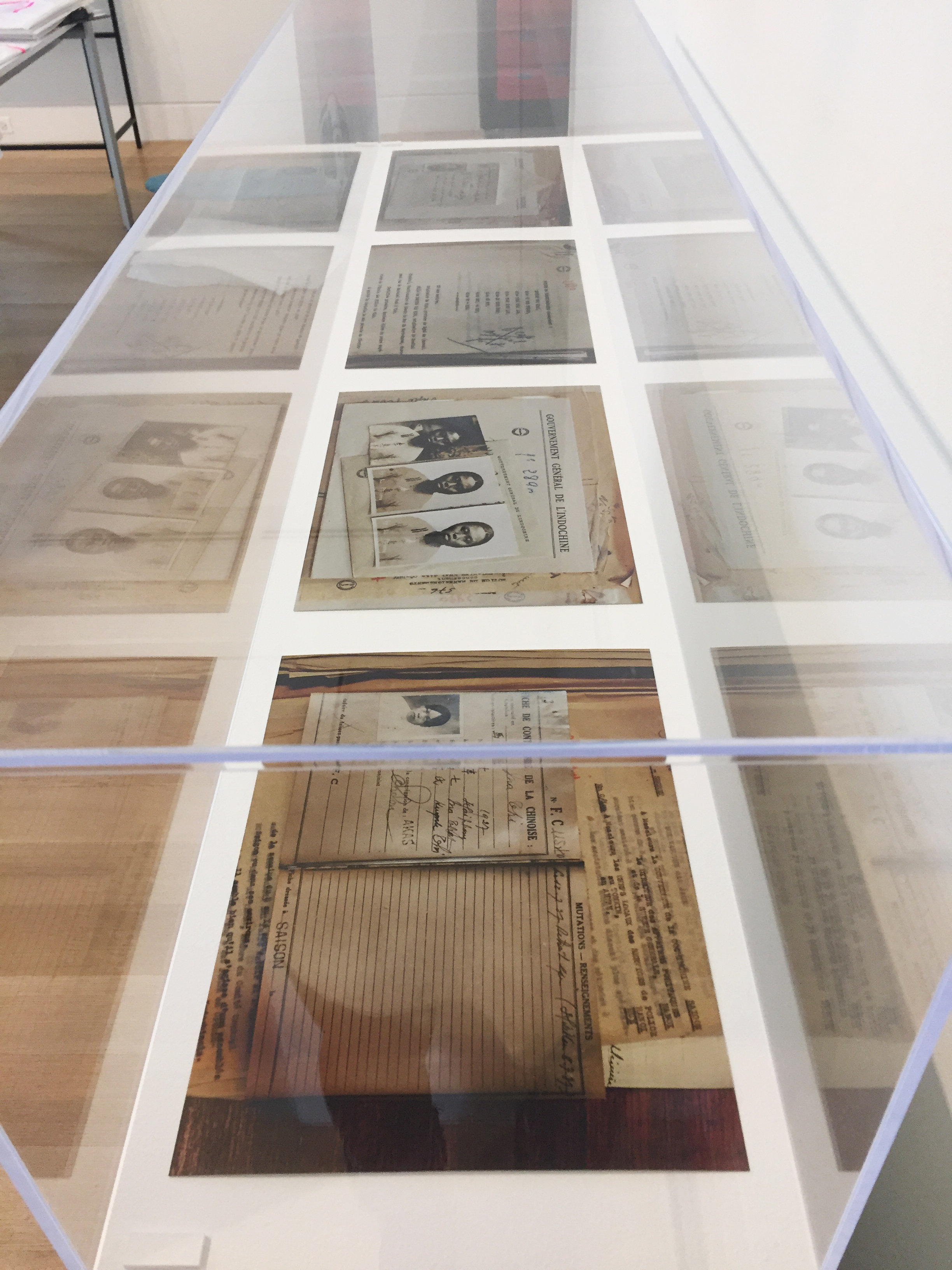
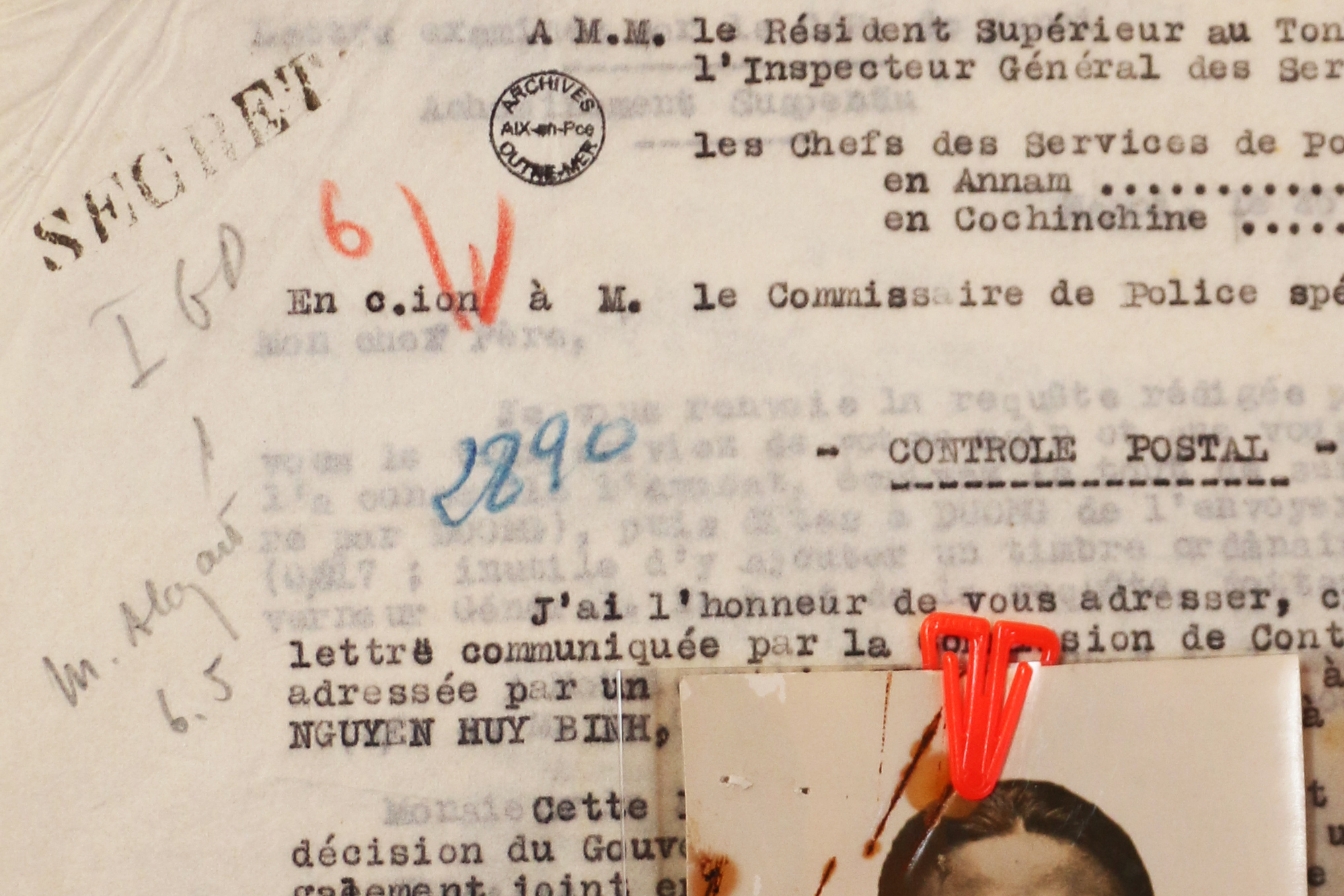
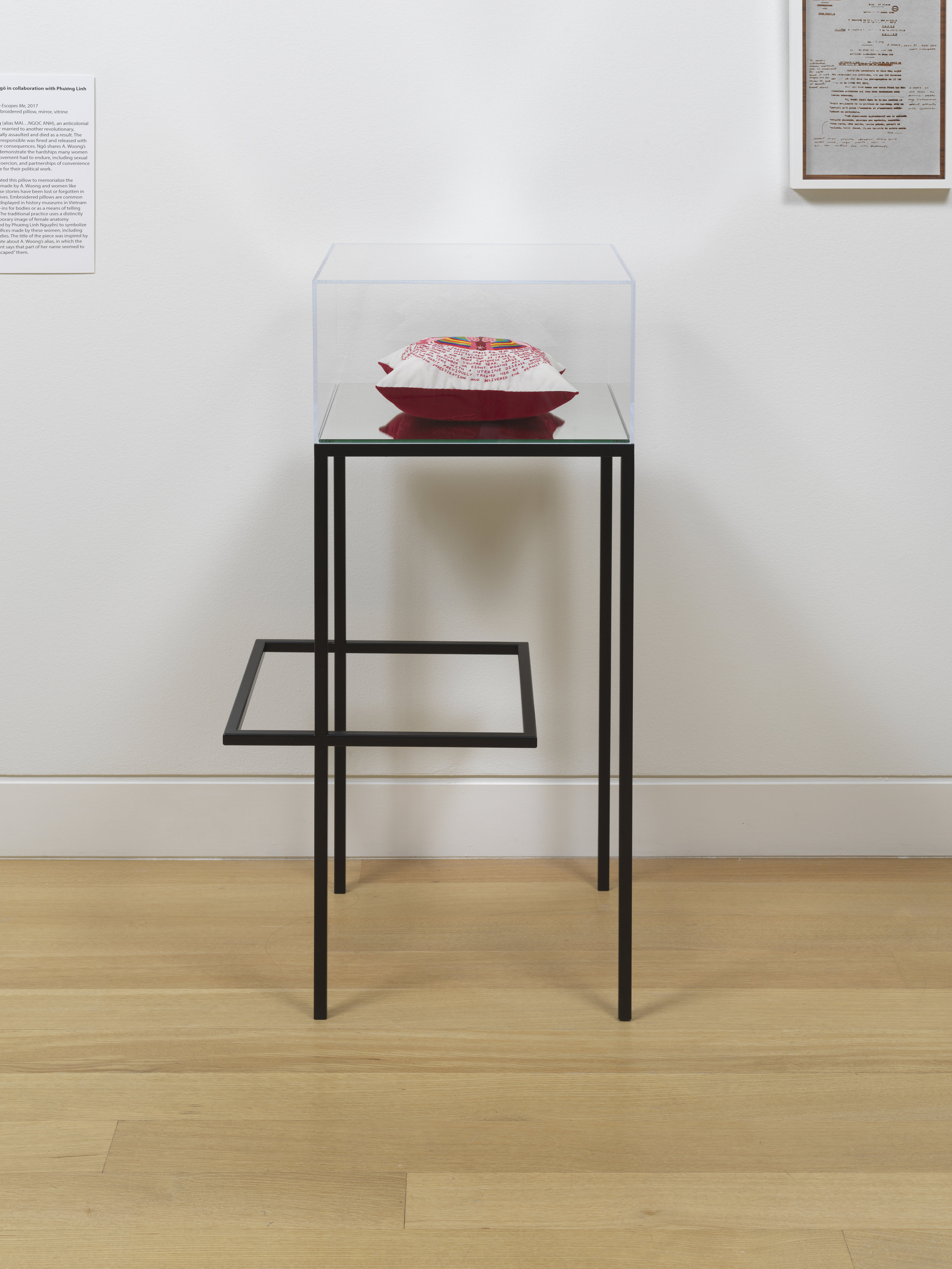
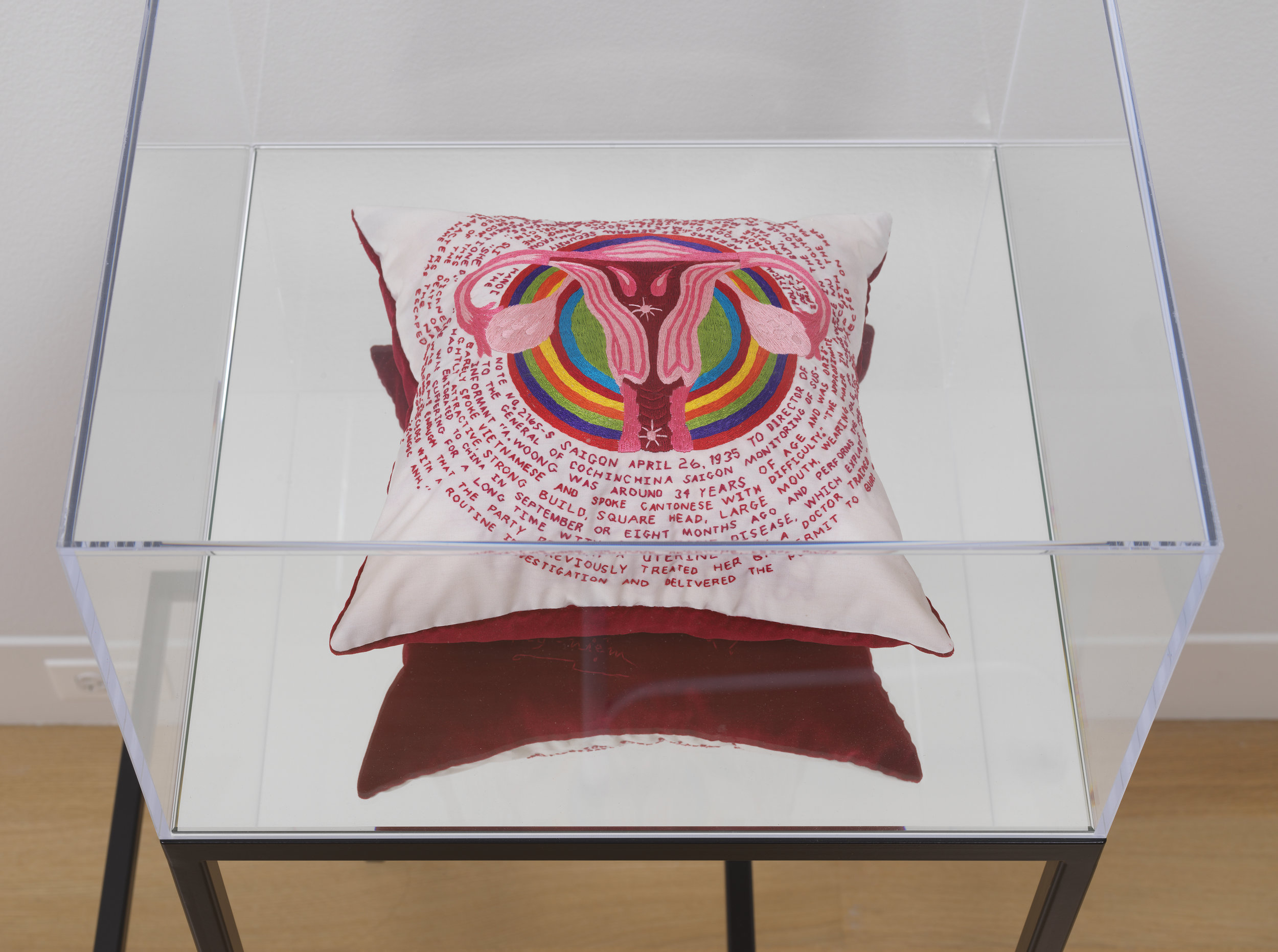
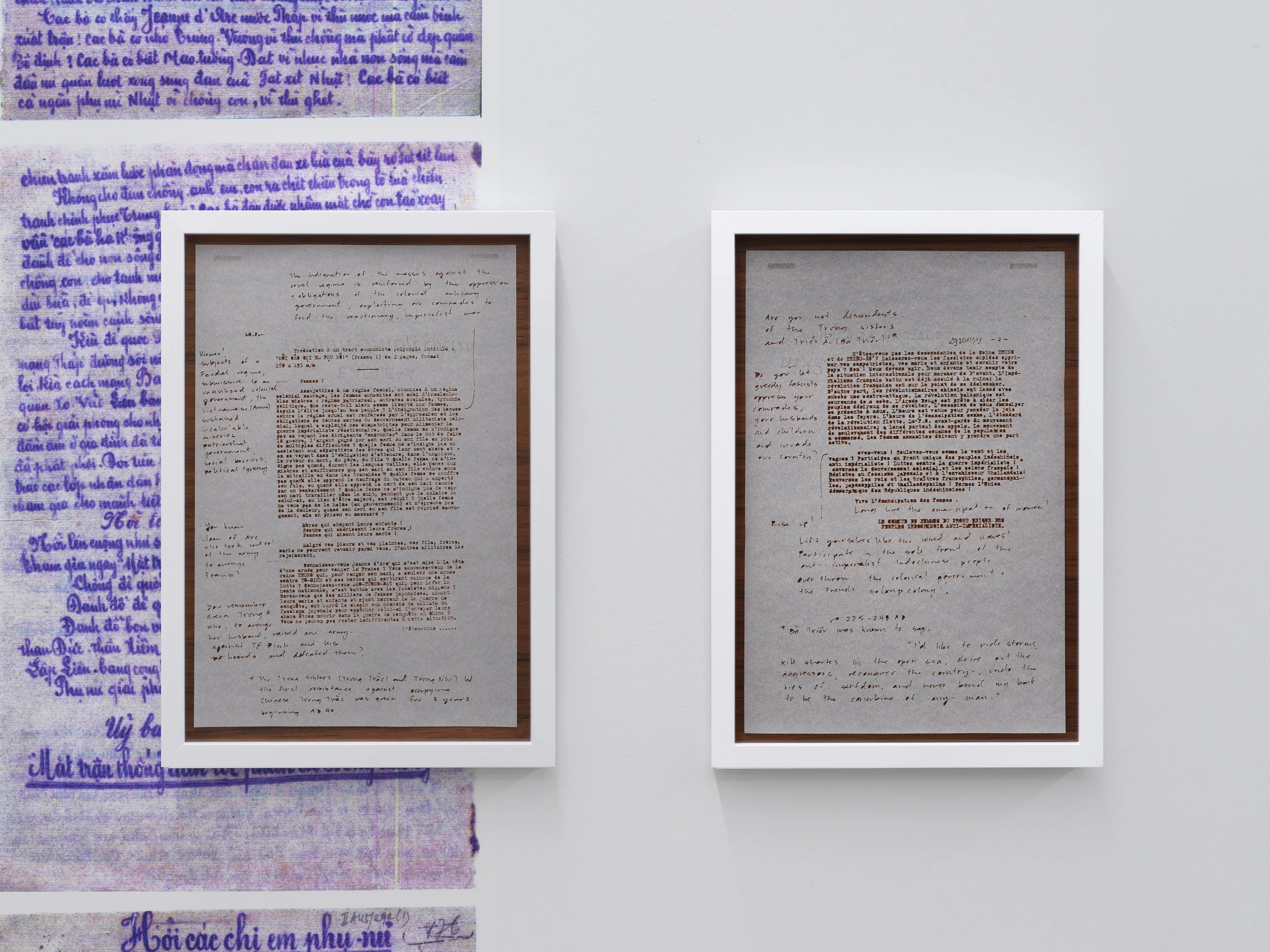
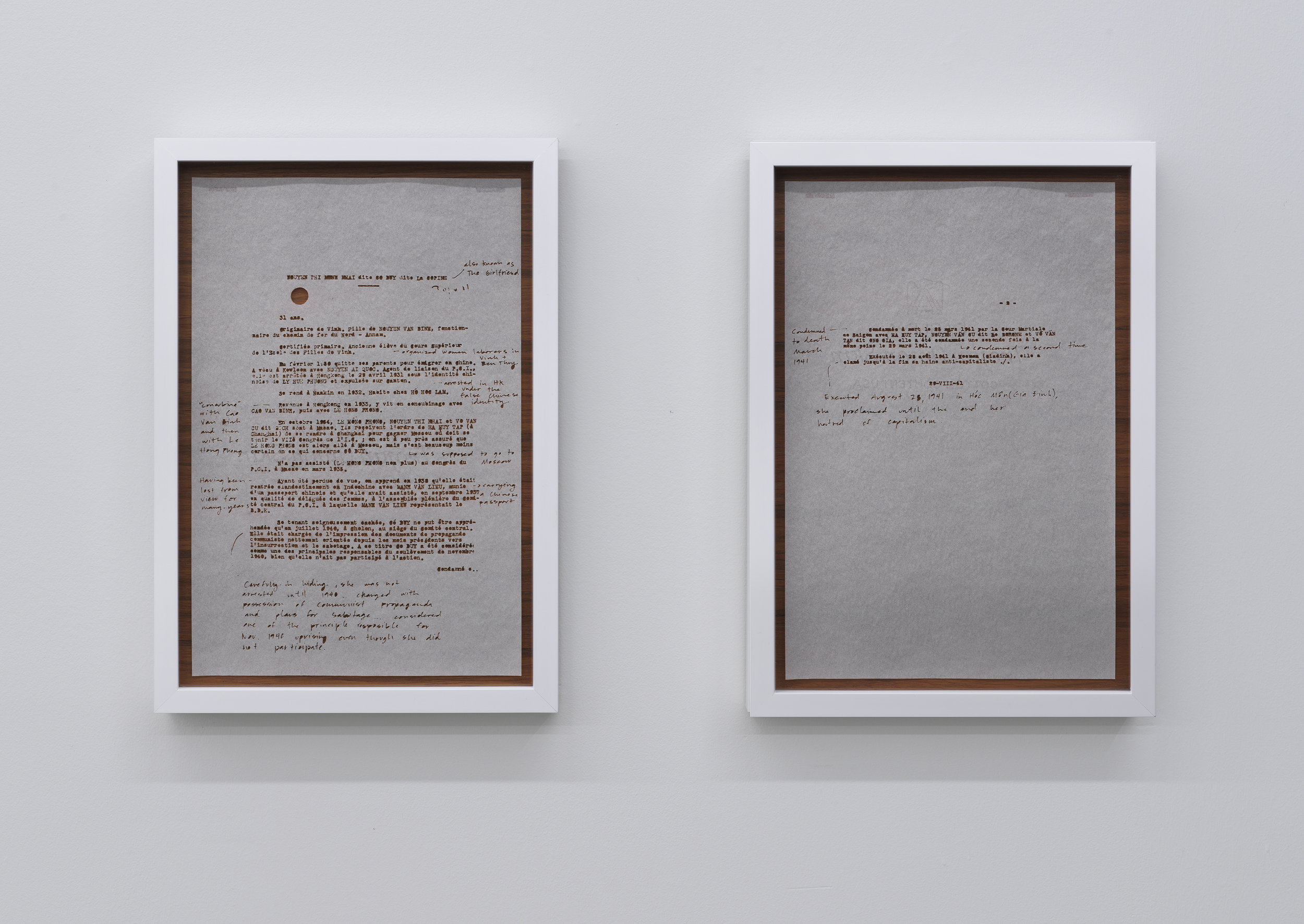
Nguyễn Thị Minh Khai, one of the most celebrated, enigmatic female figures in Vietnamese revolutionary history, was found guilty in 1940 of conspiring against the colonial government when a letter she had authored under the alias “F.L.” was intercepted and analyzed by the Sûreté, the French National Police. In August 1941, Minh Khai and several other leaders of the anticolonial movement were executed by firing squad under the aegis of the French government’s recently instituted ban of the Communist party.
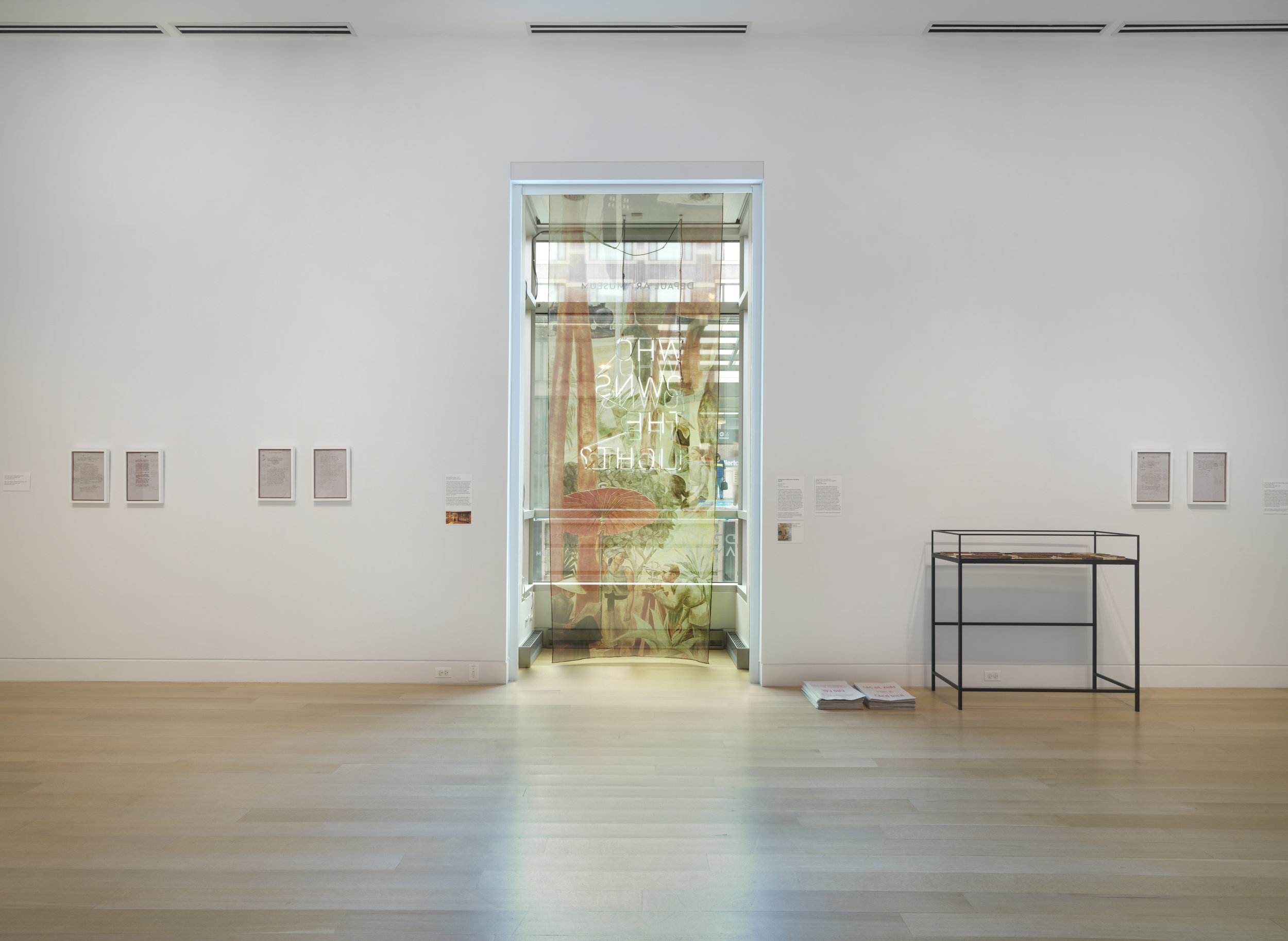
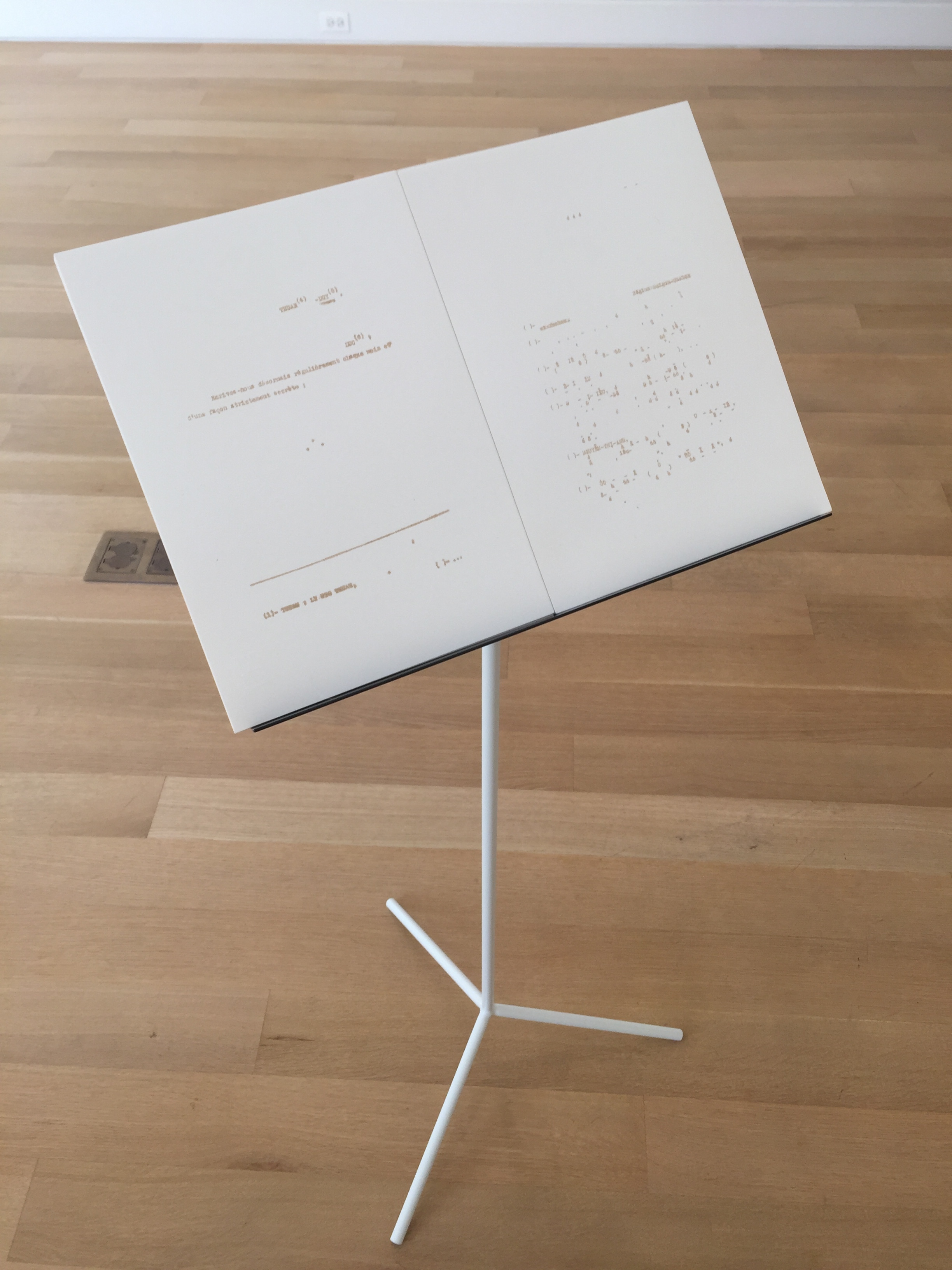
Interdisciplinary artist Hương Ngô’s newest body of research-based artwork, in the exhibition To Name It Is to See It at the DePaul Art Museum, synthesizes these absences and the politics of the colonial record. Rather than repair, and thereby efface, these gaps, her work—which spans installation, sound, video, performance, photography, and printmaking—makes materially manifest the discursive and collective historical process of ideology formation: the making and unmaking of Nguyễn Thị Minh Khai,the event.
View the Exhibition Publication
From Lori Waxman, Chicago Tribune:
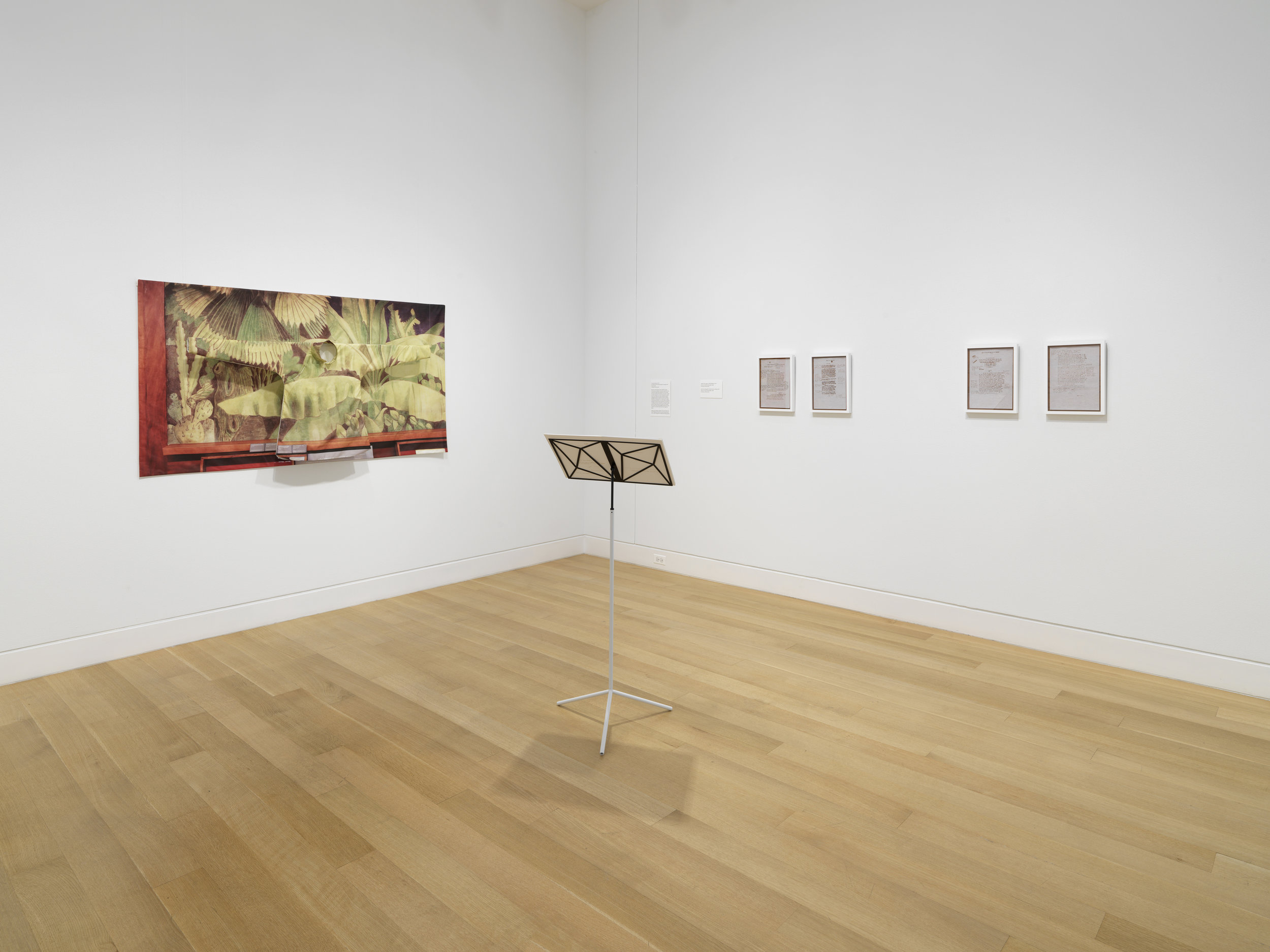
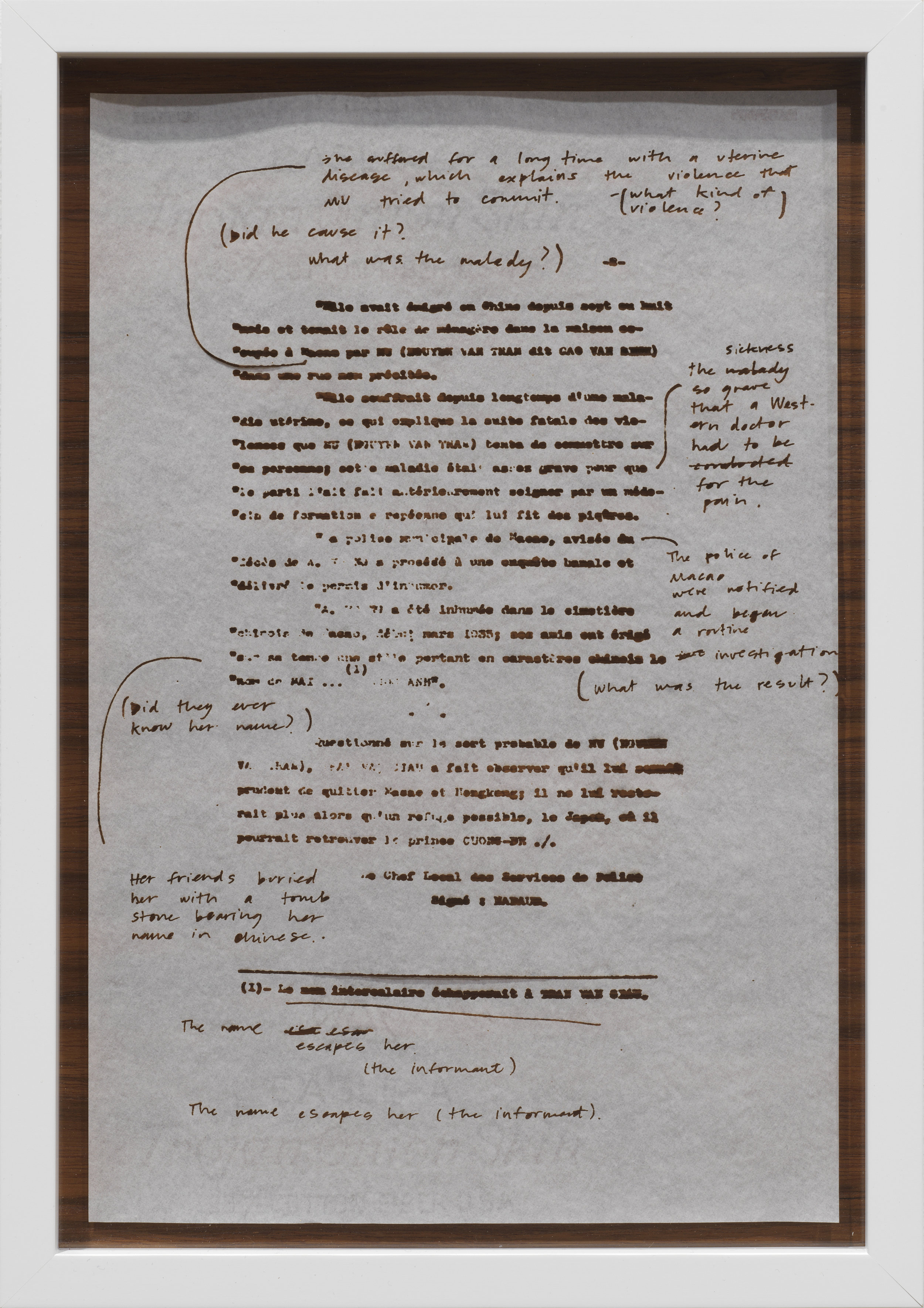
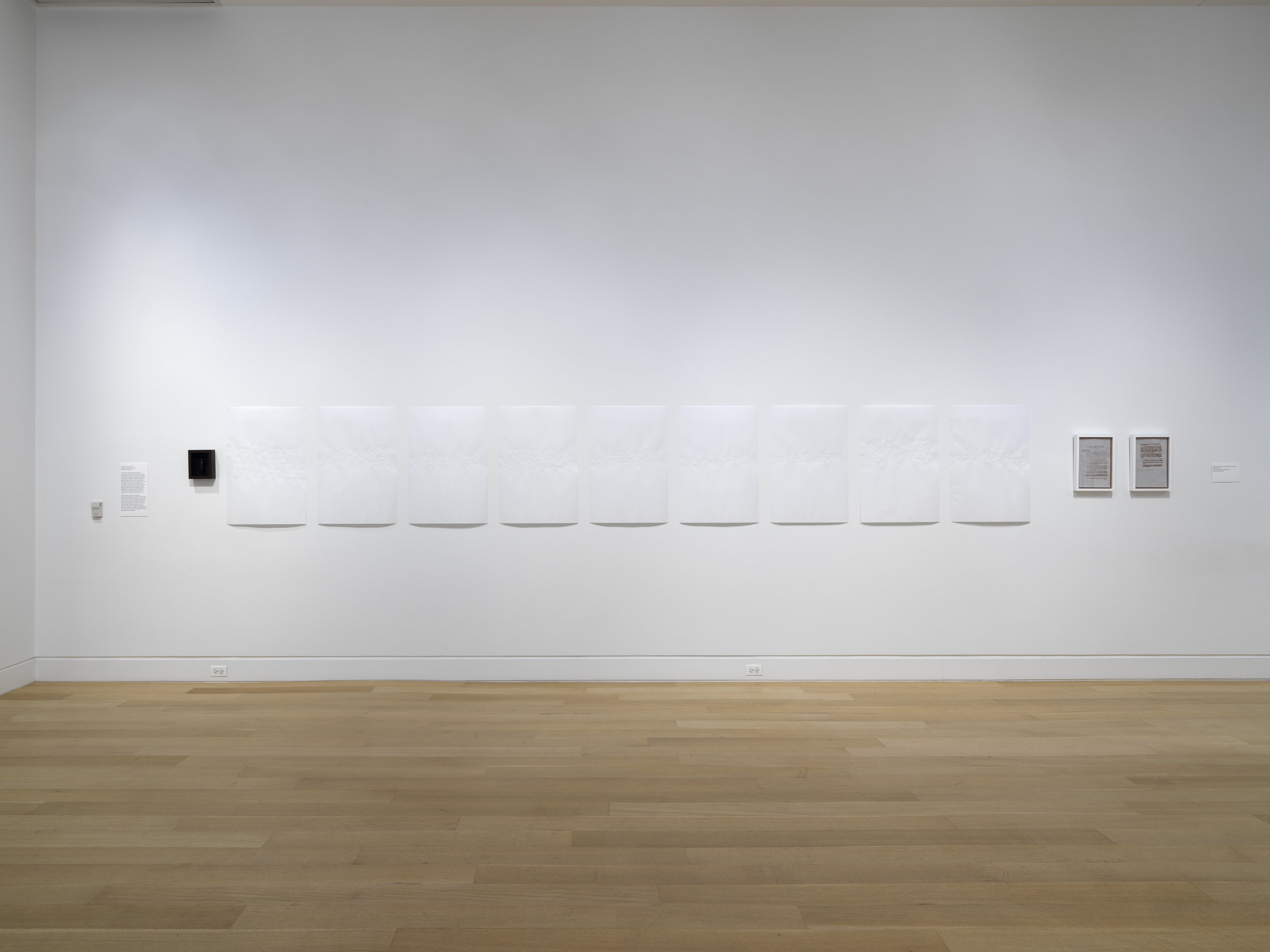
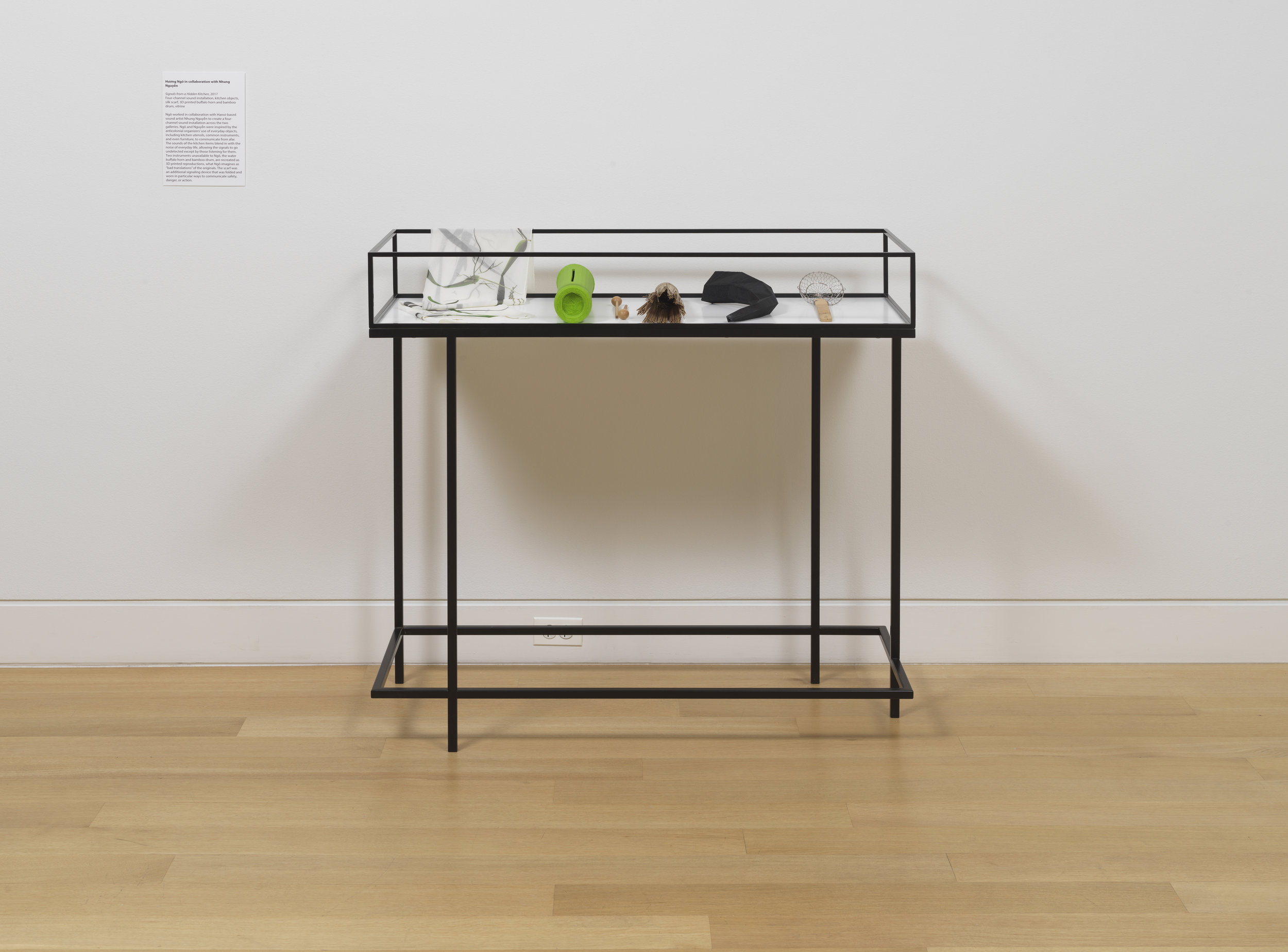
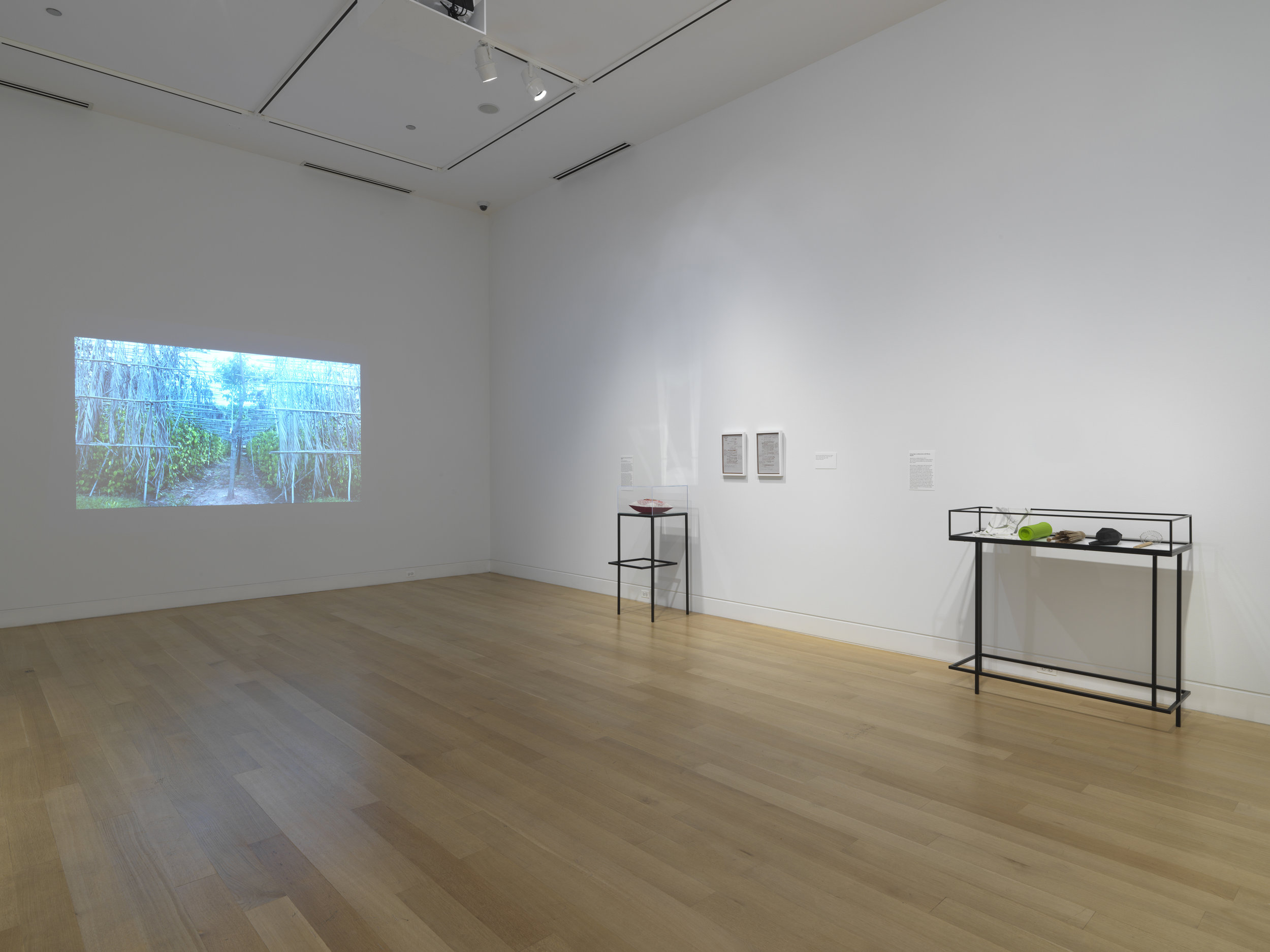
Despite having delved into archives in Vietnam and France, Ngo, whose Vietnamese-Chinese family took refuge in the U.S. a few months after she was born in 1979, can't fix the gaps in the deplorably lacking historical record of Minh Khai. Instead she makes them manifest, reproducing French translations of intercepted letters by laser-cutting them into onionskin paper. The typescript words appear as negative space against a background of teak, a wood introduced to Vietnam by the French at the turn of the last century. A series of all-white puckered drawings bear invisible marks painted with a brush dipped in boiled-rice water, a popular espionage technique of the time. (Displayed adjacent is the iodine solution that makes such transcriptions visible.) An exhibition case filled with common items that would have been used by anti-colonial organizers for coded communication includes, in addition to a scarf and a kitchen strainer, a 3-D-printed buffalo horn, since the original proved inaccessible.
From B. David Zarley, New City Chicago:
Important, heart-rending, and elucidating, Huong Ngô’s “To Name It Is To See It” feels like nothing less than conceptual magic.The artist’s largest museum presentation to date, it is a show which paradoxically manages to be both freighted with import—themes as heavy as dying stars—and suffused with information but minimal in its presentation. It is approachable and democratic in its design and delivery, a light expression of unbearable being, a funeral shroud or flag. A materially rich distillation of Ngô’s research into the life of 1930s Vietnamese anti-colonial activist Nguyen Thi Minh Khai—done in France and Vietnam—the show both presents the challenges faced by Minh Khai, whipsawed by the colonial government and by the sexism of her rebellious peers, as well as echoes, via themes of spying and surveillance, colonialism and feminism, issues which continue to suffuse the global atmosphere today.
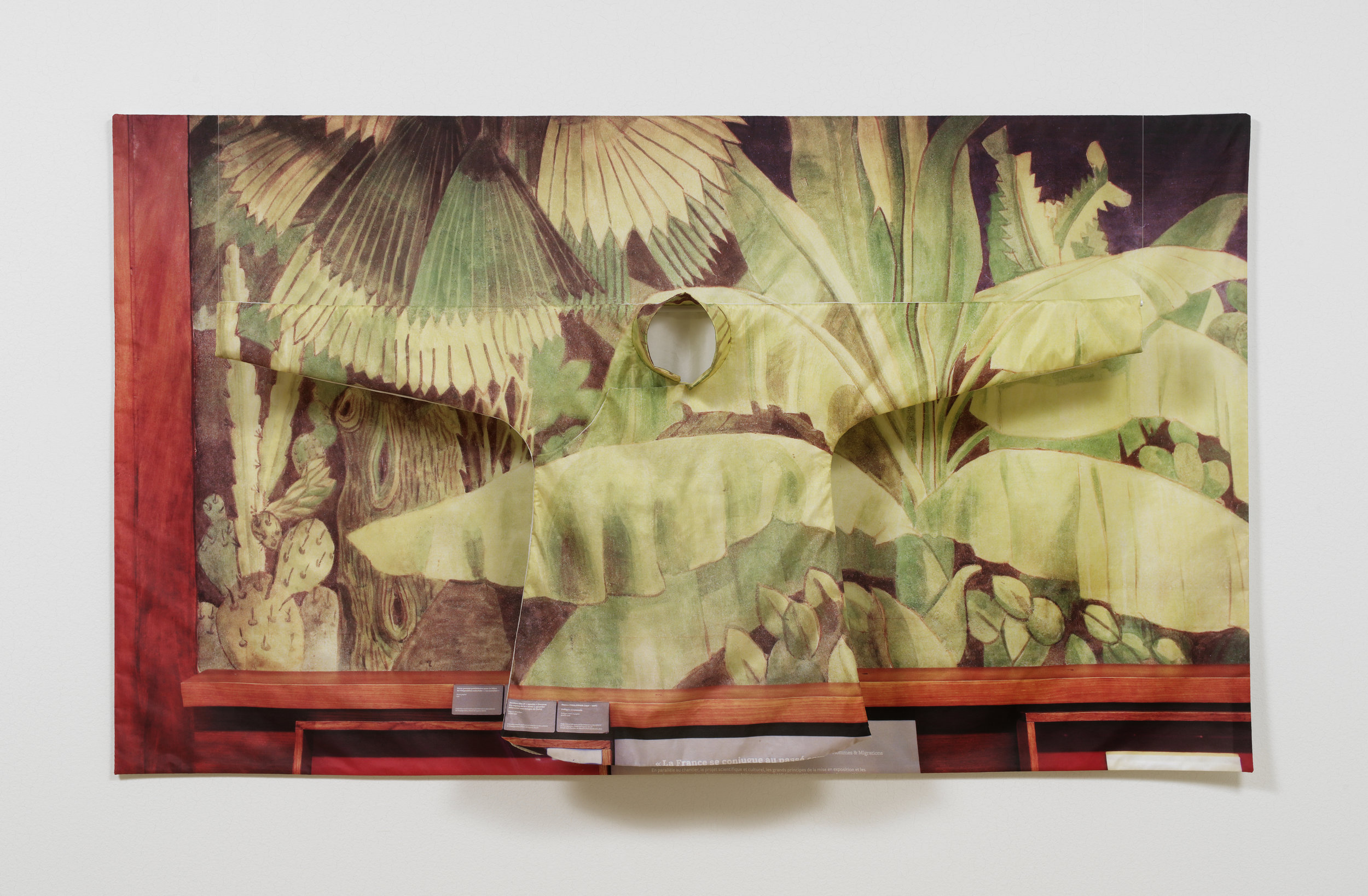
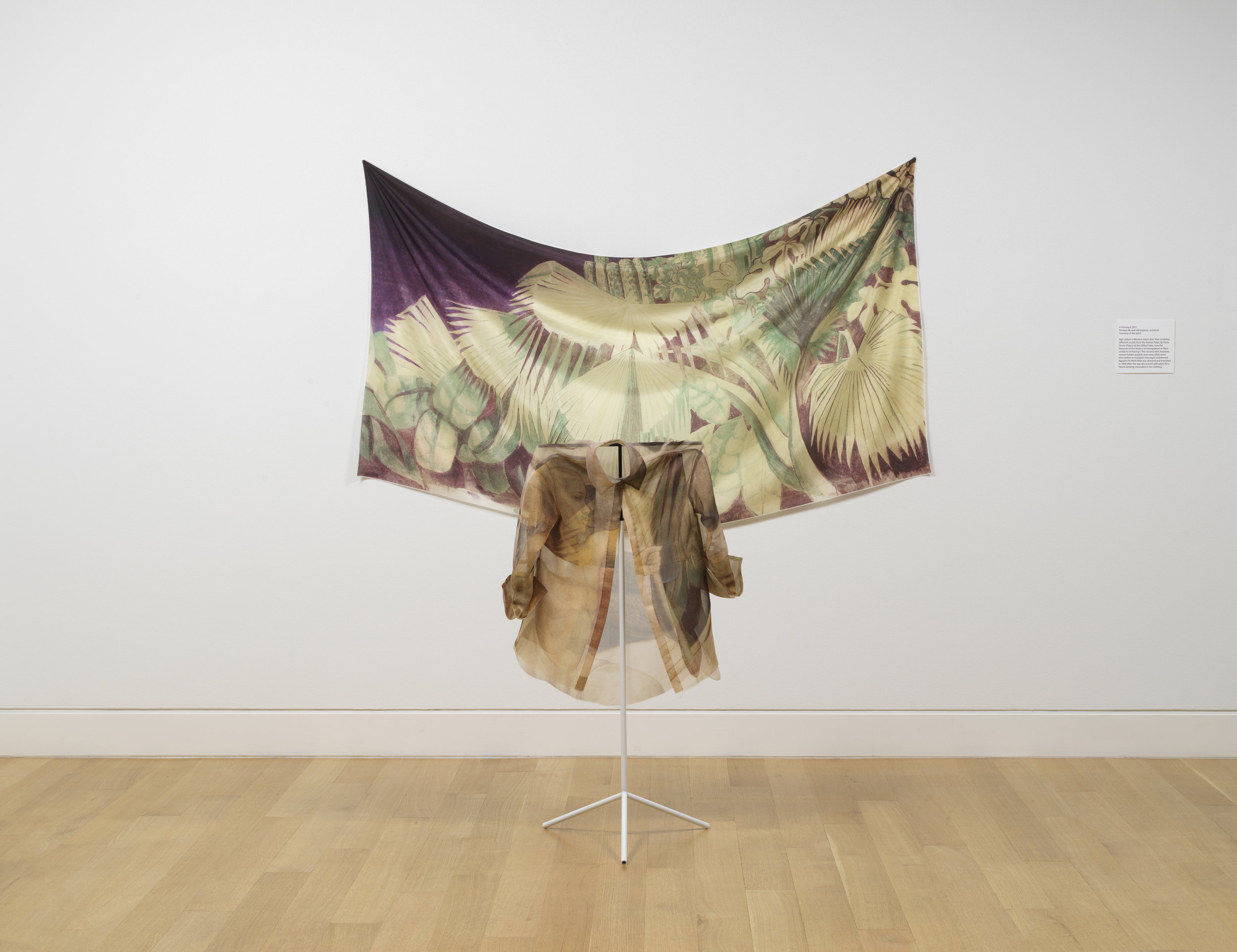
There is a kind of visual reportage to this thoroughly researched and immaculately presented exhibition, with meaning and knowledge infused in every work. The type used in “Proposal for a Translation,” specially designed by Giang Nguyen for the printing of specially commissioned translations of “feminism,” make the very language of the show bespoke. The “In Passing” series consists of two shirts which share their pattern with a mural from the Palace de Porte Dorée, now the Museum of the History of Immigration in Paris. One, a reproduction of a mandarin shirt of the kind Minh Khai wore in photographs circulated by the authorities, blends perfectly into its background, just as the revolutionary did when she subsumed herself in the colonial fabric of Vietnam, hiding as a male skirt maker. The other, set further from the camouflage, has its hidden pockets on view in the light of the gallery; the discovery of plans in such pockets were what led to Minh Khai’s execution.
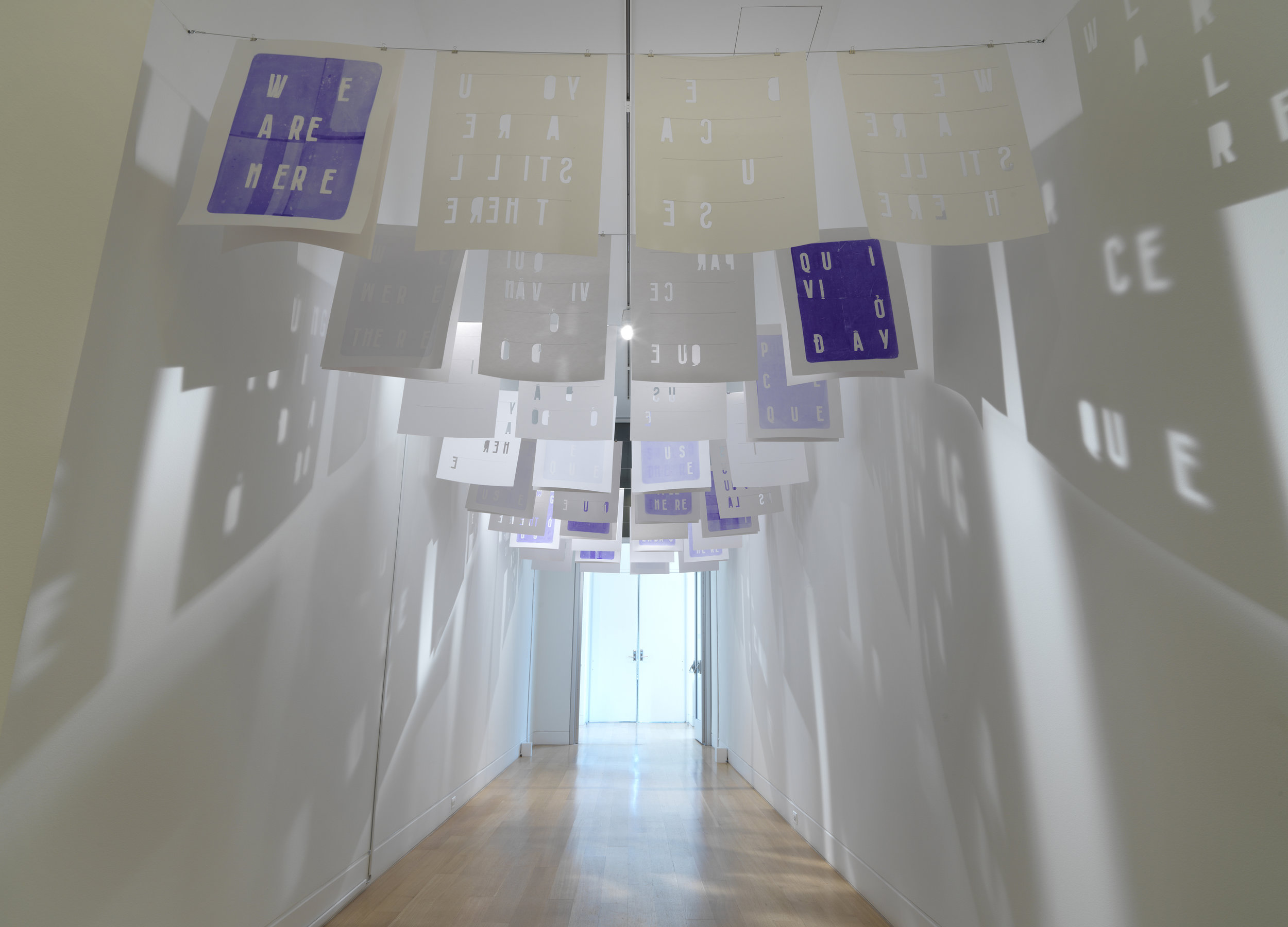
In the thin hallway gallery adjacent to the bulk of the show, prints made with the obsolete hectographic method—the kind used by the anti-colonial activists—use agar-agar, a common Asian dessert ingredient, to display English, Vietnamese and French iterations of the pro-immigration rallying cry “We are here because you were there.” The artist’s royal purple agitprop hangs over the observer’s heads like Damocles’ sword, a powerful reminder that history is written in blood and spoken through the gnashing of teeth. One leaves the show with eyes open, but blurred by now-knowing tears.

Reap the Whirlwind
Press Release
2018
“She made him her slave with opium. She suffered his rage when there was nothing to smoke... she wanted to keep him all to herself – and did – until the day he died.”
- Jean Hougron, Reap the Whirlwind
“Now all is broken and my spirit is not longer haunted by these questions of marriage or maternity. Let’s speak no longer of the past! My only spouse, it is the Communist Revolution.”
- Nguyễn Thị Minh Khai
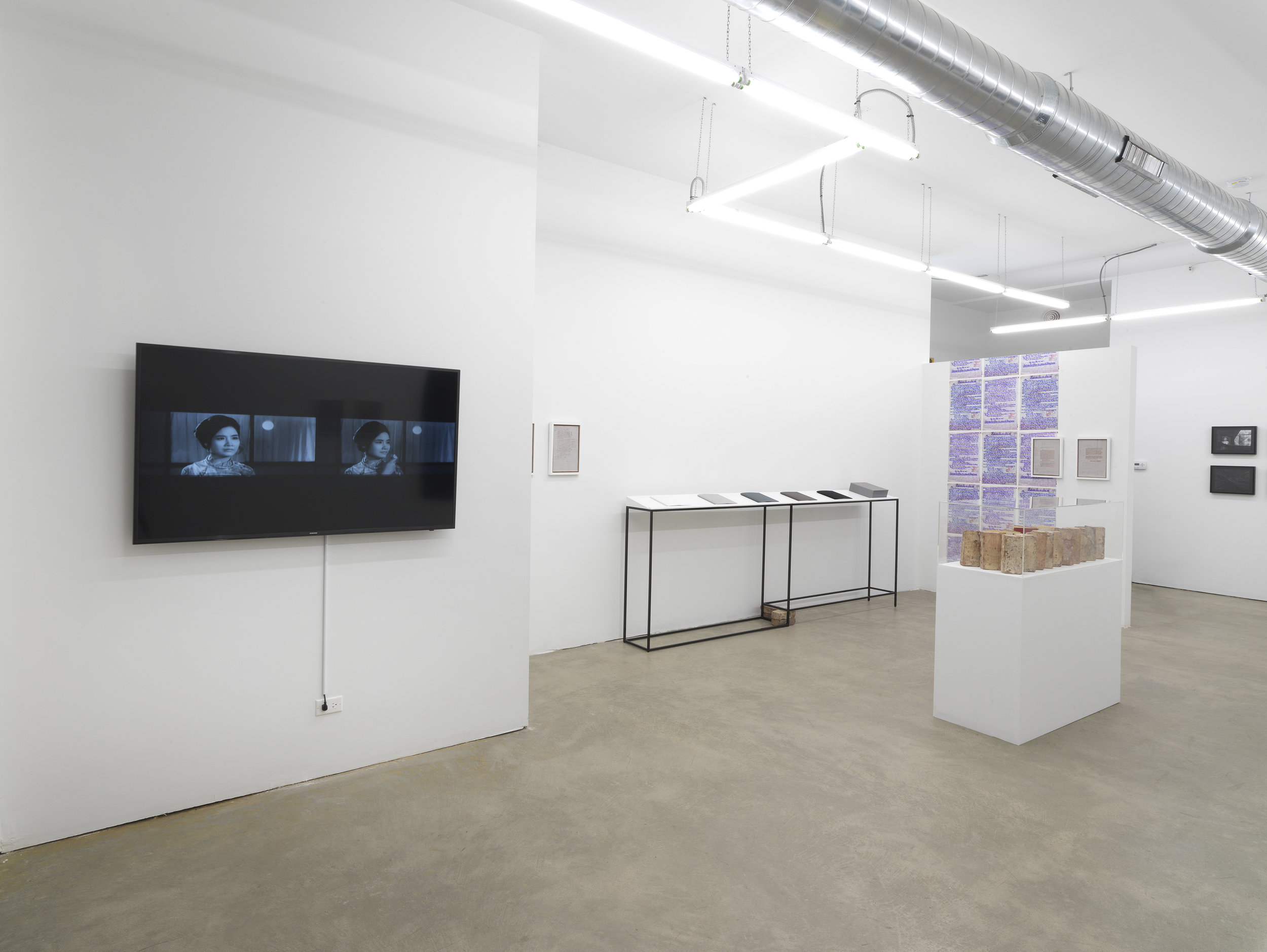
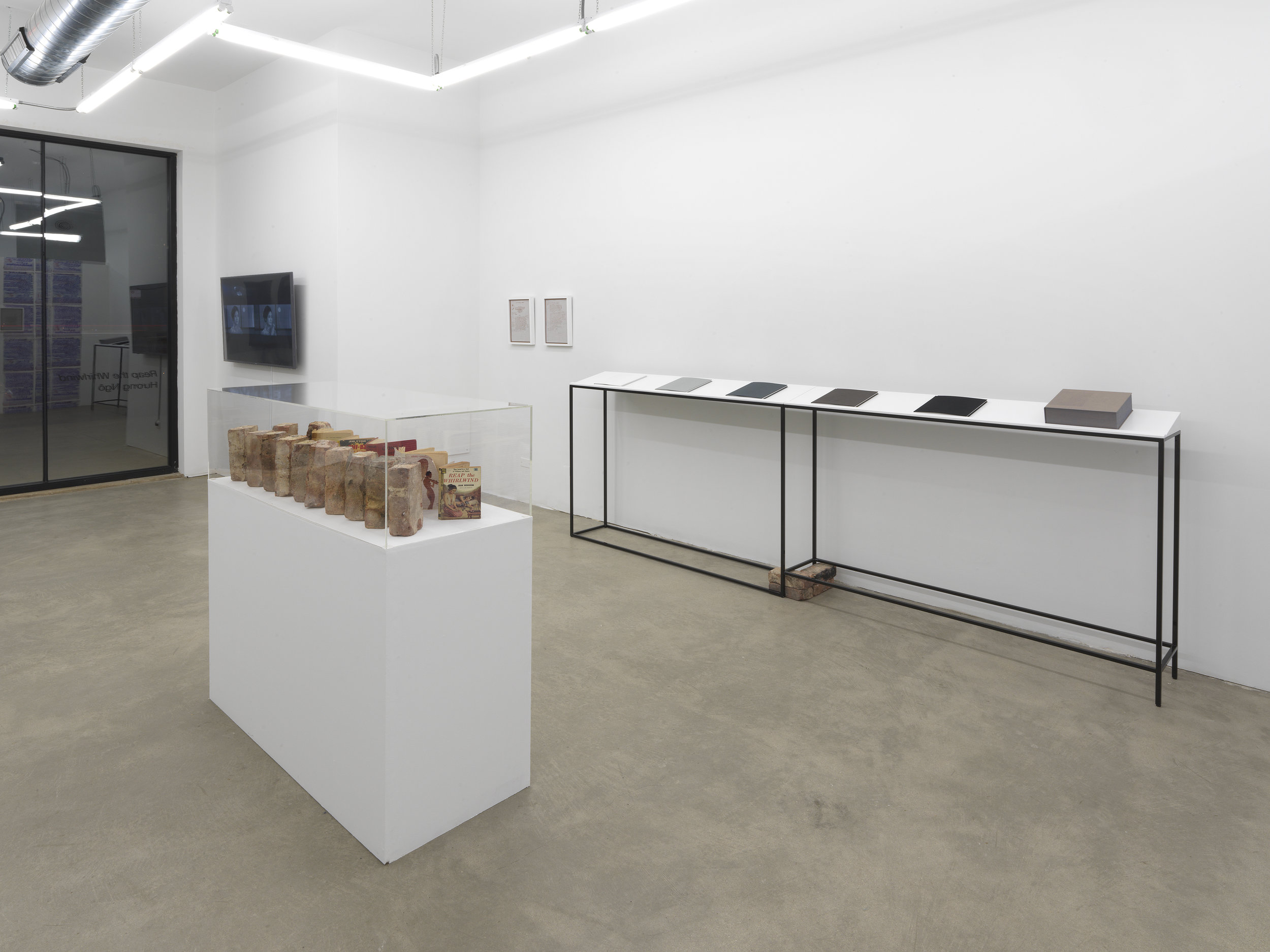
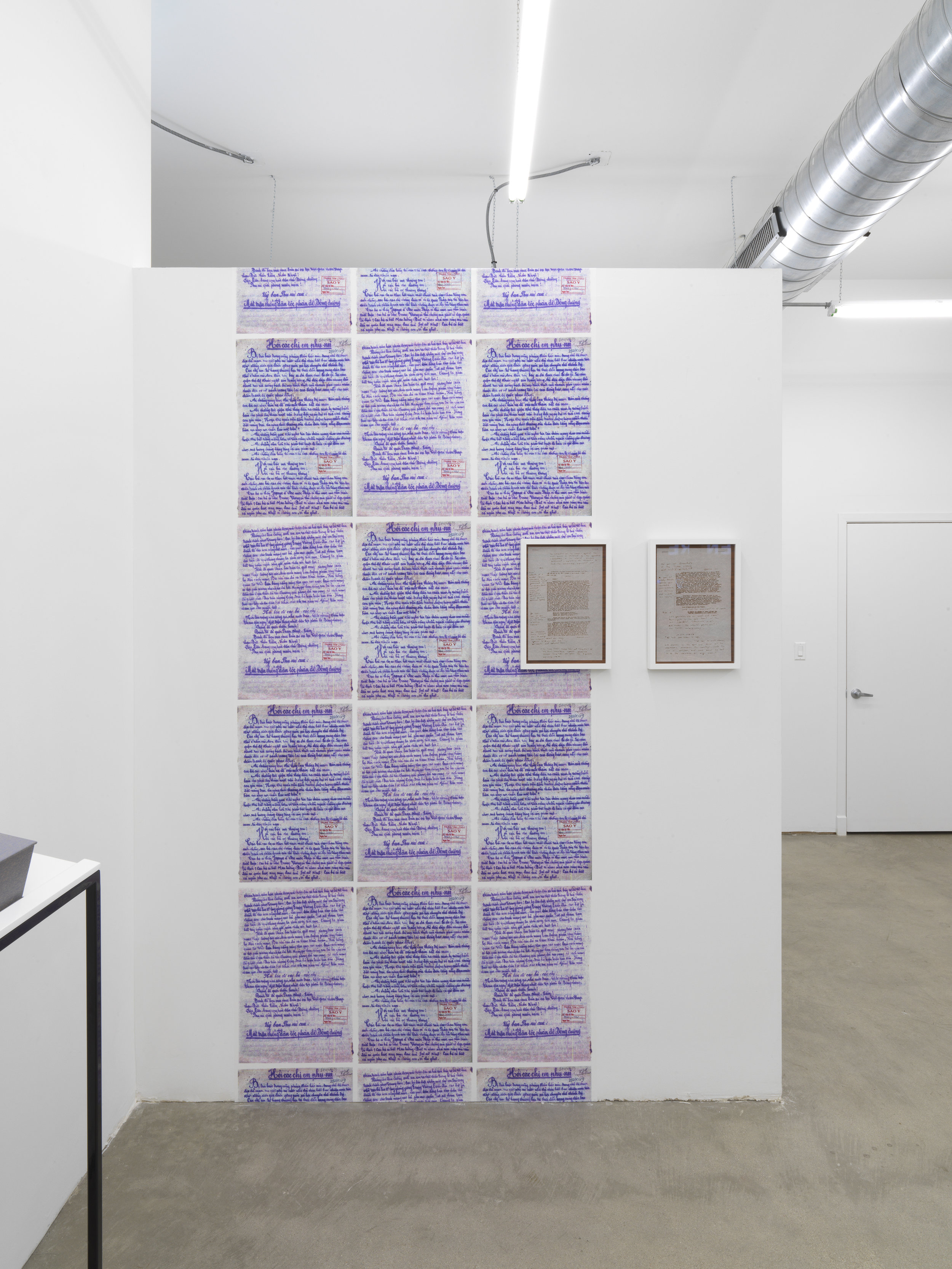
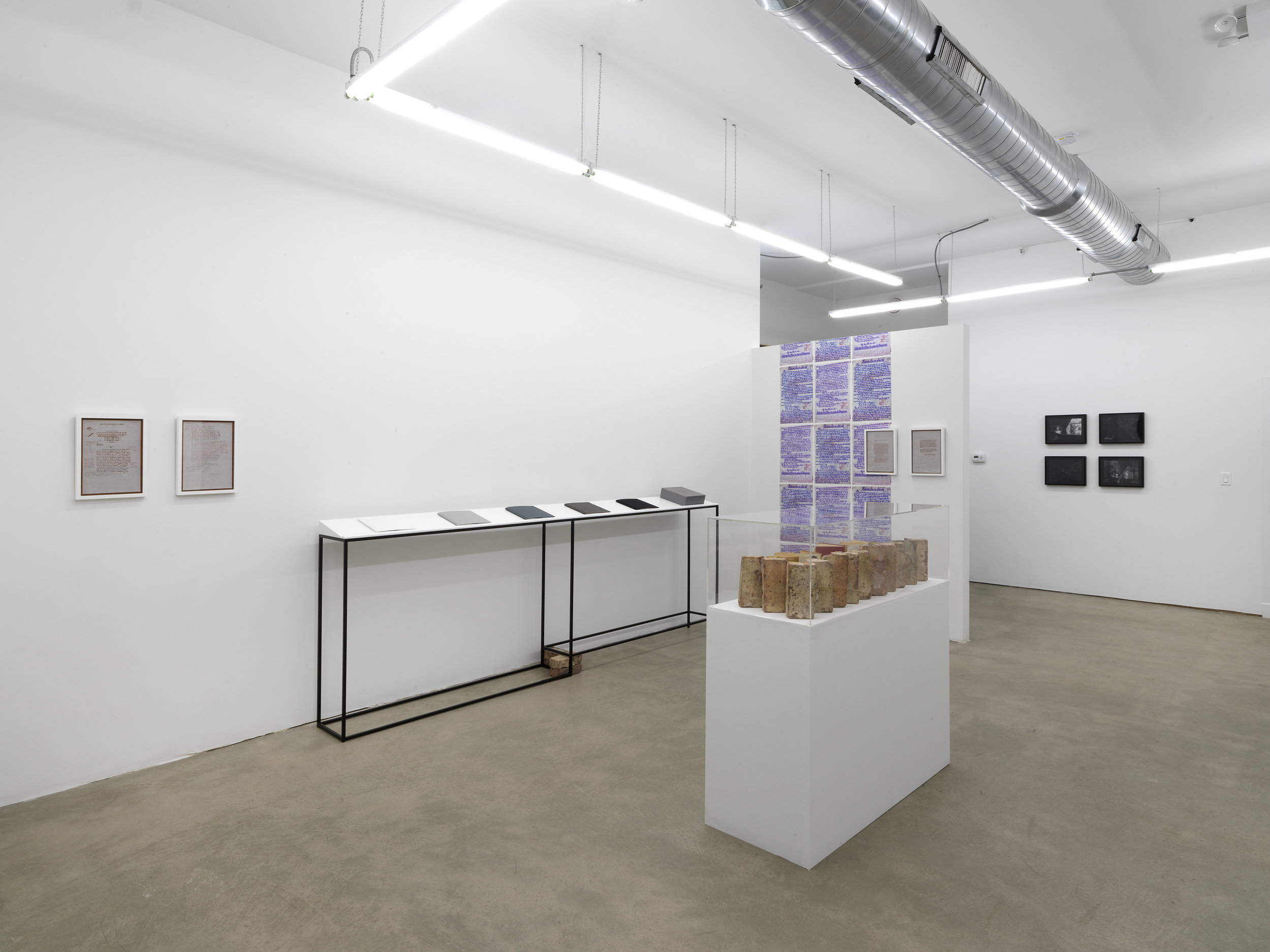
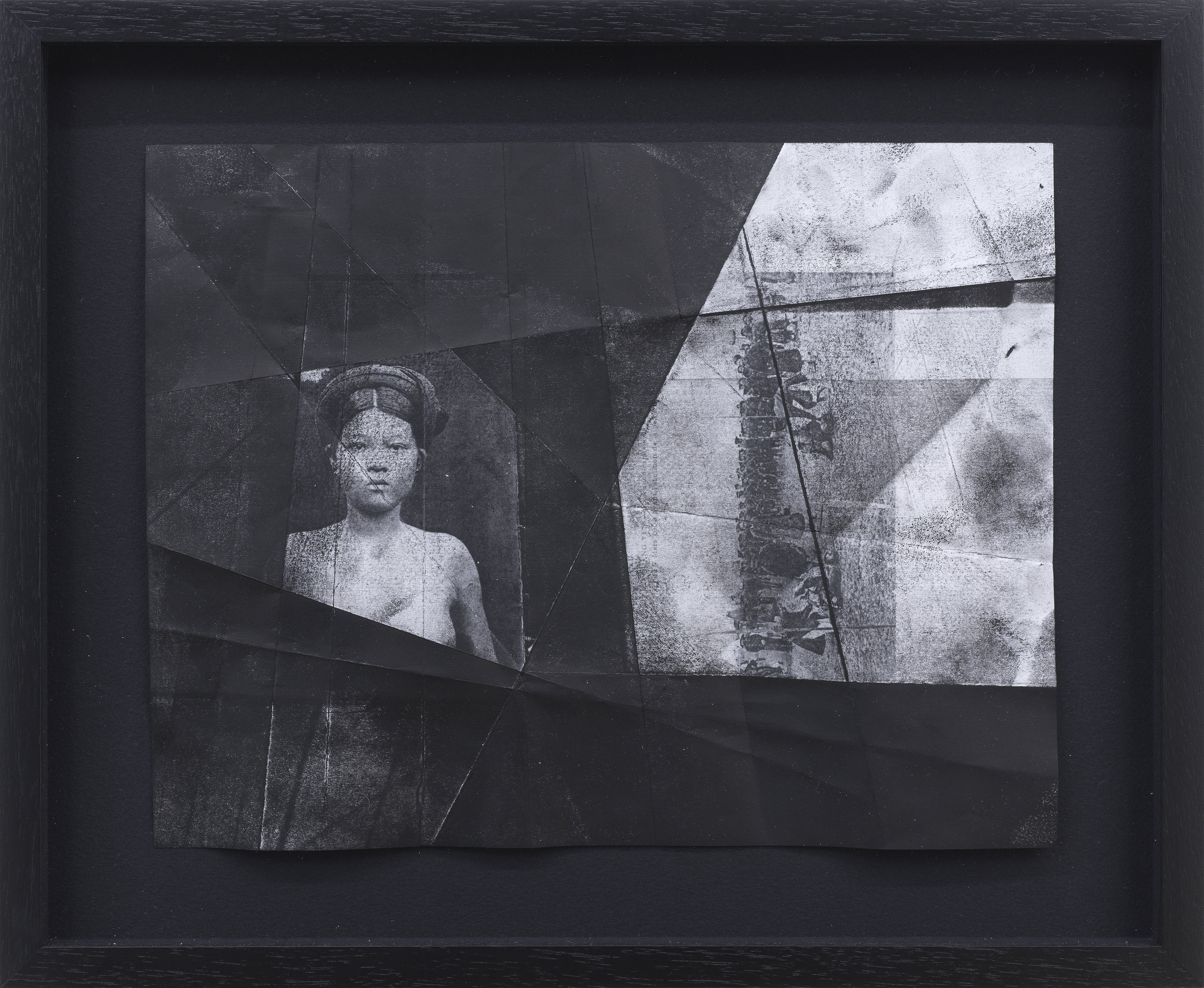
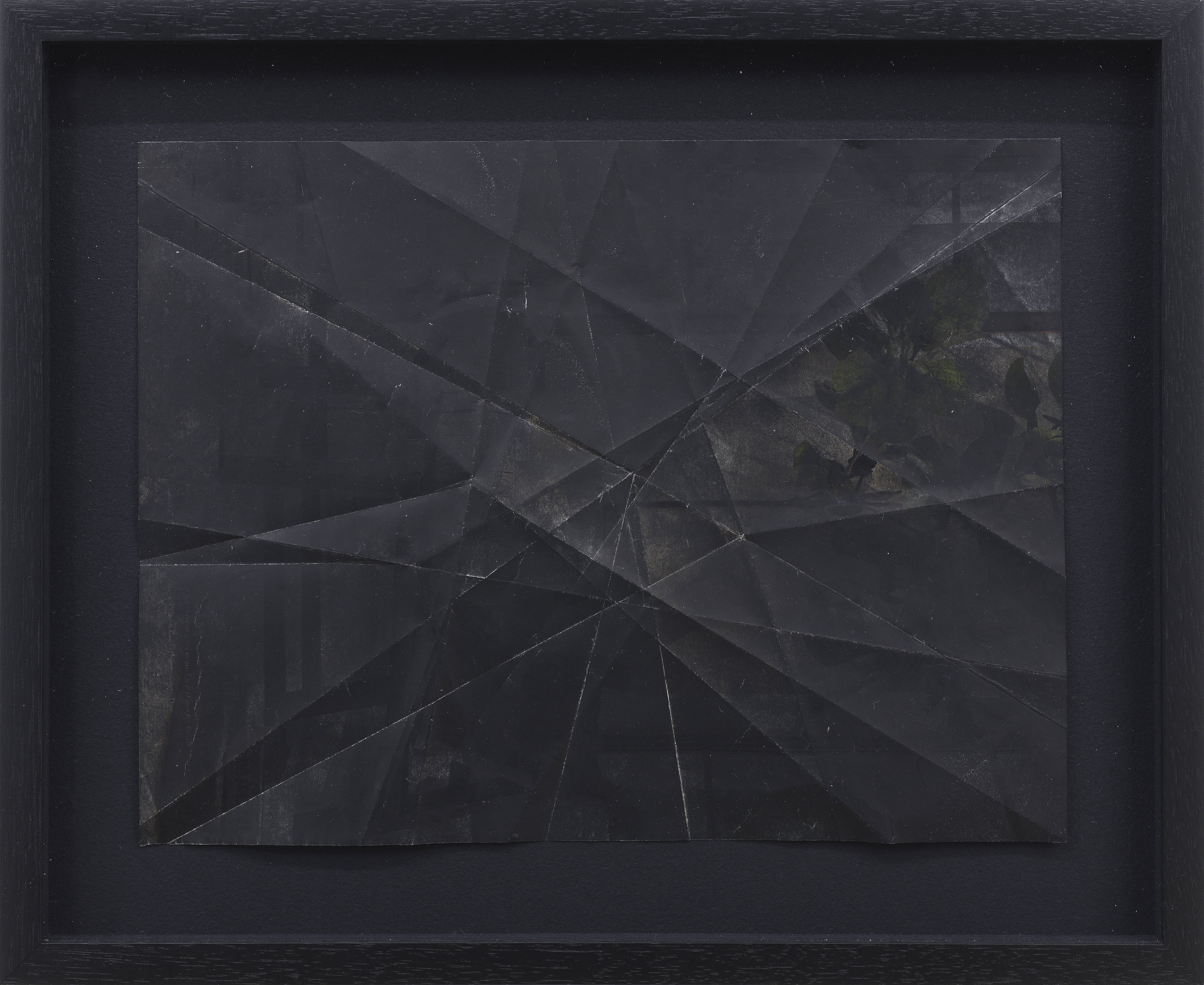
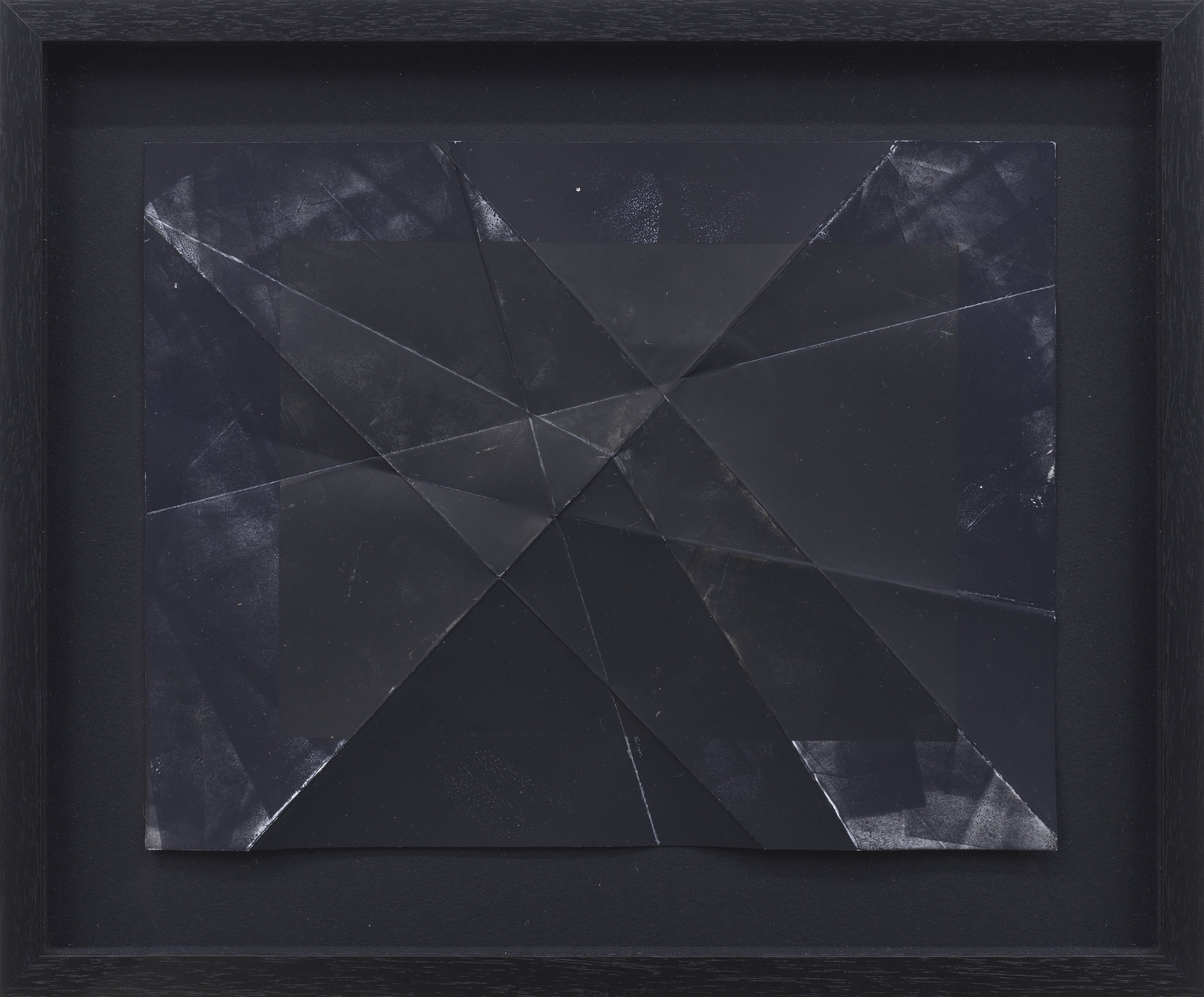
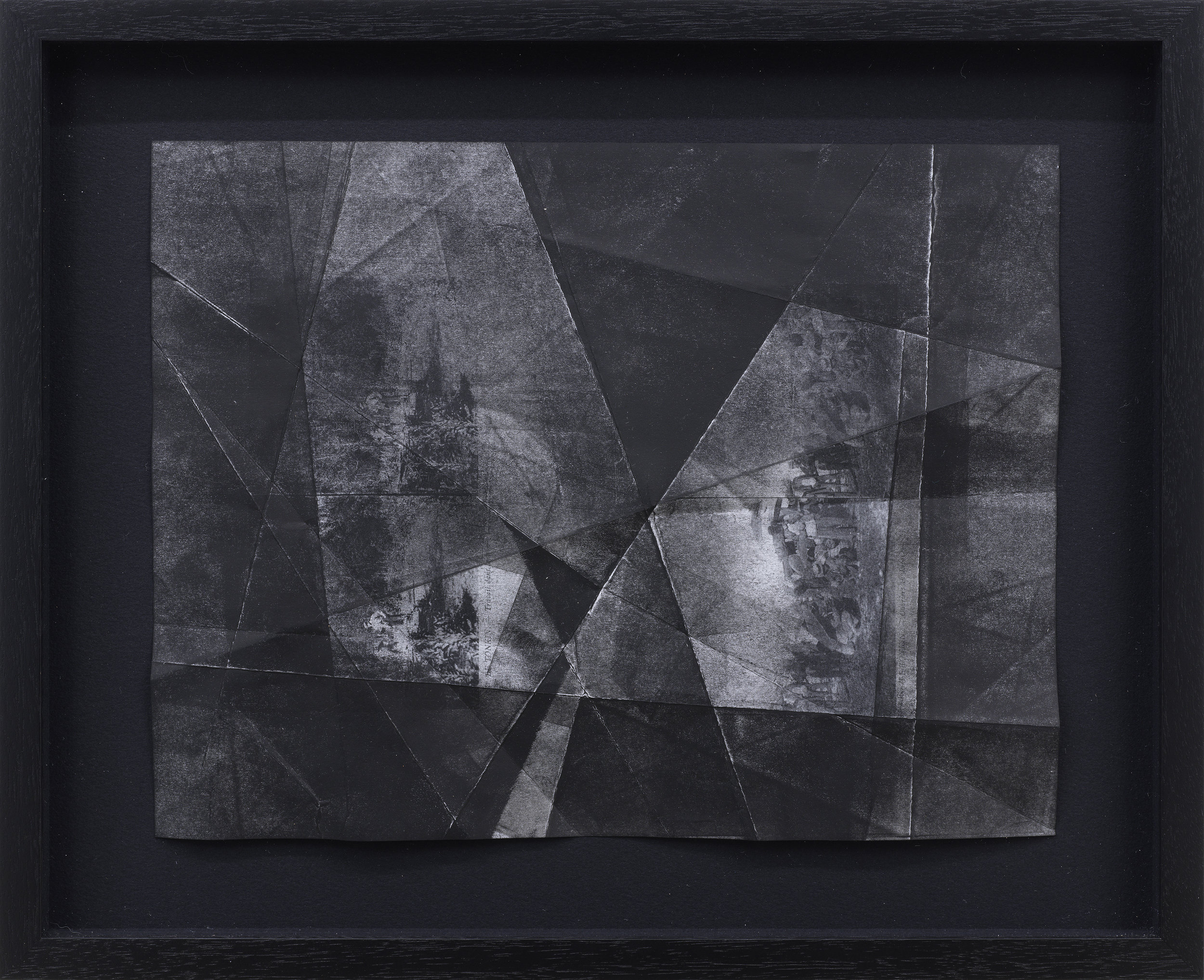
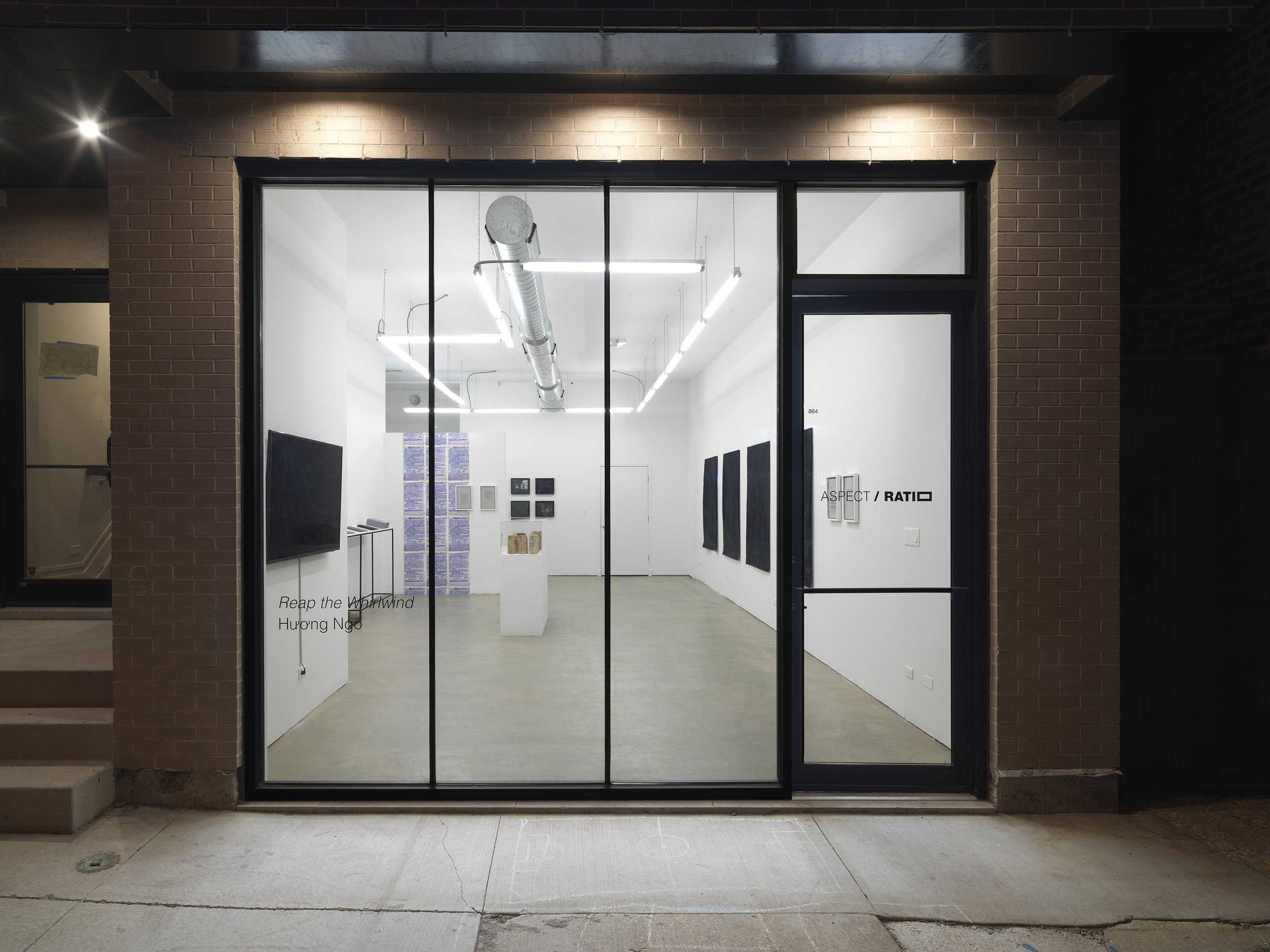
How were representations of the colonized female body introduced to the world and utilized to sustain the project of colonization? How do representations of these bodies afford or deny subjectivity, and how might we reconsider thesewomen as political subjects seeking agency rather than flattened figures in history? In this exhibition of new work, Chicago-based artist Hương Ngô pairs early 1900s popular media from colonial Vietnam with her ongoing research of womeninvolved in the concurrent anti-colonial movement. These piercing questions fueled her recent solo exhibition To Name It Is to See It (DePaul Art Museum, 2017) and are expanded upon in Reap the Whirlwind at Aspect/Ratio. While previous projects concentrated on the history of women who were a part of the resistance movement and their tactics of counter sousveillance, Reap the Whirlwind focuses on their foil–the hypervisible, exoticized concubine that was the subject of a number of novels and widely-circulated colonial postcards of the time.
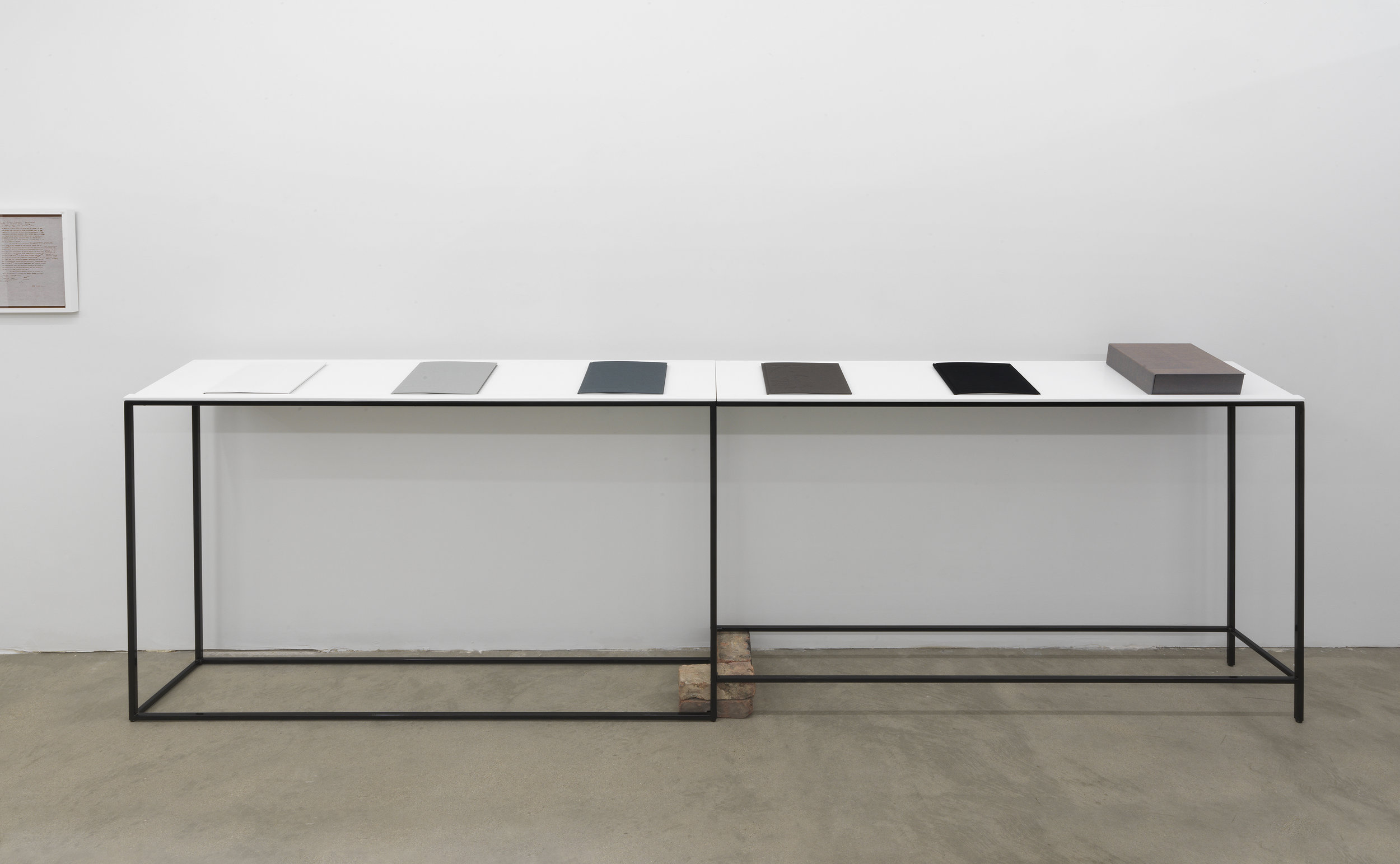
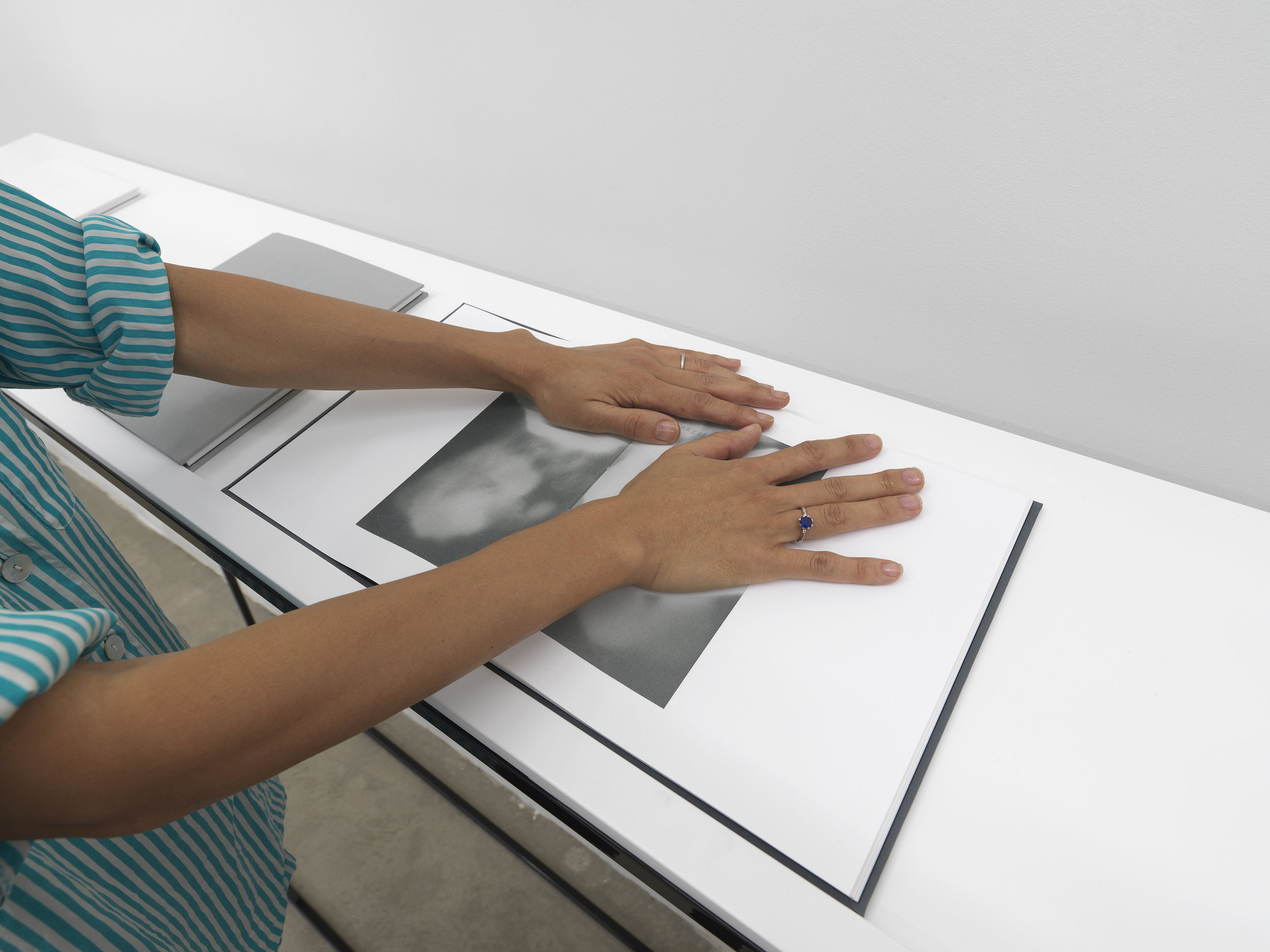
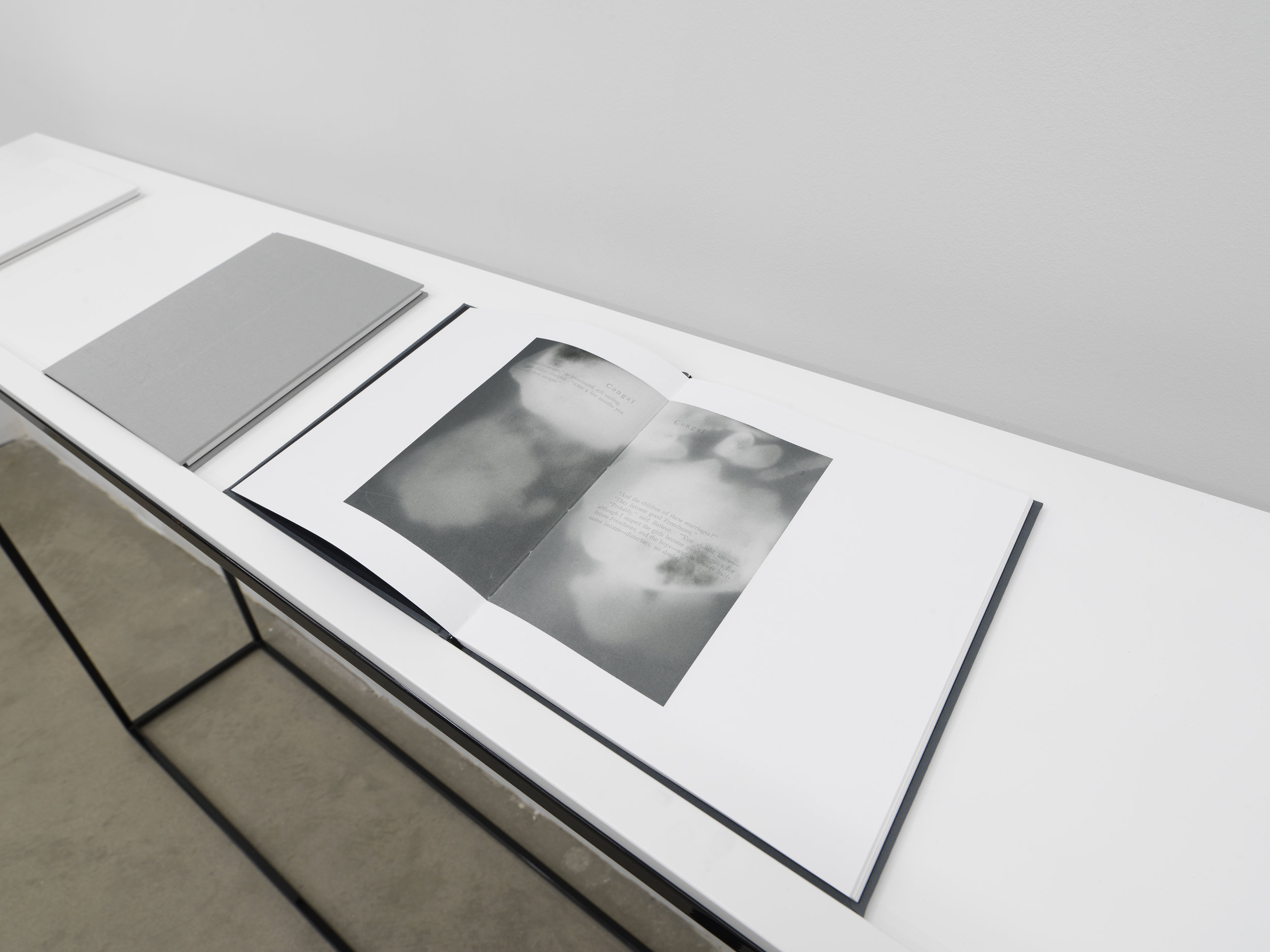
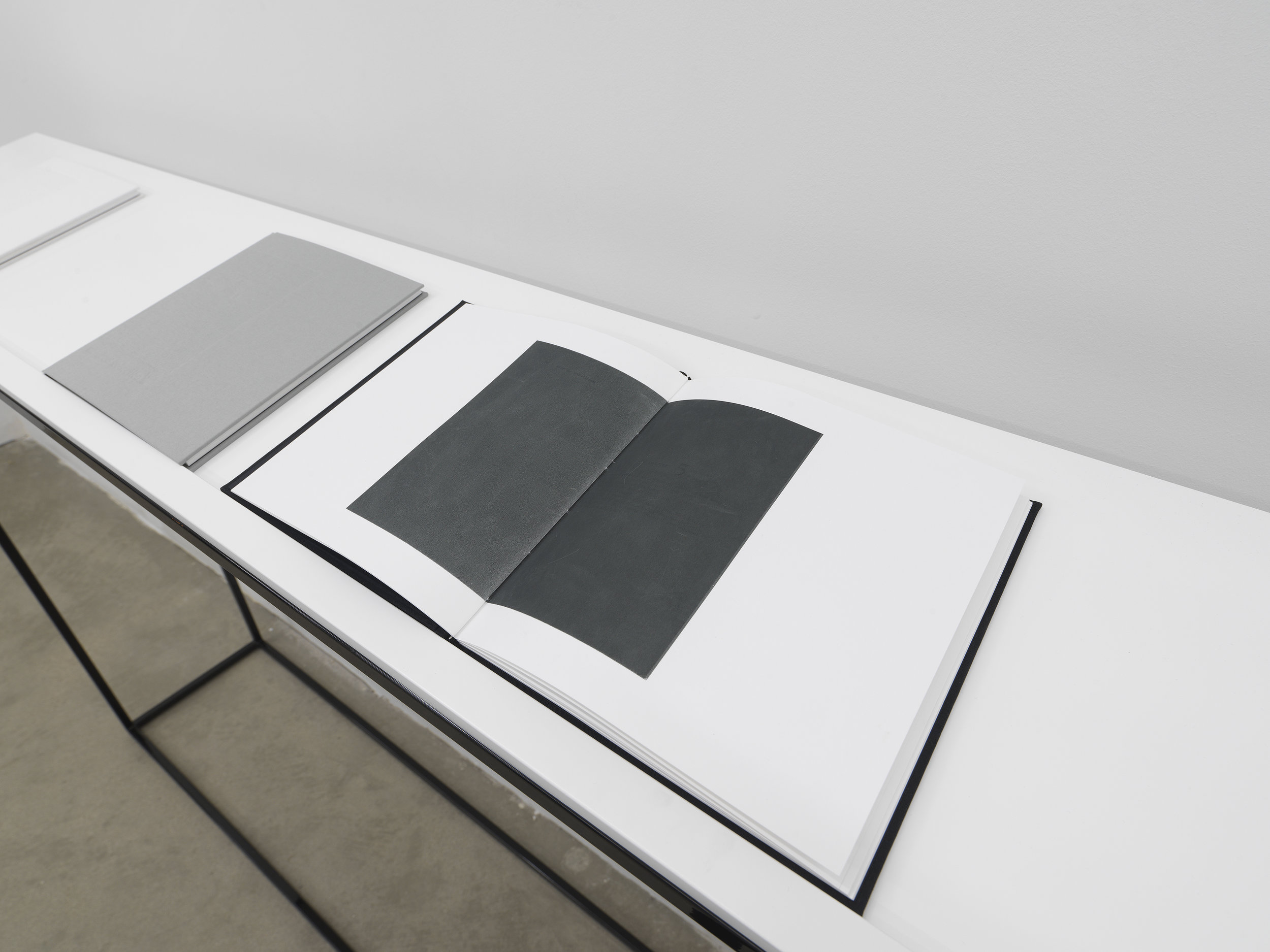
An artist book serves as the anchor of the exhibition. It is a collection of five handmade volumes with text excerpts fromcongaï novels that each narrate a different version of the logistical, ethical, and political aspects of the concubine system often practiced between Indochinese women and French men during the colonial period. Though appealing to a pulpfiction readership, each book offers a portrait of a character who is politicized against oppressive forces through her congaïship. Ngô has overprinted the collection with thermochromic ink, preventing the viewer from reading the text untilit is touched and implicating them in this matrix of intimacies.
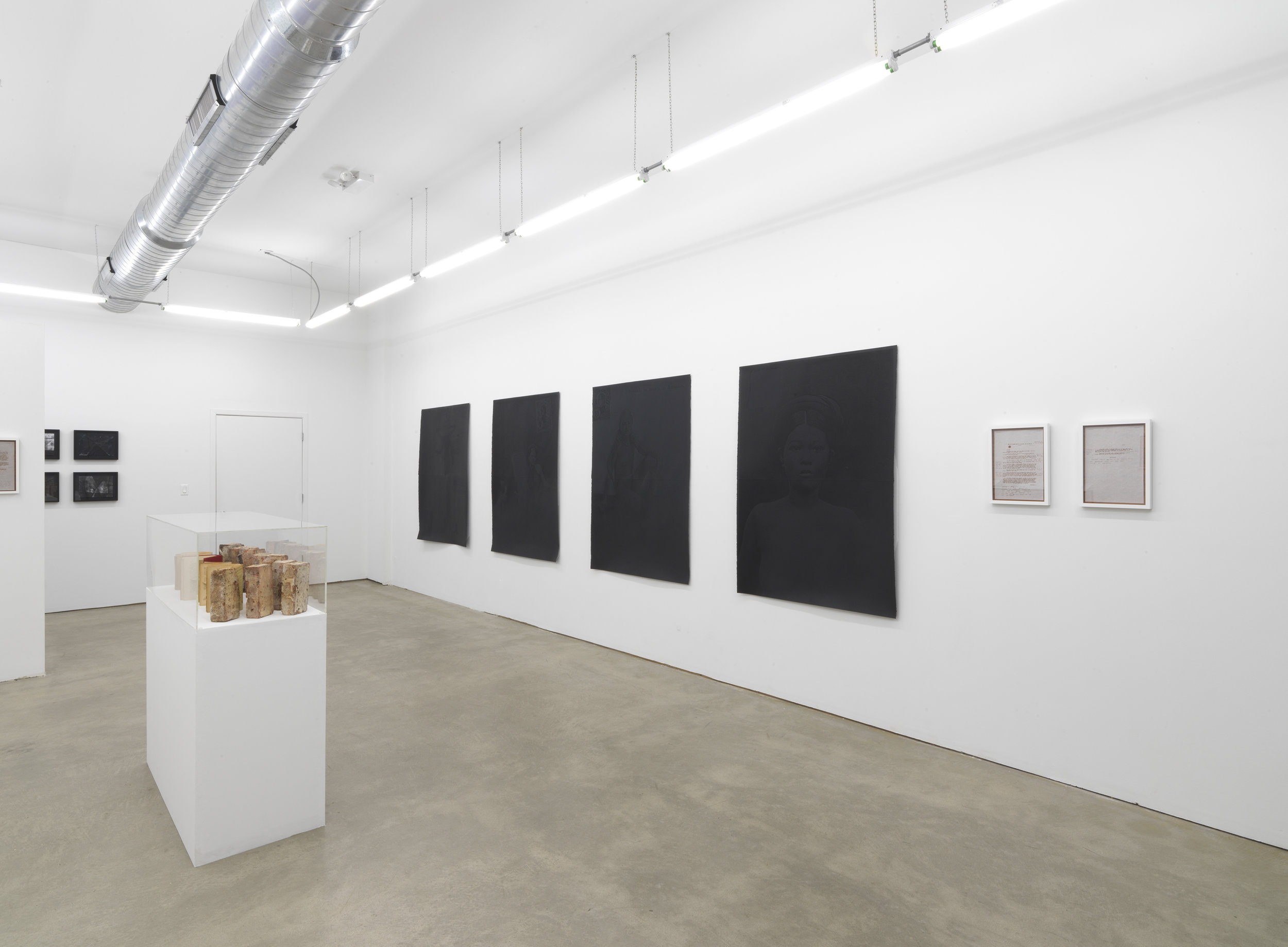
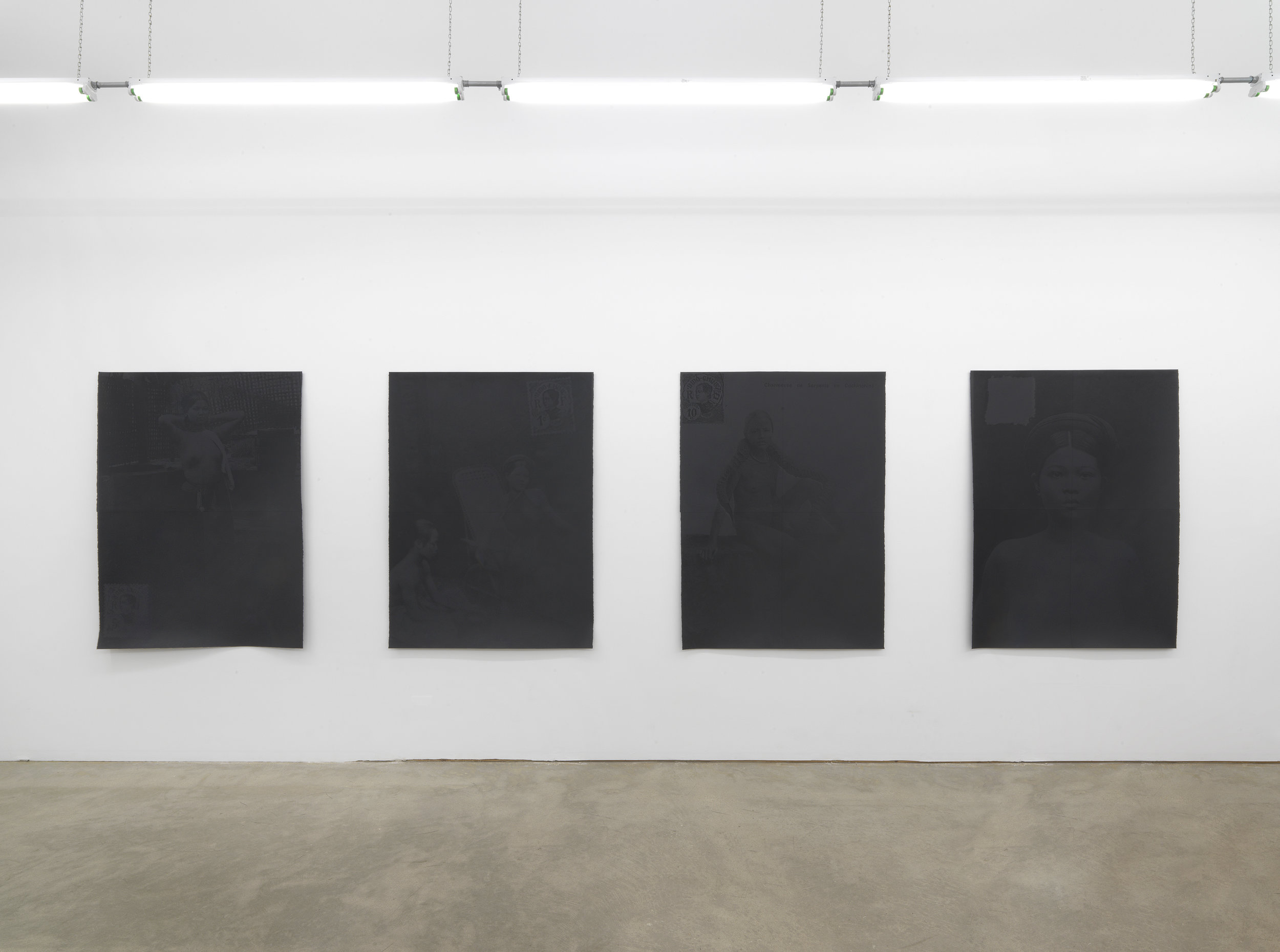
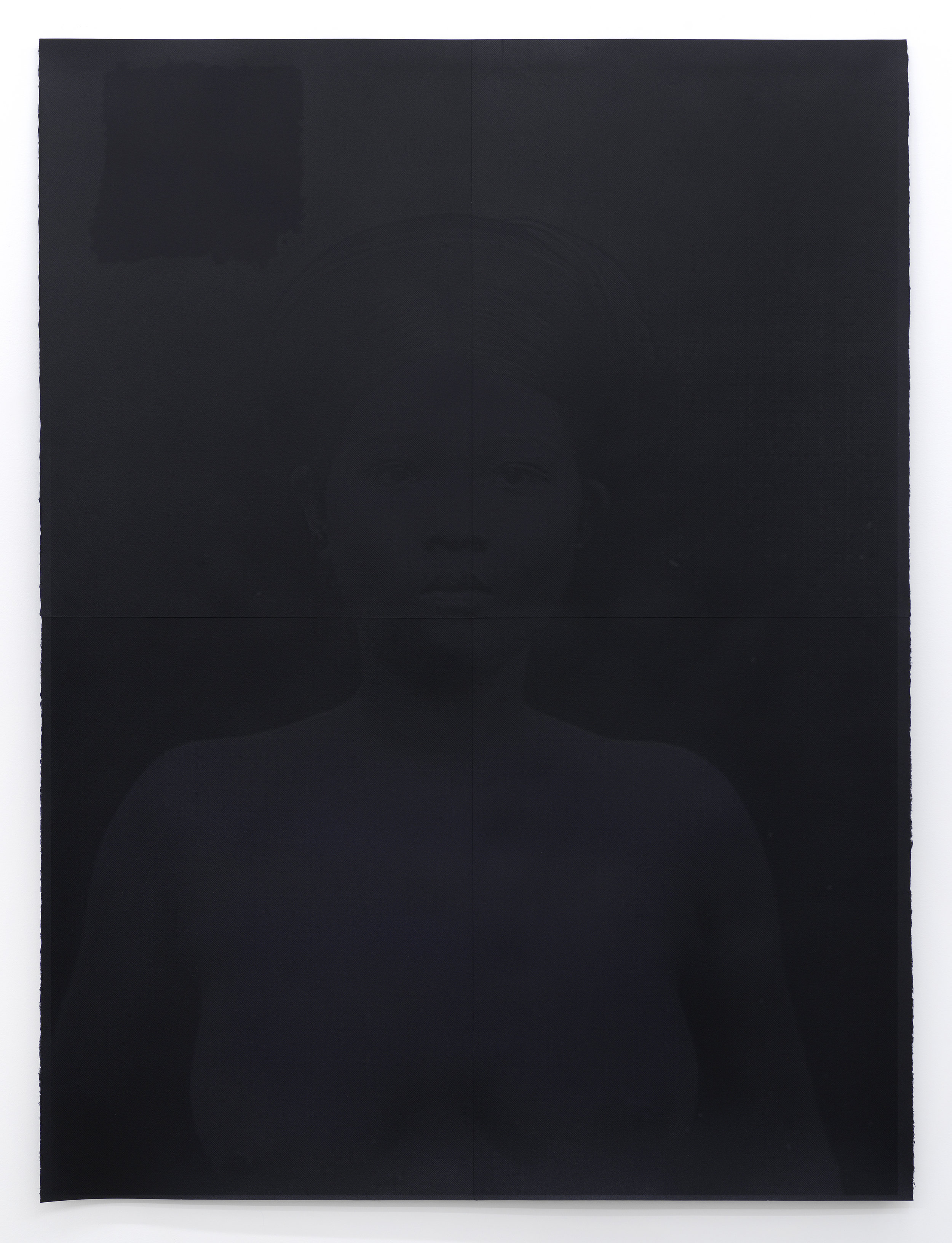
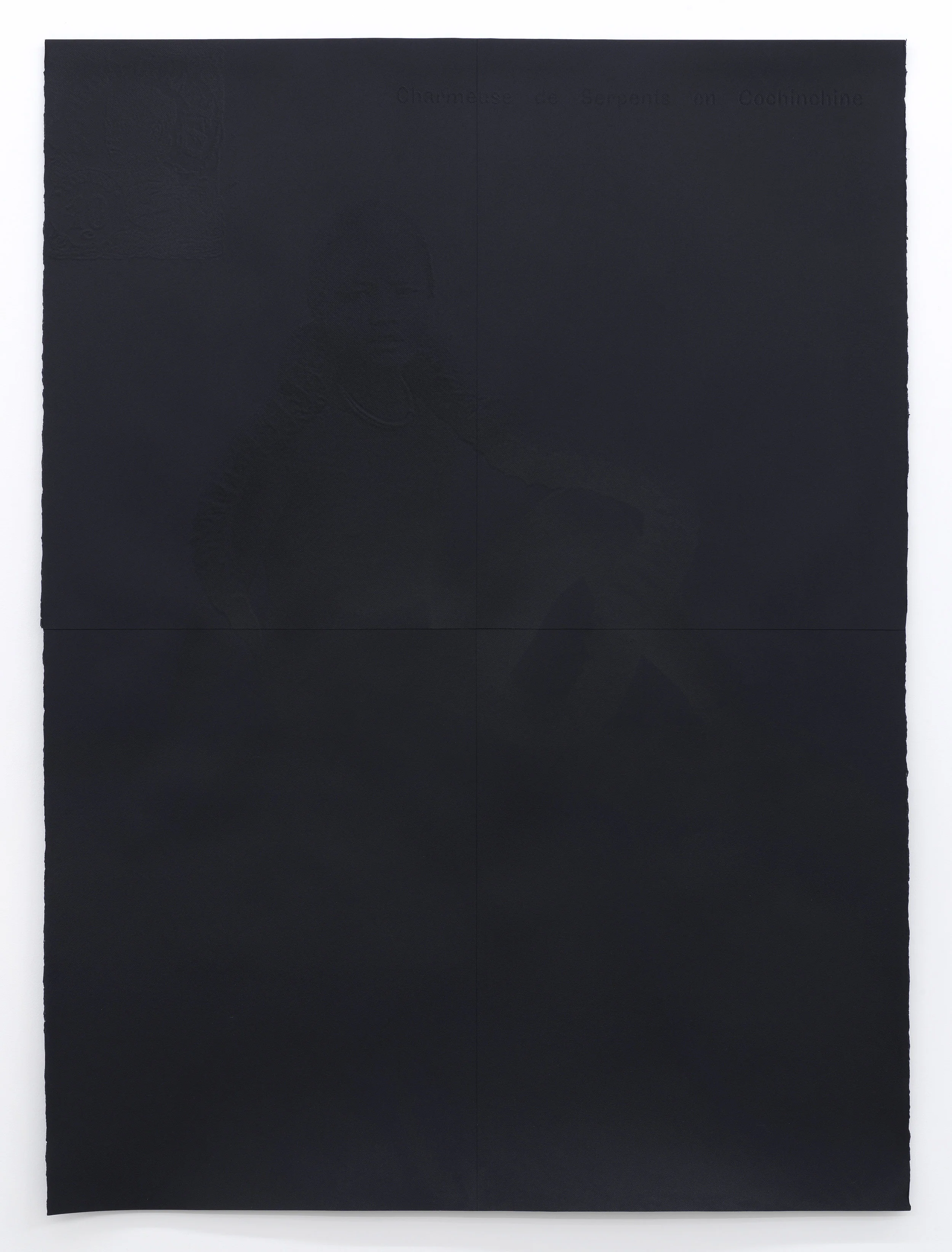
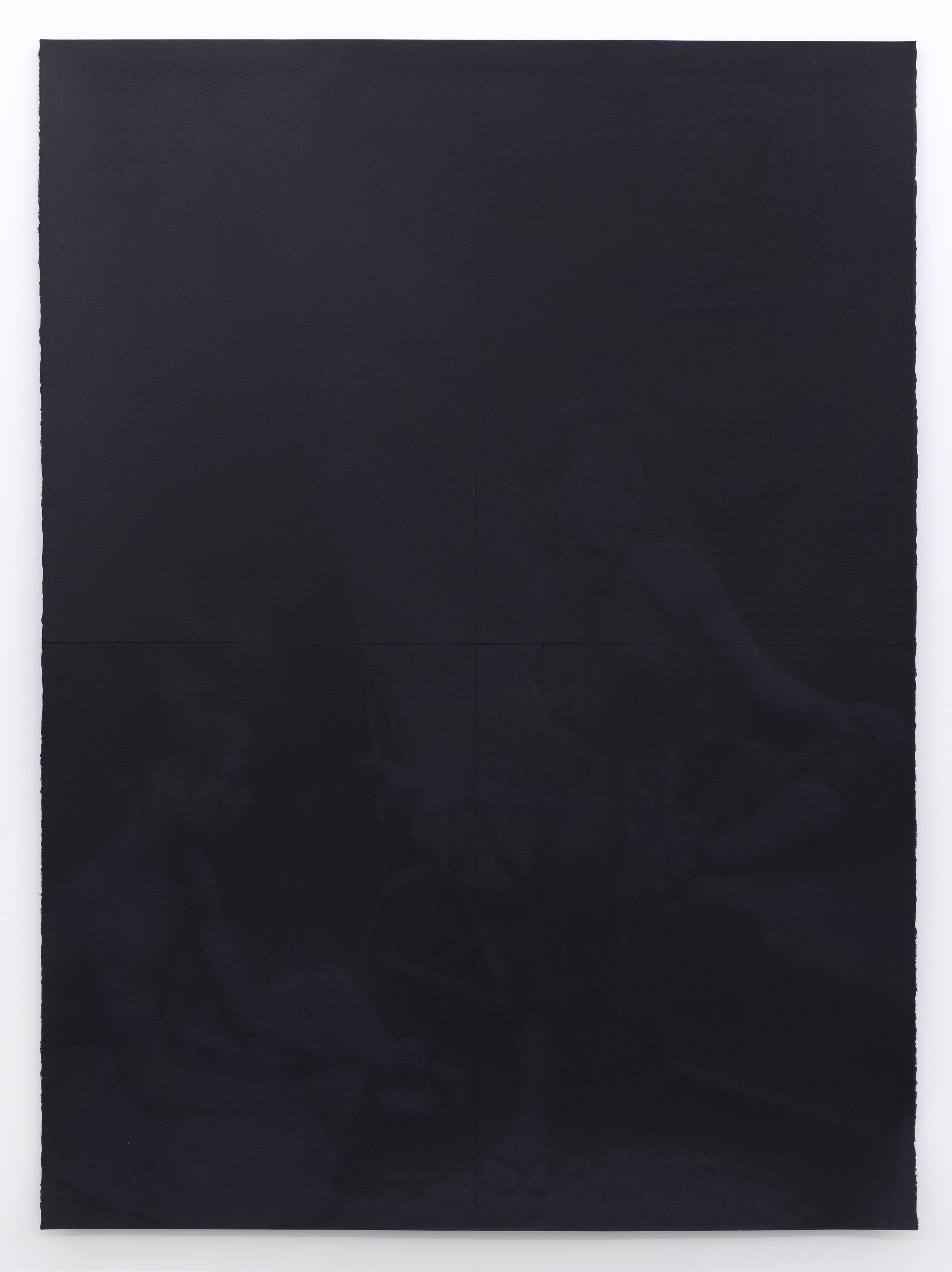
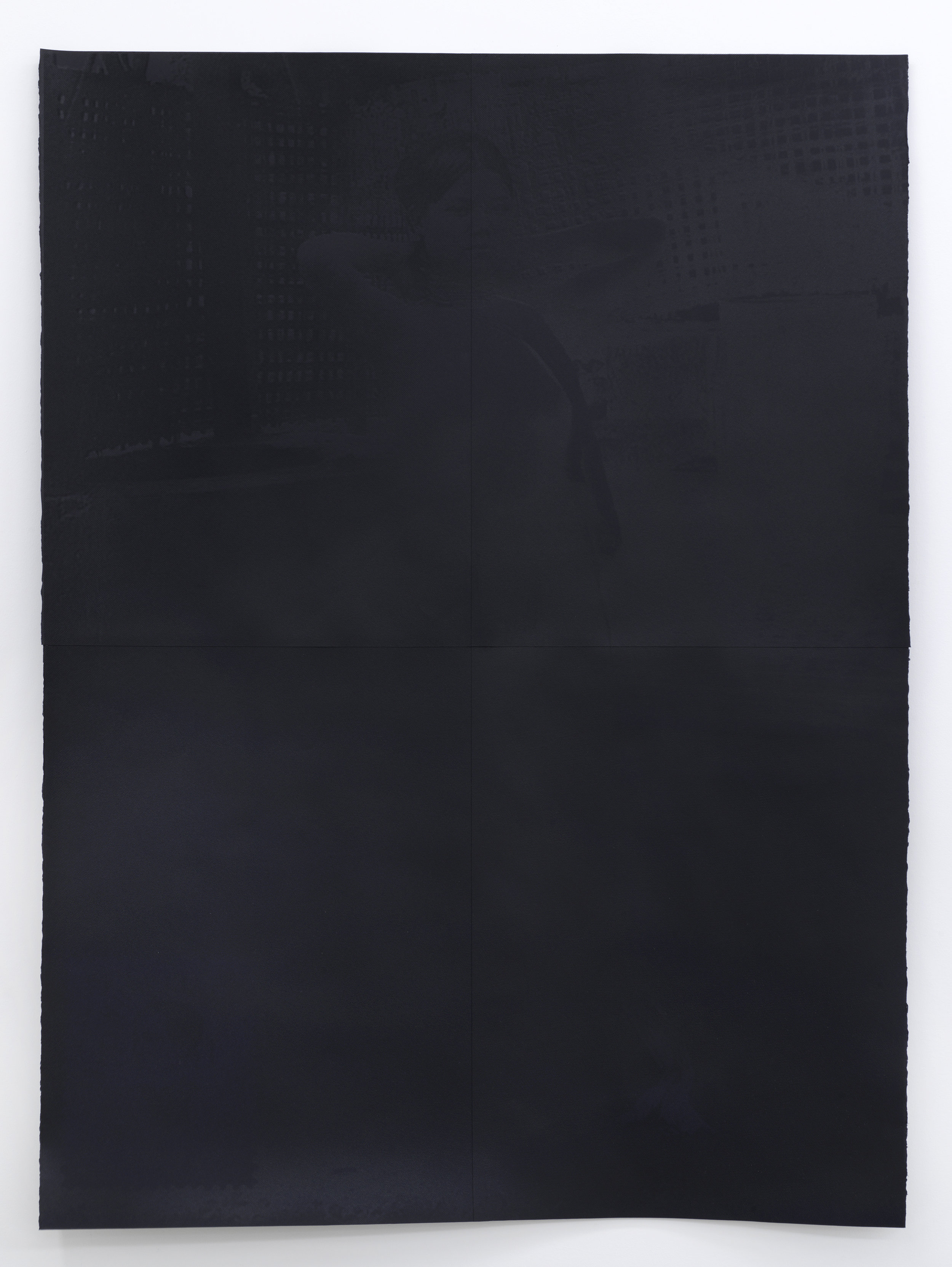
Elsewhere, a series of four large serigraphs depicting indigenous Indochinese women posed in exaggerated situations are printed with high gloss on black paper. The prints are abstracted from postcards and only become visible through angles intentionally maneuvered by the viewer. By translating the exploitative images of indigenous women throughelusive new forms that refuse to be completely seen, Ngô opens up possibilities for images to simultaneously evoke theirhistorical context while inciting the potential for resistance. These works ask how misrecognition might catalyze a cre-ative negotiation between identity and image, a critical and reflexive process of one’s own becoming.
Additional works bring in the larger context of the anti-colonial movement through video and installation, and assist incomplicating the reception of the female figures that loom large in the exhibition. Invoking the proverb, “They that sowthe wind, shall reap the whirlwind,” the title asks what consequences befall those that execute or enable systems of op- pression and how are they held accountable. It is a phrase all too relevant to our current political moment.
This project is partially supported by an Individual Artist Program Grant from the City of Chicago Department of Cultural Affairs & Special Events, as well as a grant from the Illinois Arts Council Agency, a state agency through federal funds provided by the National Endowment for the Arts.

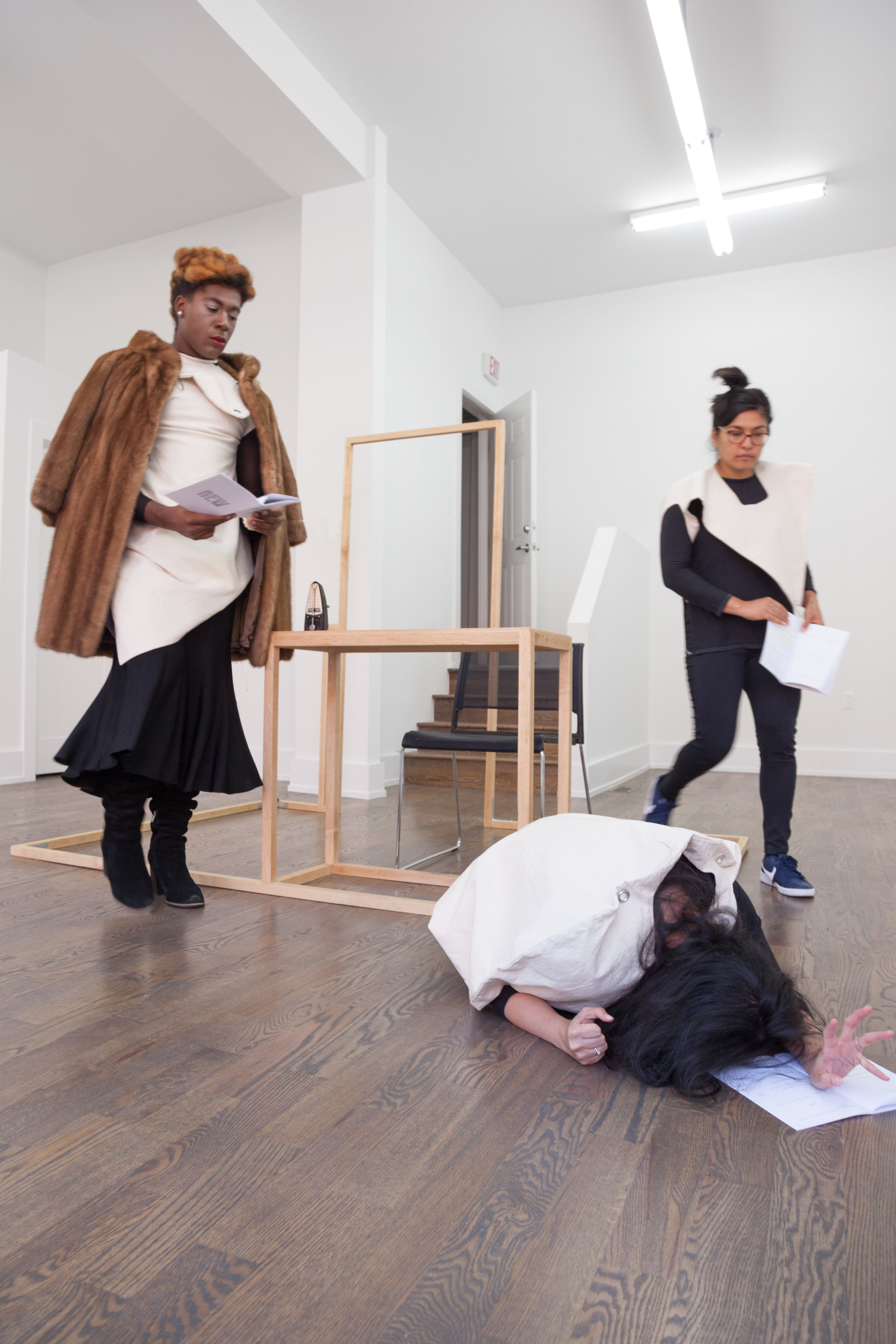
New Women
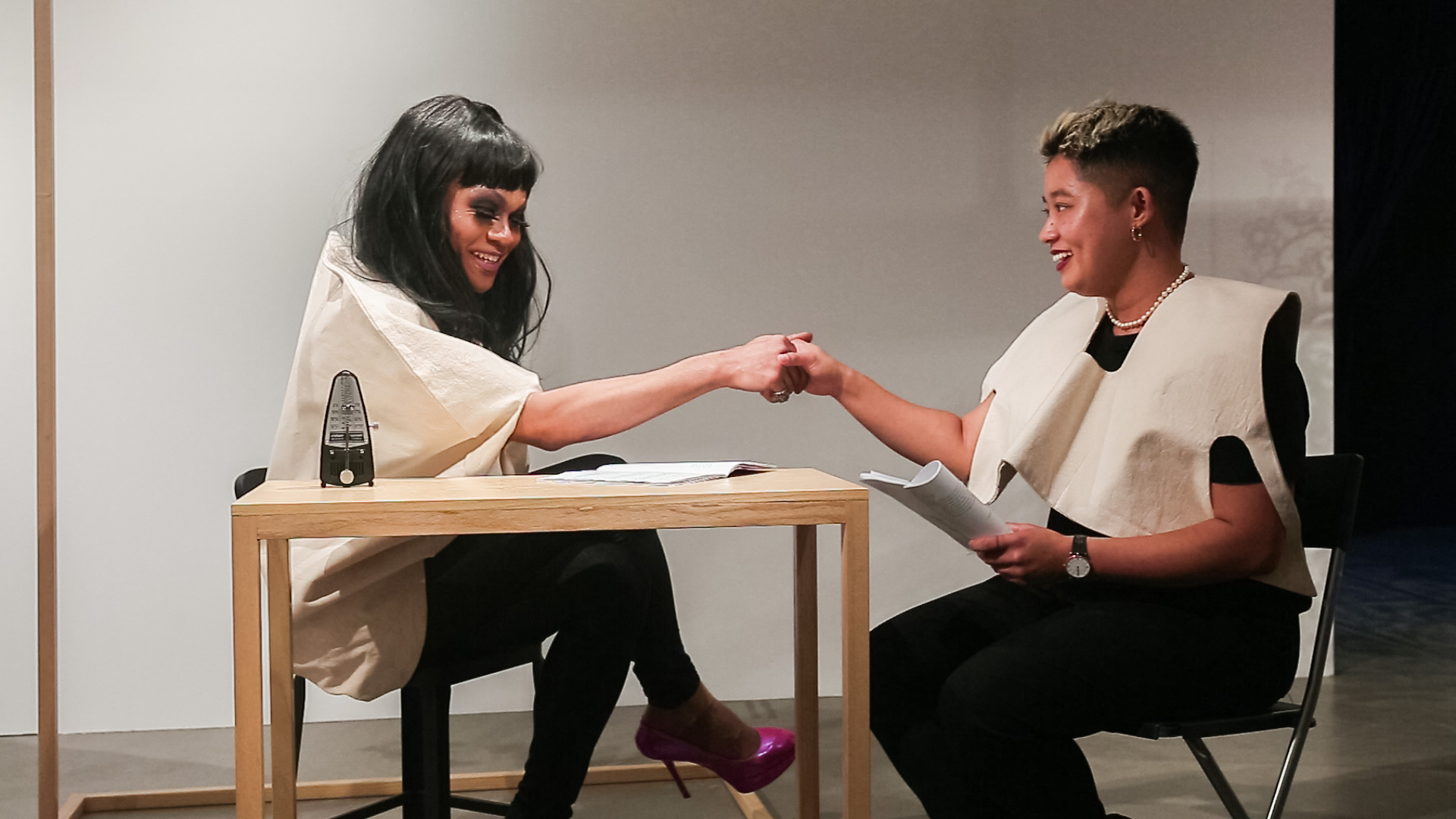
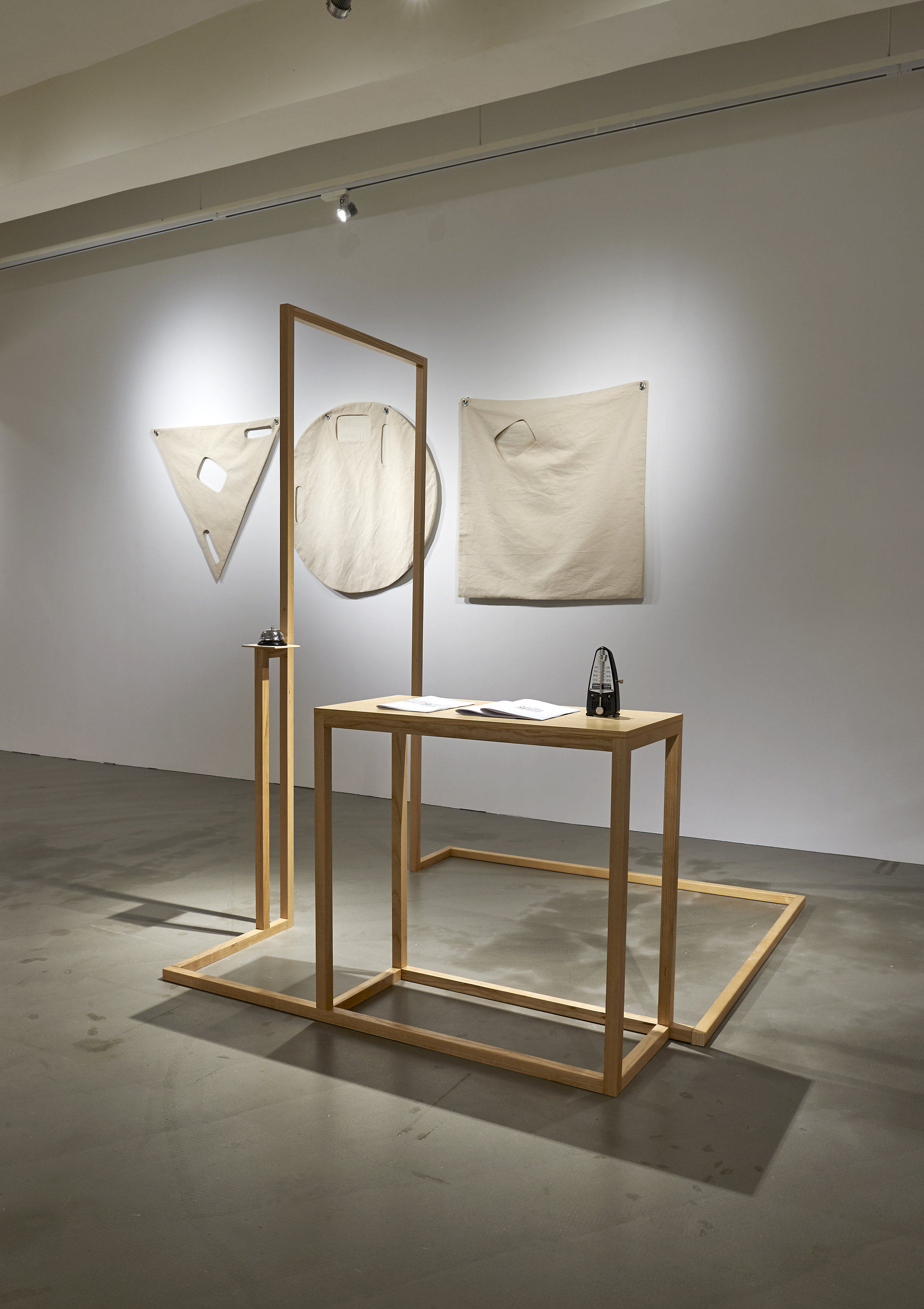
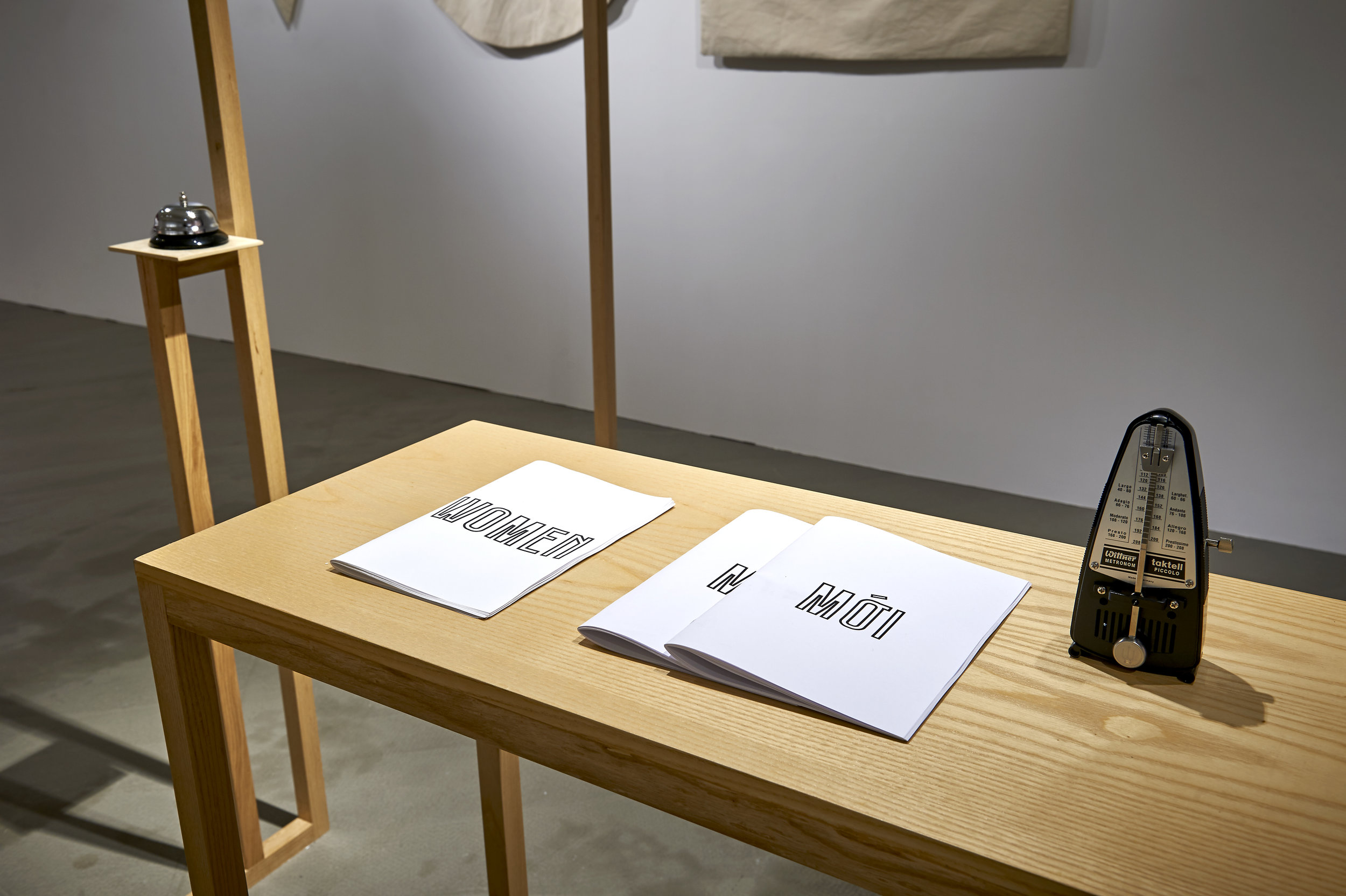
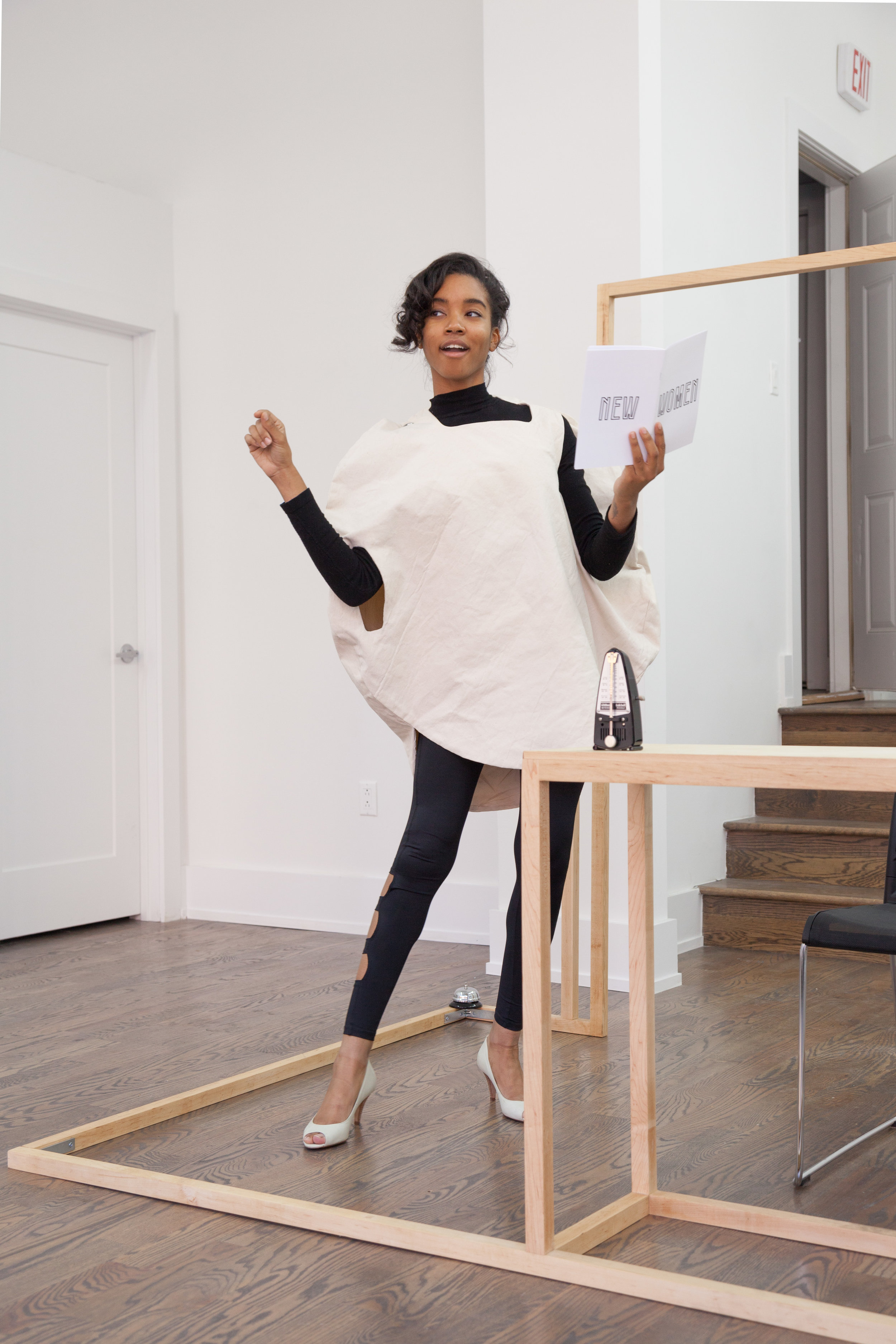
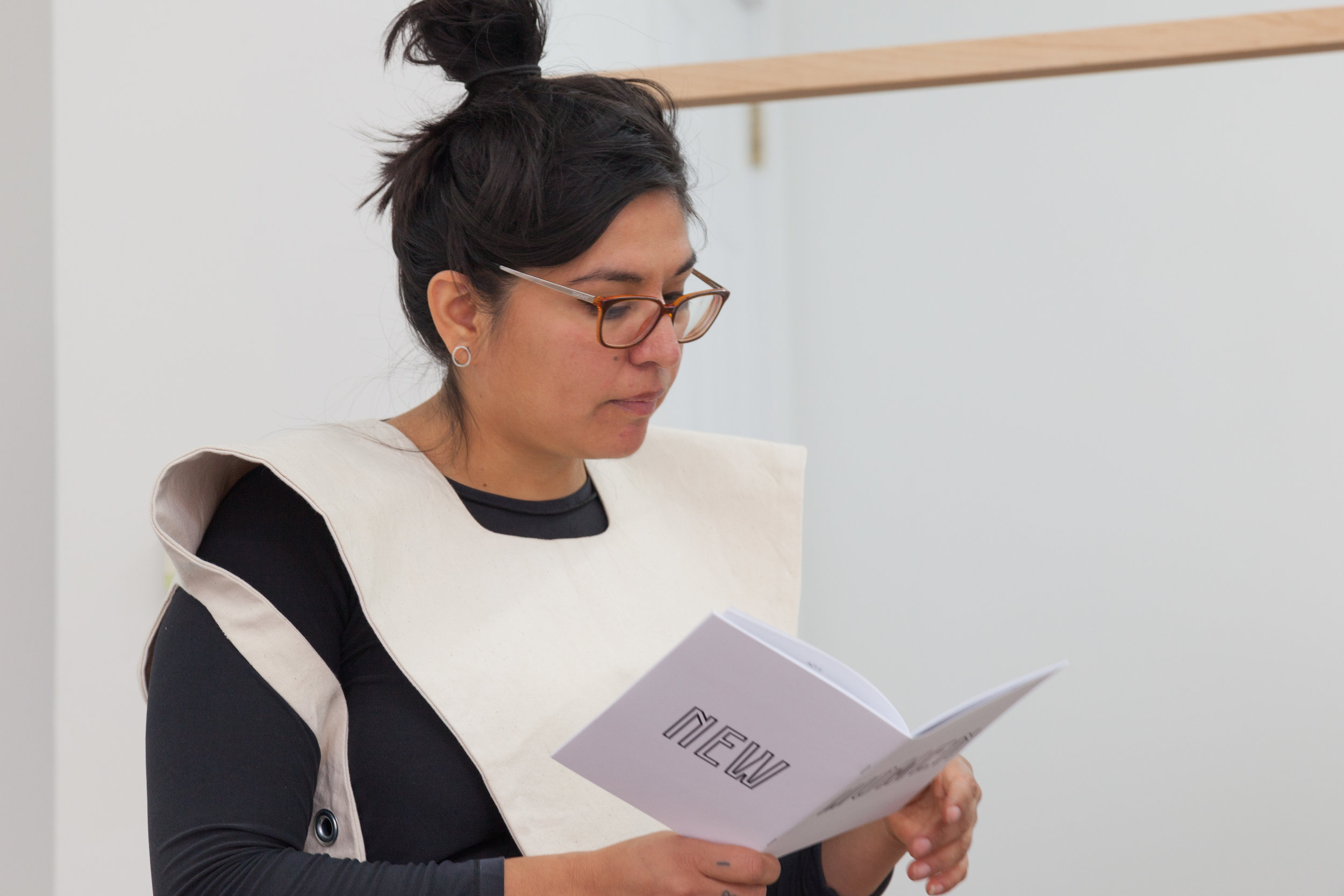
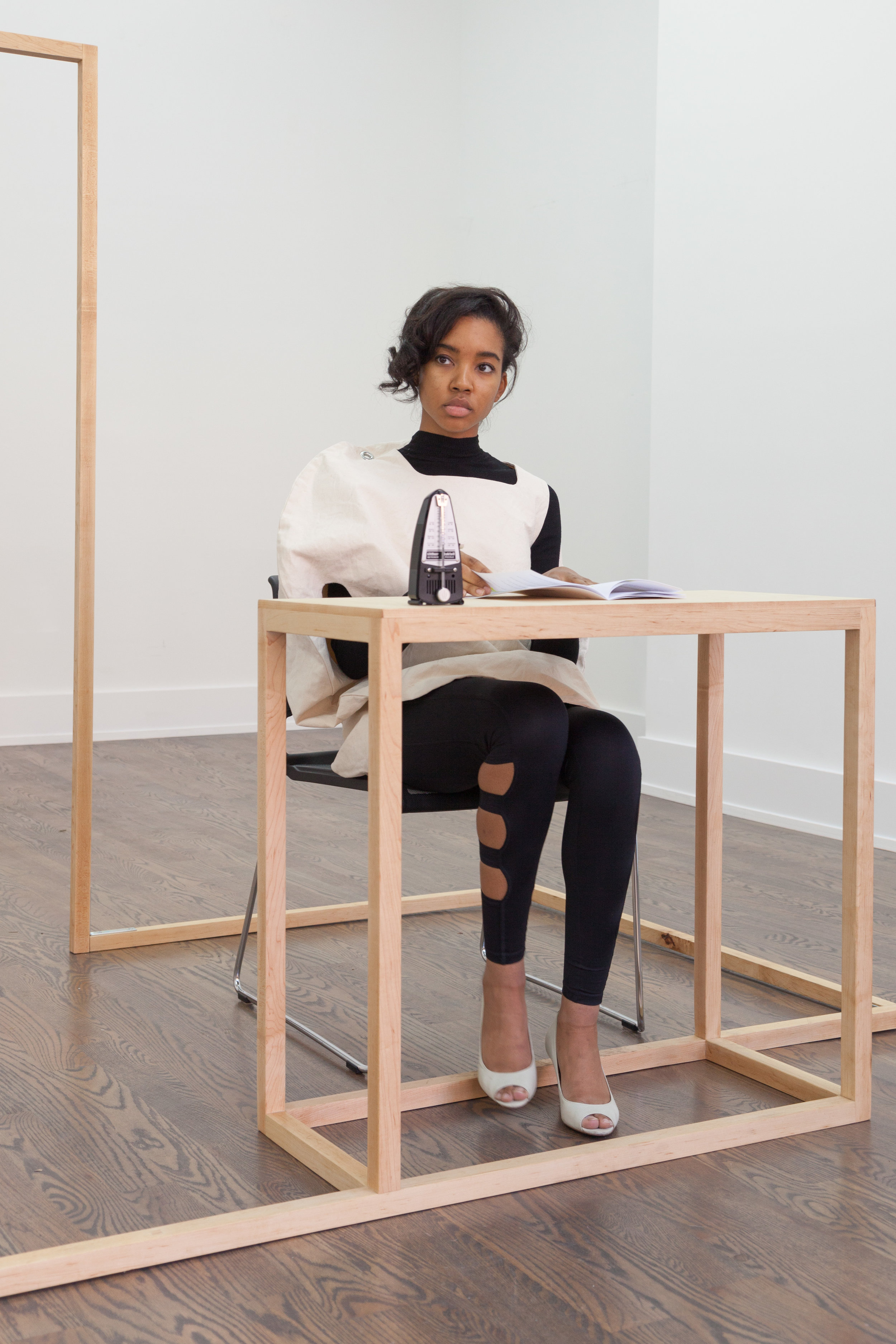
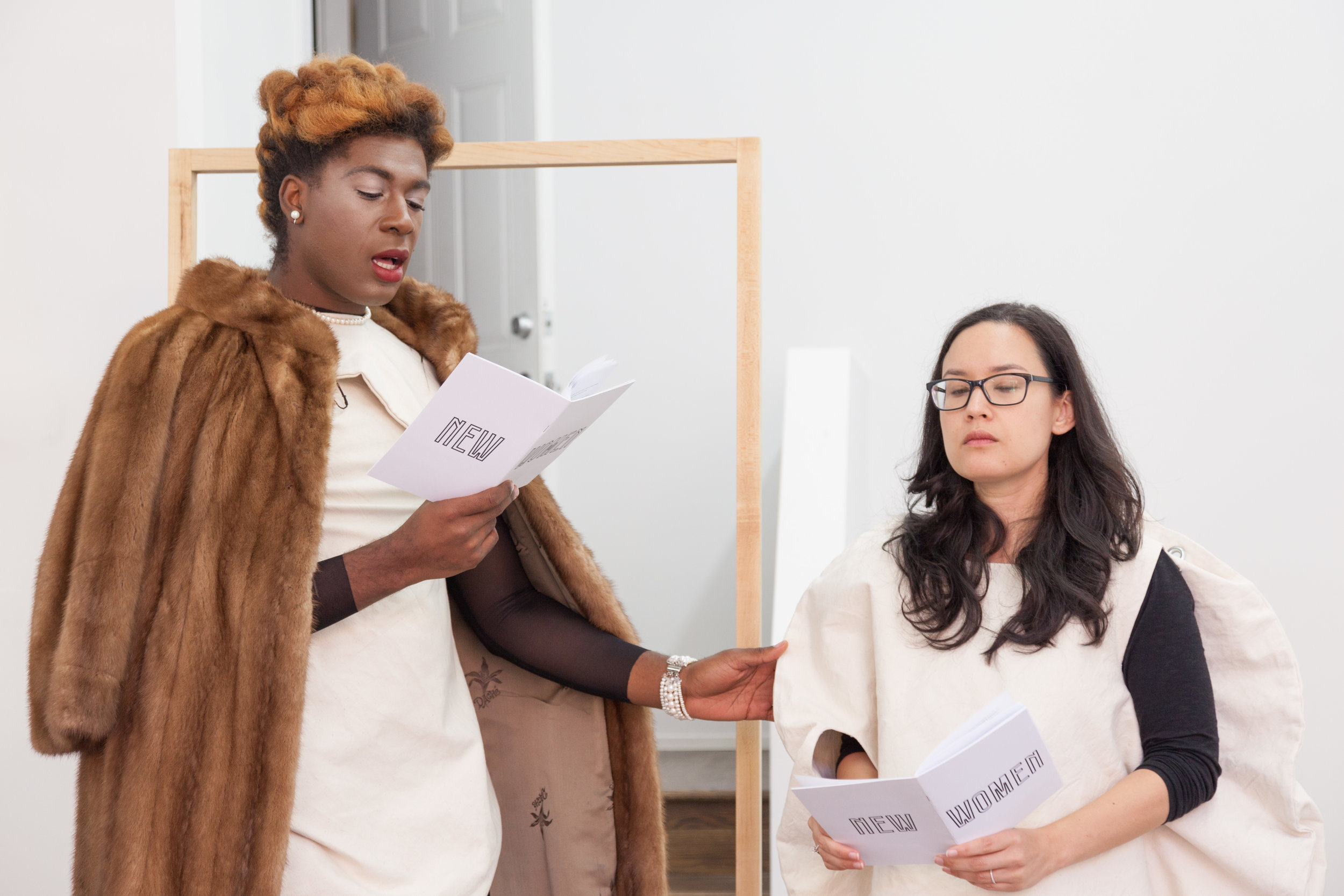
Dramatic Reading with Stage and Costumes.
2017
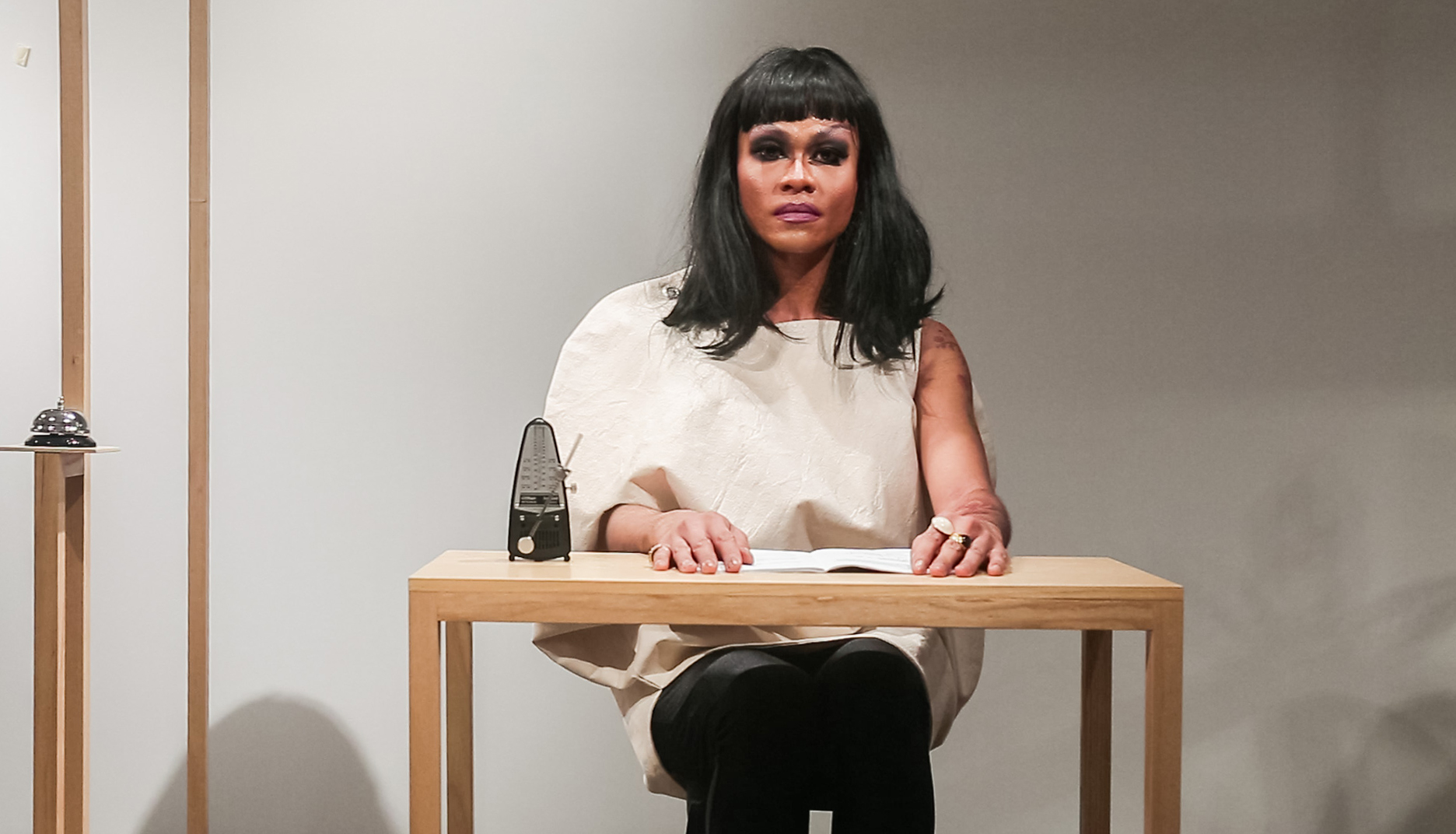
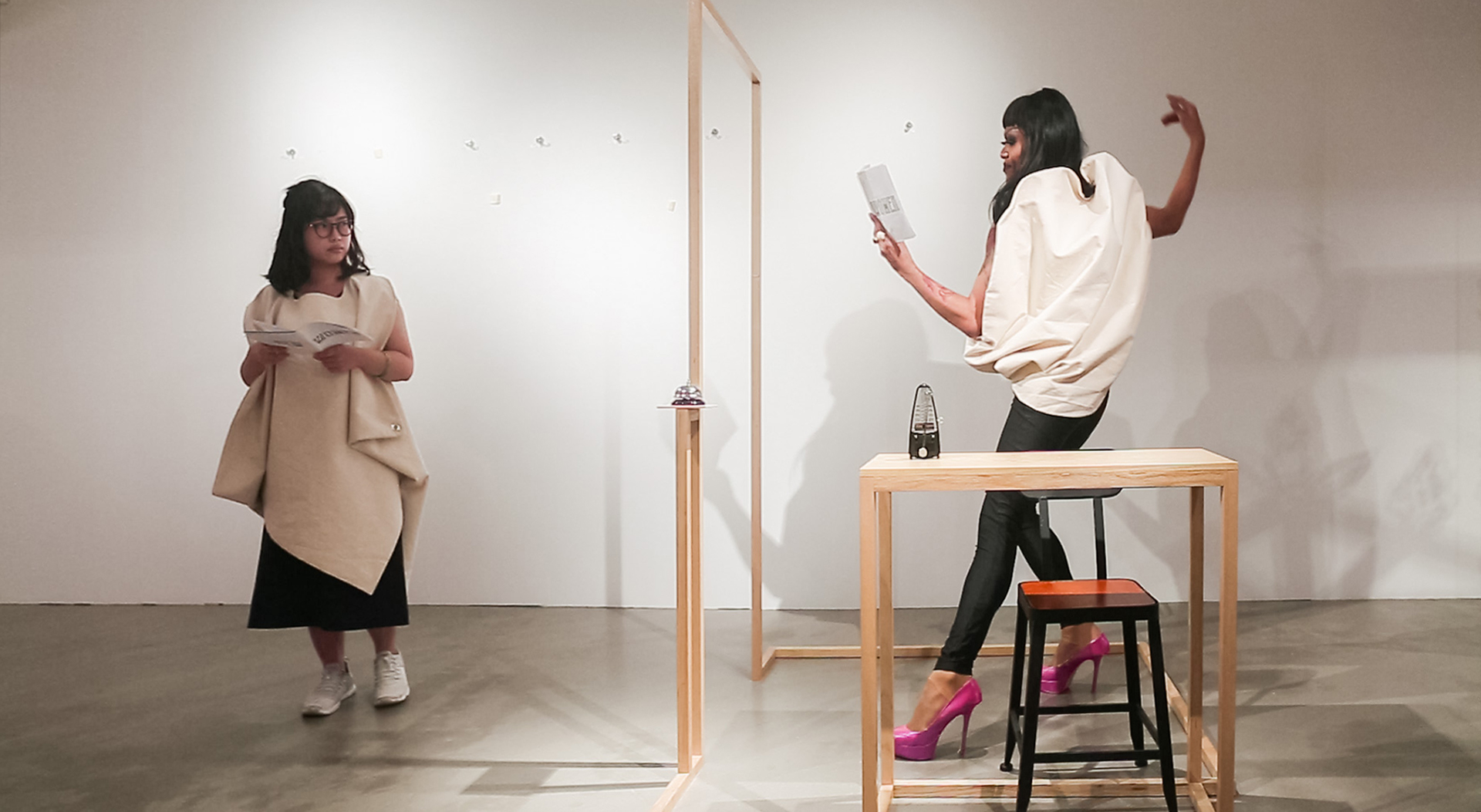
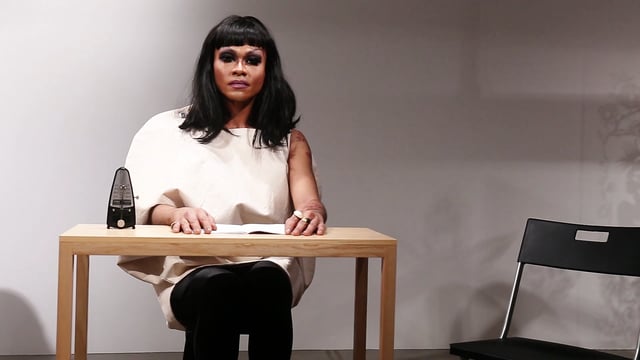
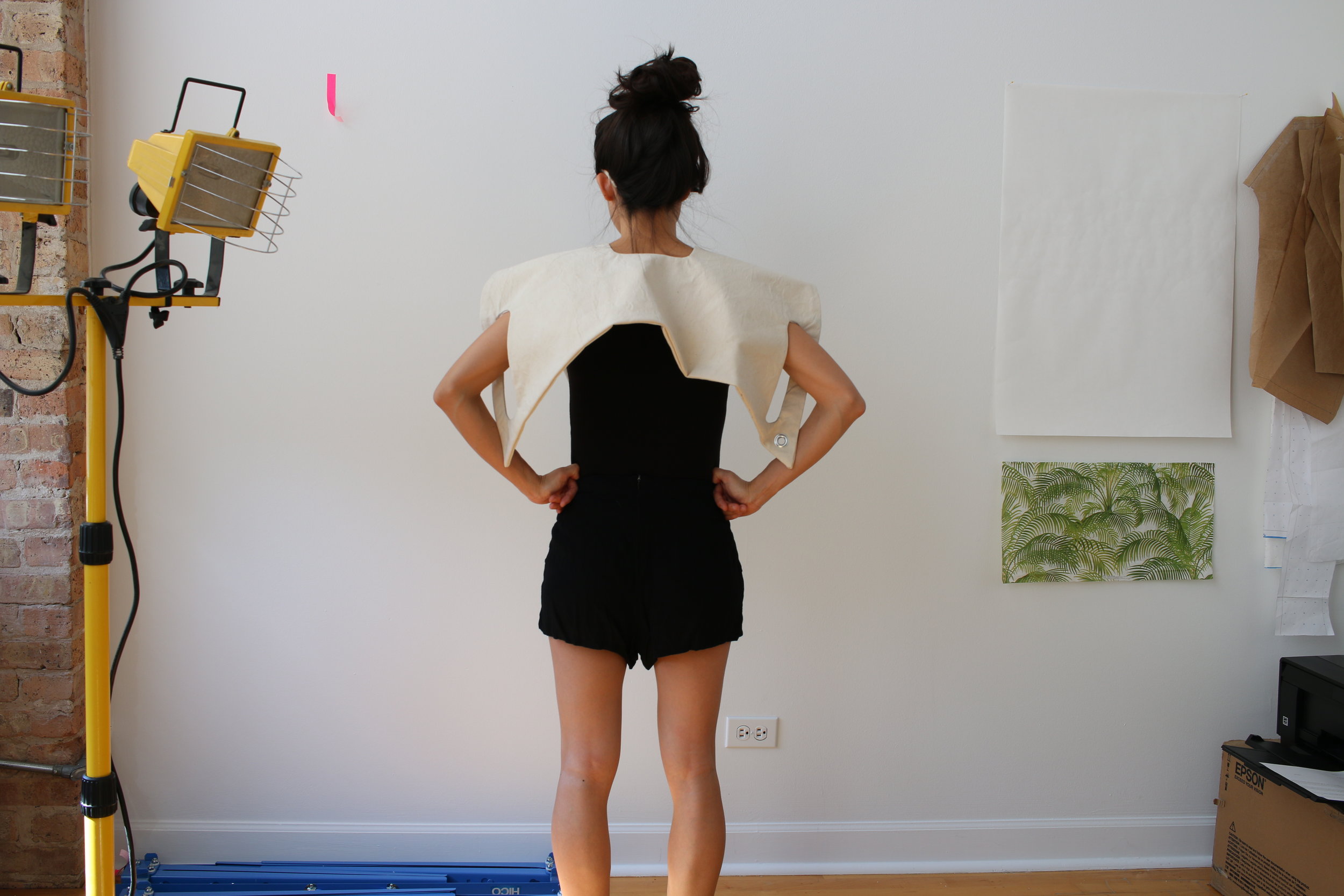
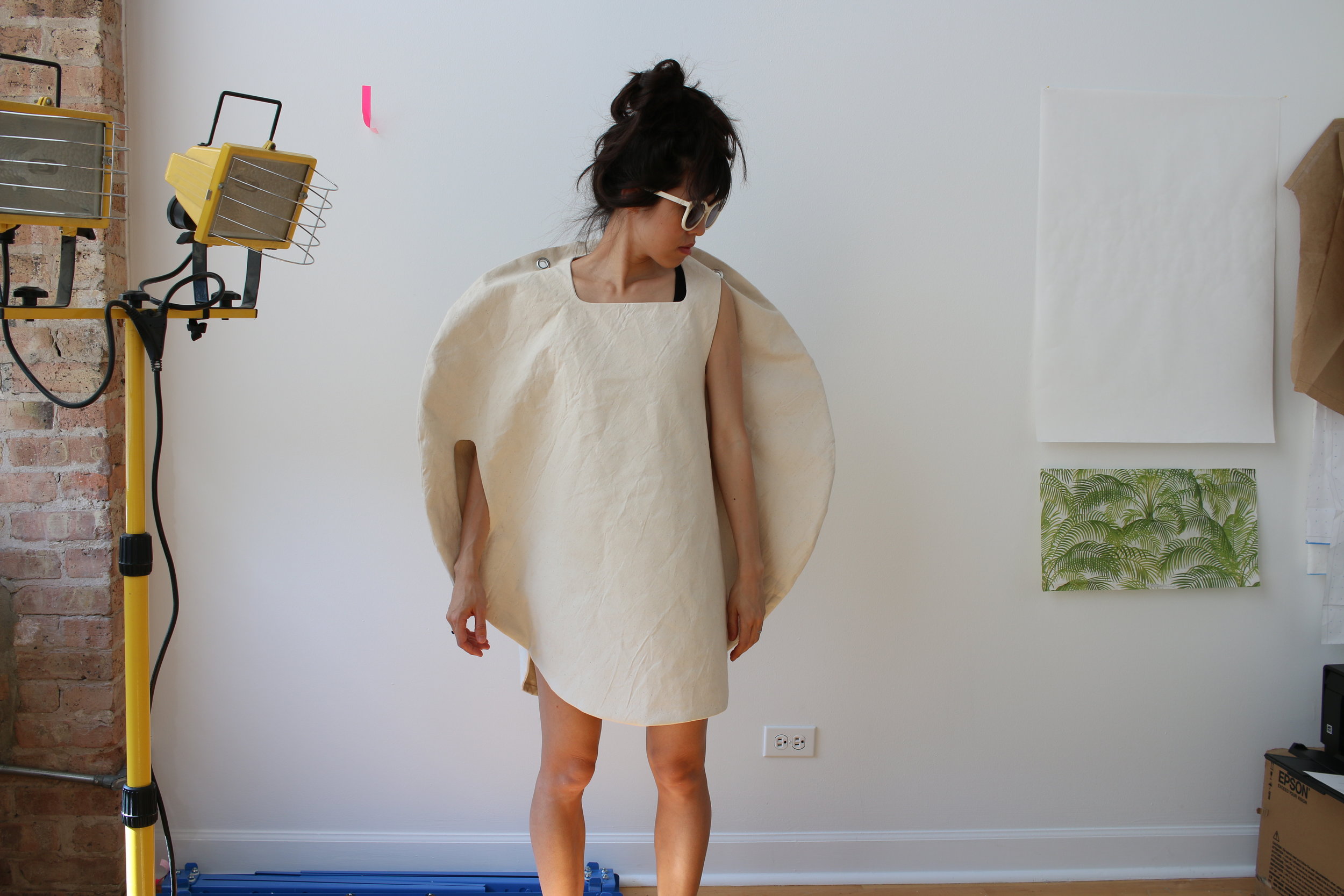
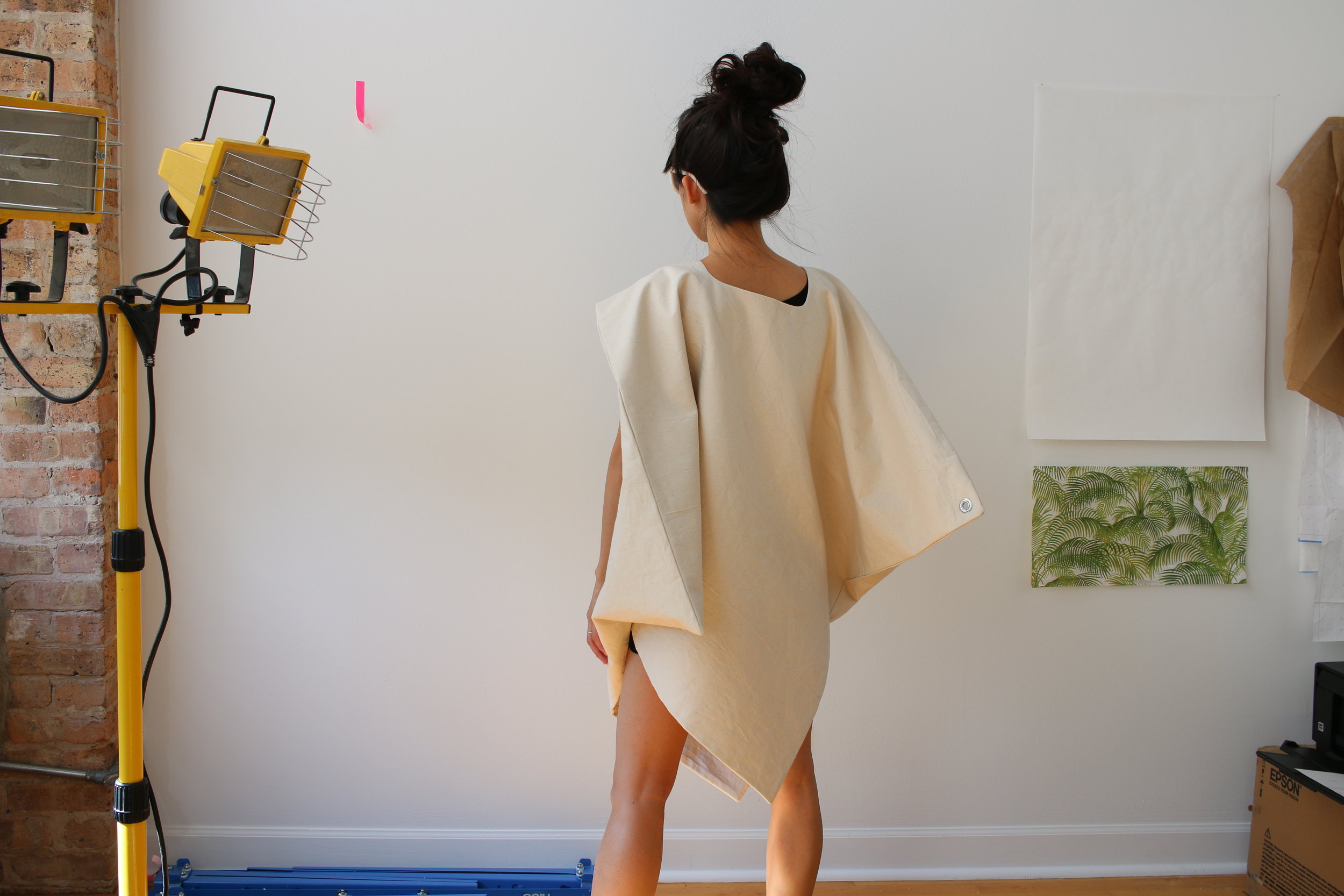
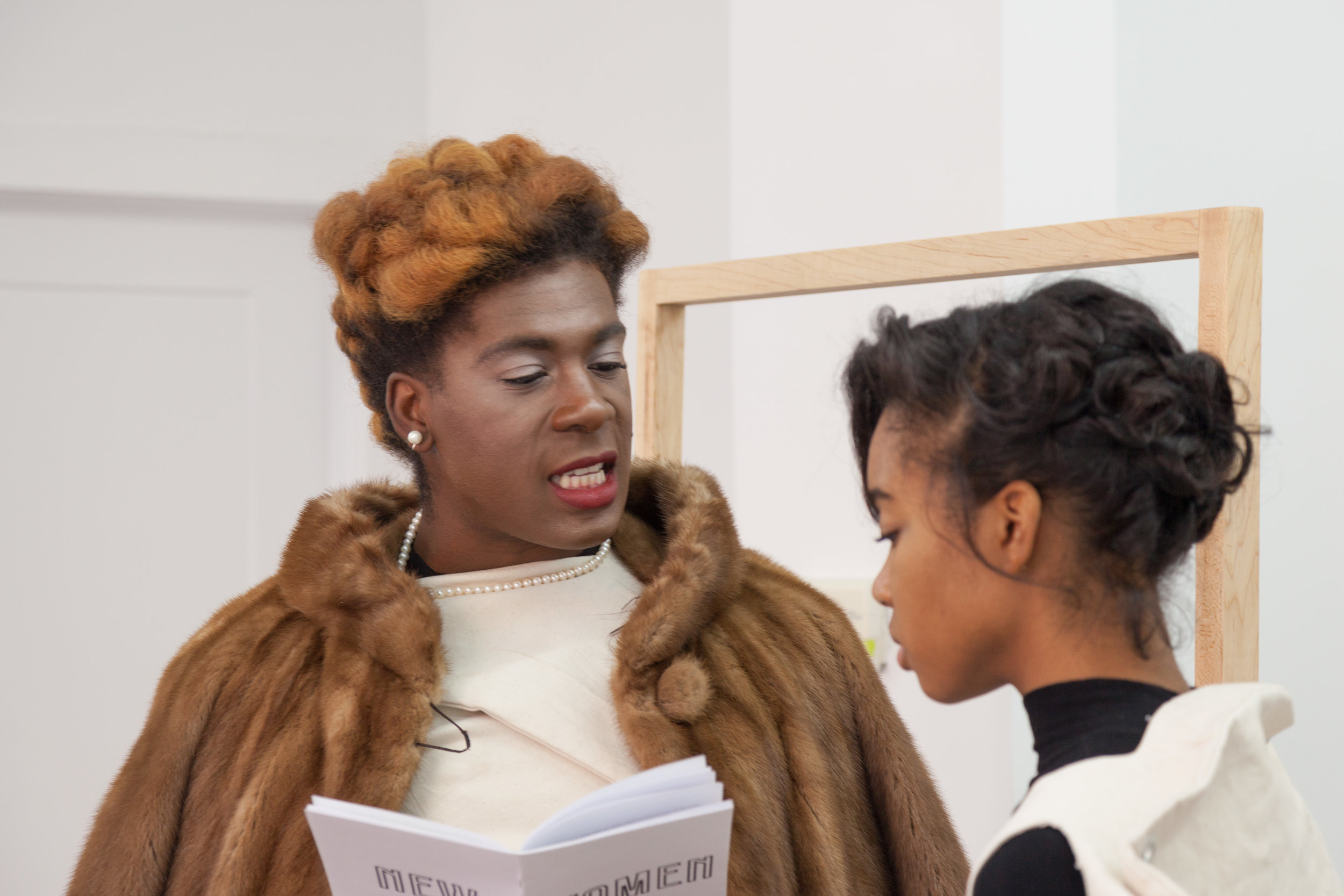
New Women tells the story of three women working for a contemporary women's magazine and was originally written in 1944 by seminal Vietnamese playwright Vũ Đình Long. Although the play was seen as modernizing because of its French-influenced "théâtre-parlé" style, the plot champions a patriarchal, Confucian gender structure: the main female character is preyed upon by the male publisher of the magazine and one woman is pitted against another. Ngô uses the 20th century story to reexamine how patriarchy and capitalism operate in concert, yet invisibly to exploit female-identifying bodies. In her dramatic reading, Hương Ngô adapted the play by omitting all of the male voices. This process leaves behind blank spaces and long pauses, opening the text to a contemporary reinterpretation.
The original play was inspired by the actual magazine Phụ nữ Tân văn, which was published out of Saigon from 1929 – 1935 and covered a wide range of topics including home-making, child rearing, relationships with the family, and politics. Political content that was censored in mainstream magazines often went unremarked in Phụ nữ Tân văn, such as the results of a mock election, published while Vietnam was still under French colonial rule. While it is difficult to trace actual characters from Đàn bà mới to Phụ nữ Tân văn, one can see parallels in conflicting ideologies of Marxism, French feminism, and Confucianism in the magazine’s content and eventual fate.
Performance at Para Site, Hong Kong. Directors: David Borgonjon and Hera Chan. La Chiquitta as Tố Lan, Claudia Jim as Minh Nguyệt, Jes Fan as Song Quang, Hera Chan as Stagehand. Documentation by Kwon Lok Man.
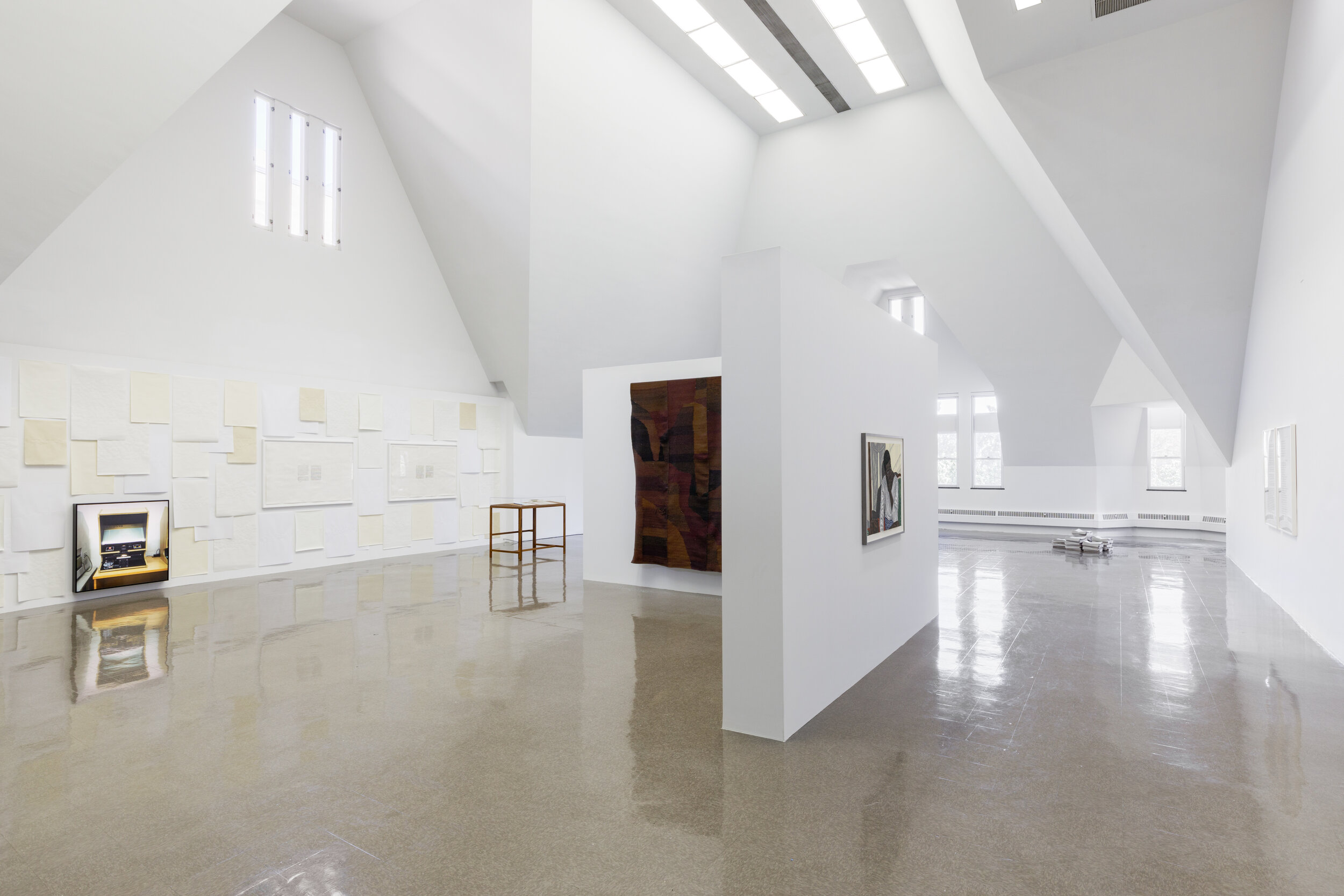
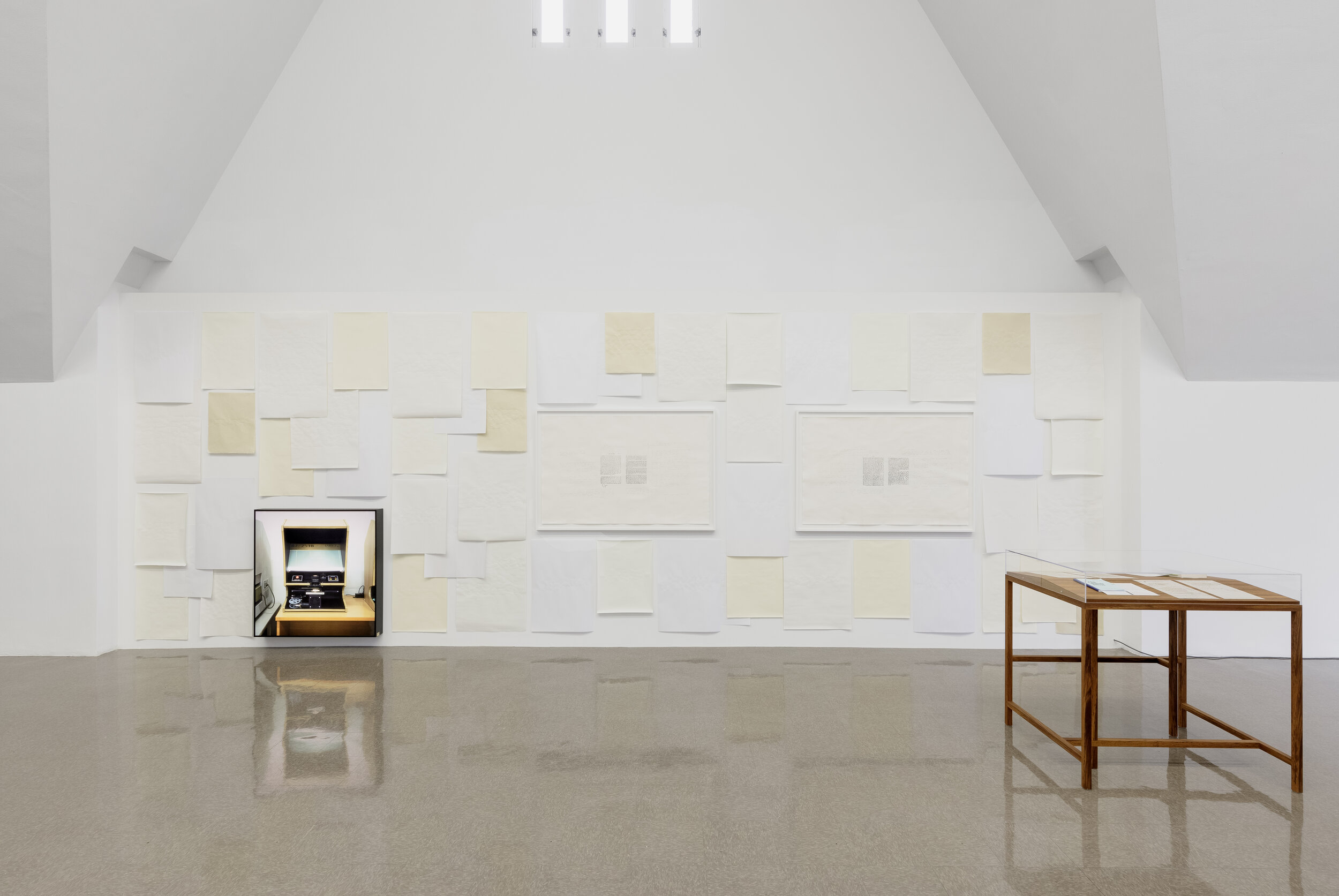
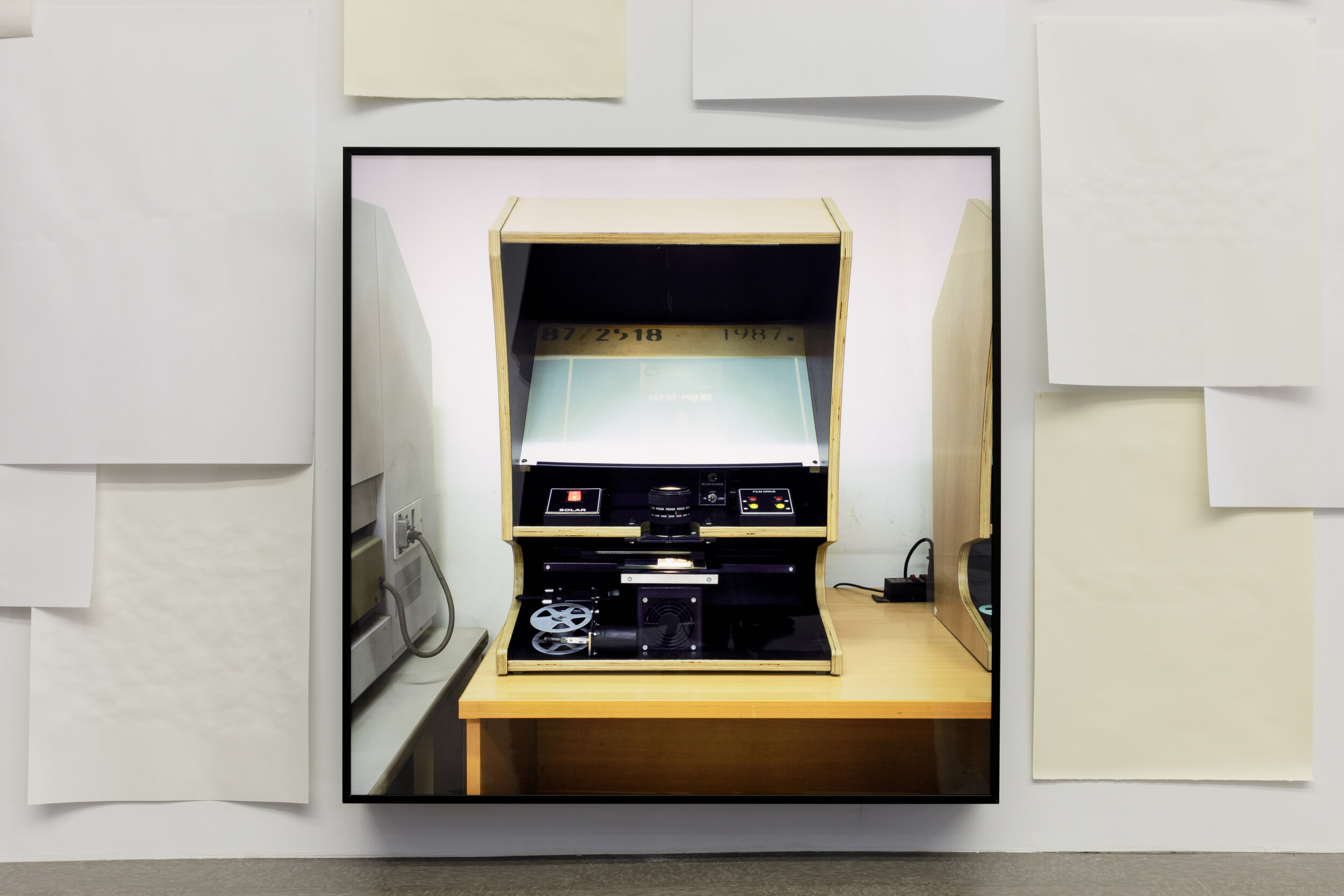
It Was Her Handwriting That Gave Her Away
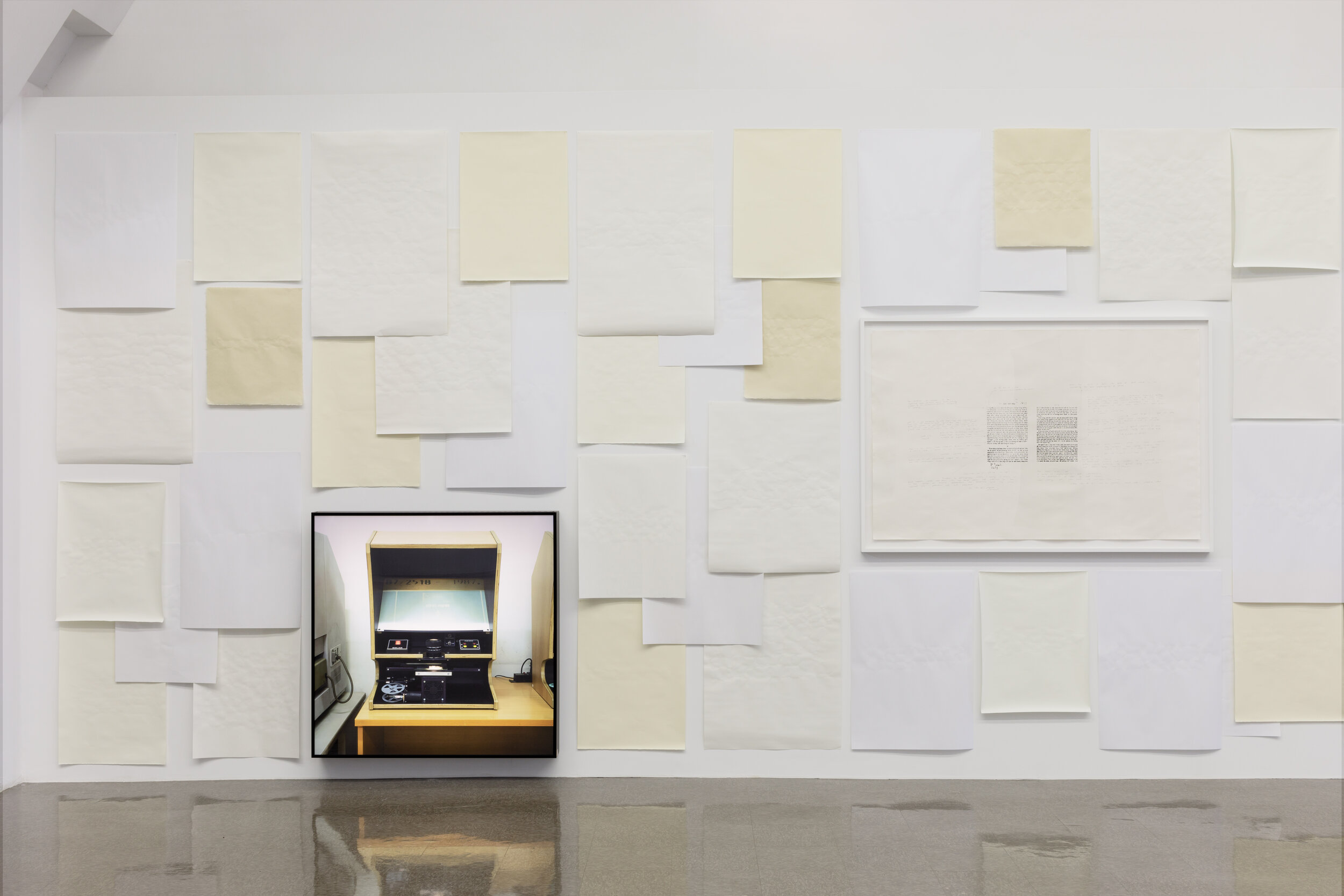
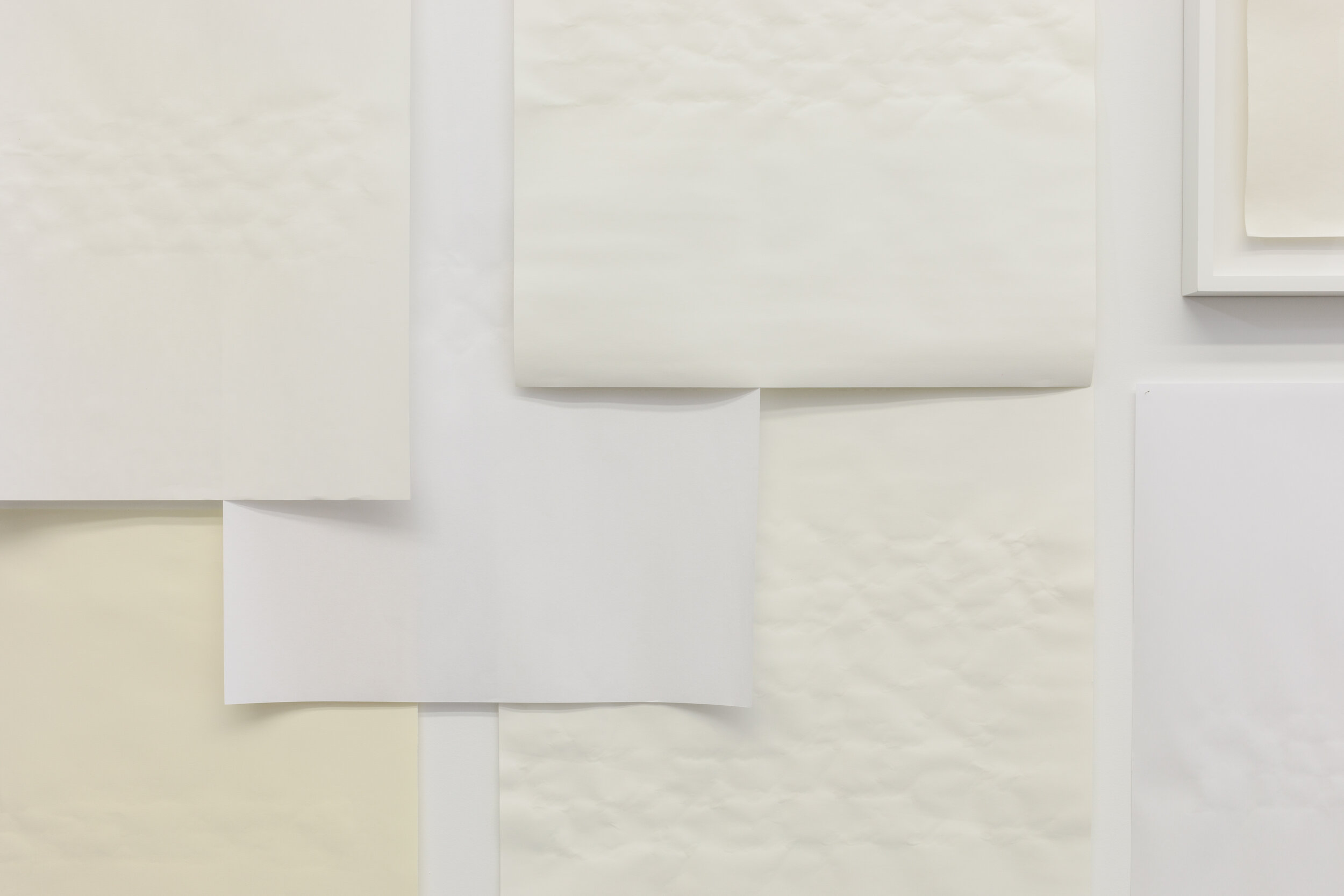
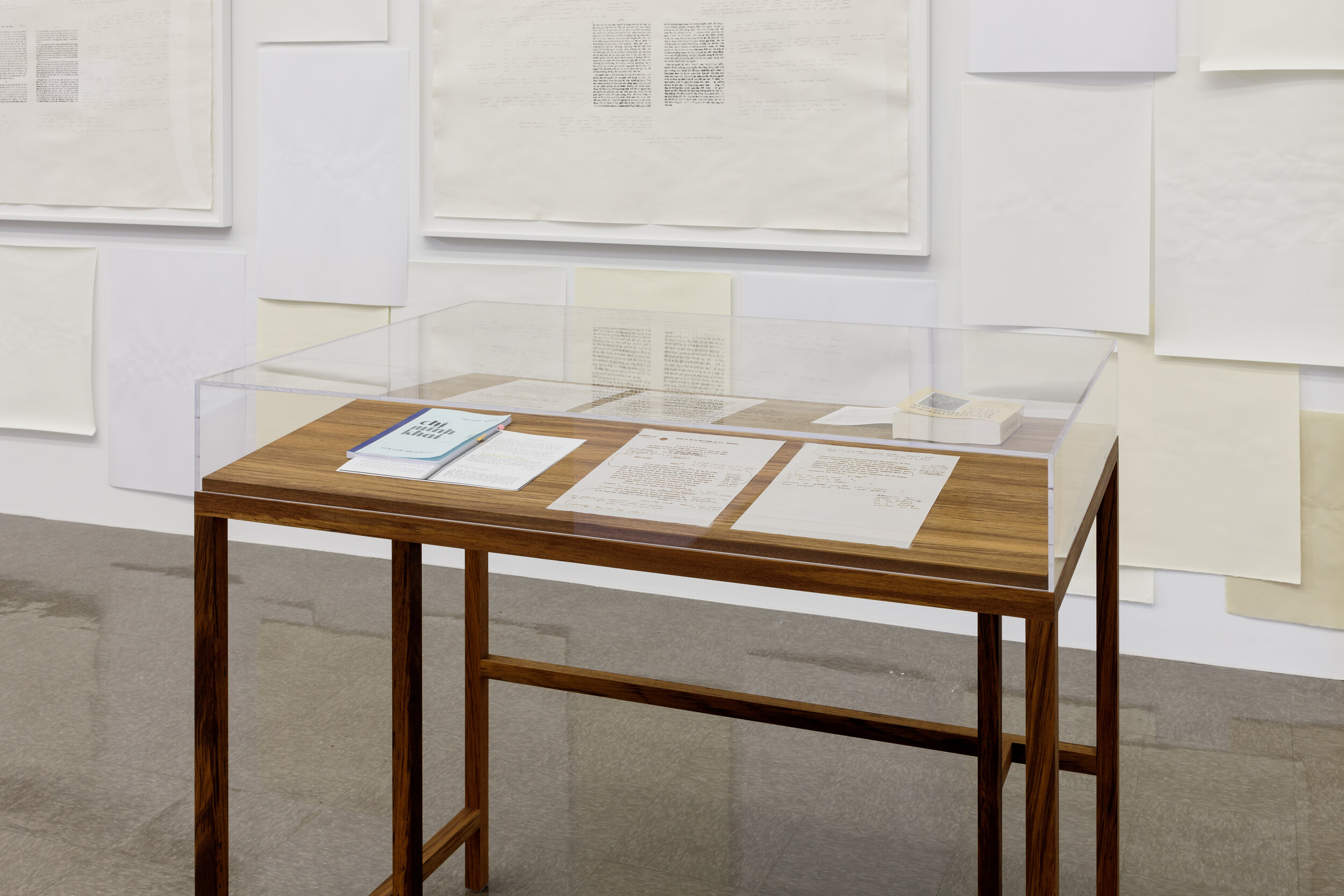
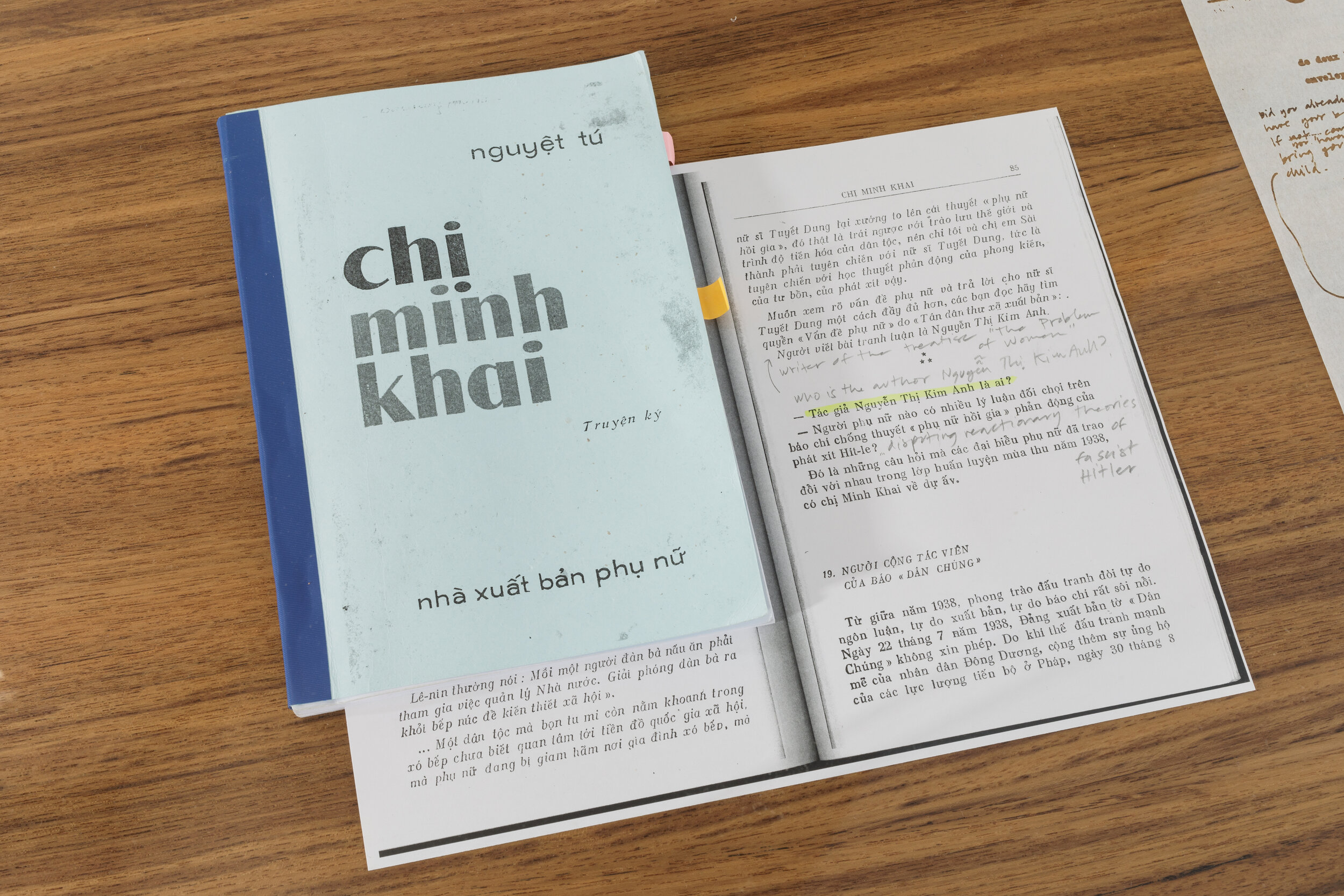
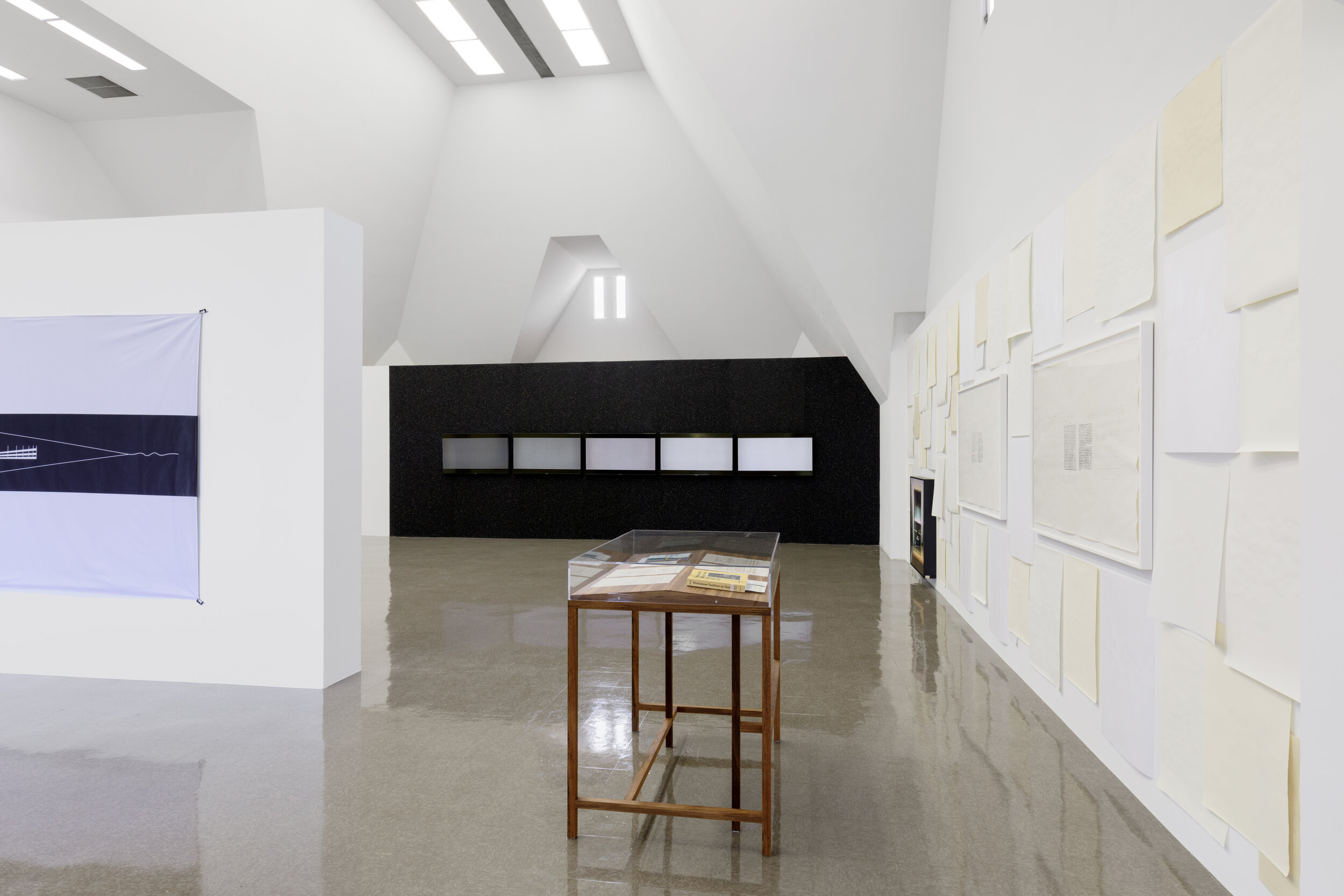
Invisible ink on paper, Framed relief prints with graphite, light box with printed dura trans, custom teak vitrine, laser cut onion-skin paper, books, Xerox with graphite.
2020
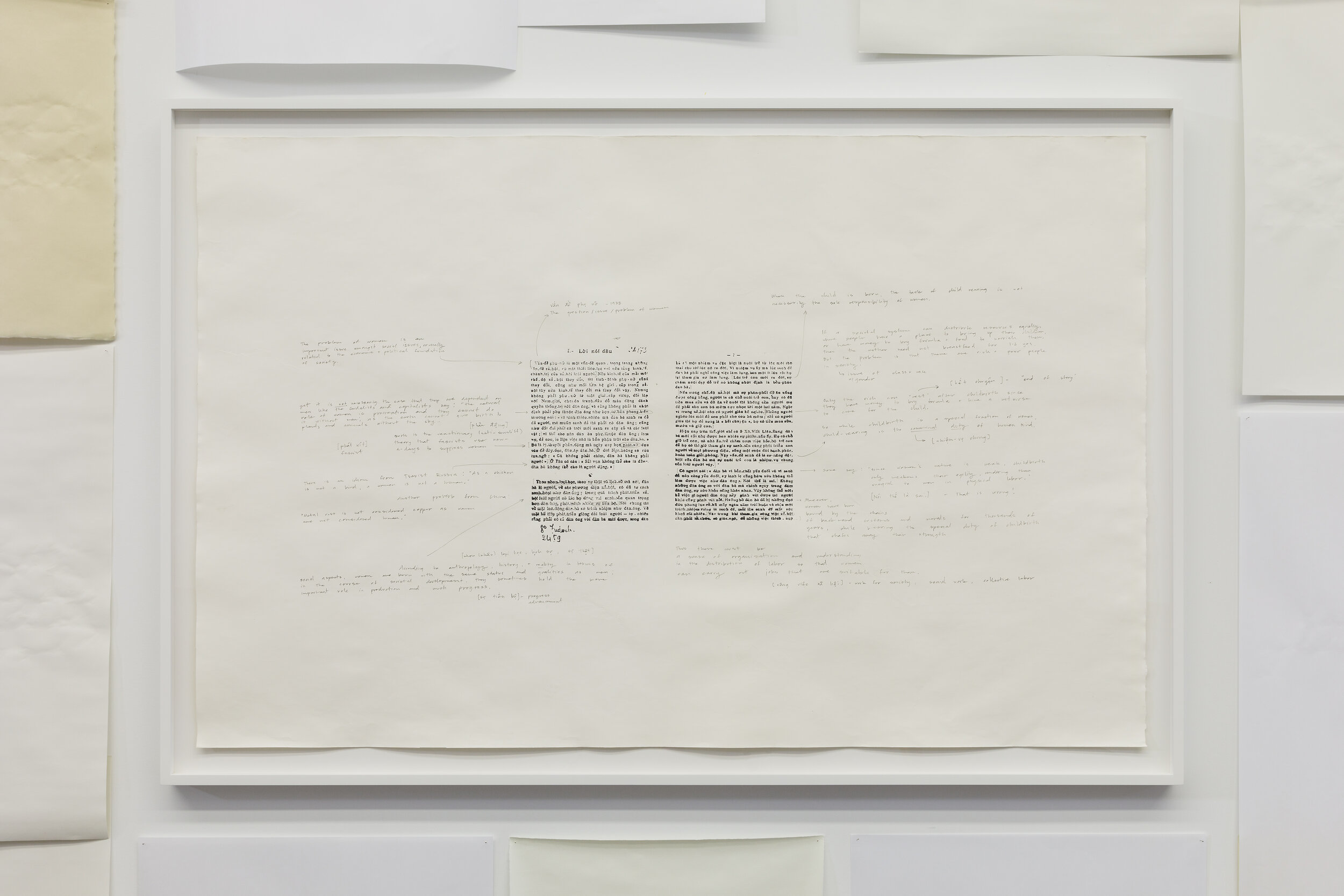
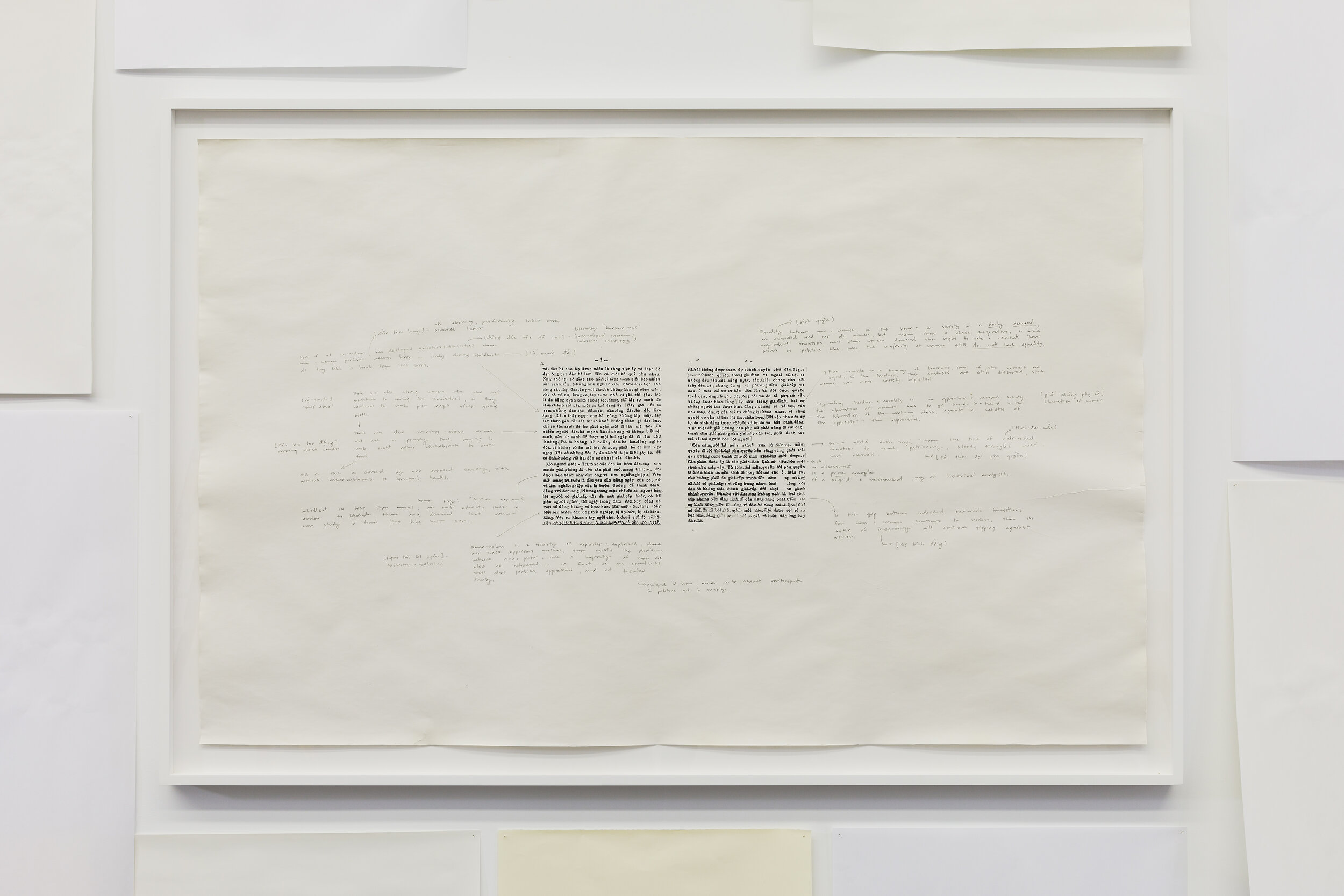
This installation holds tension between an intersectional Marxist and anti-Fascist theoretical text “Vấn đề phụ nữ” about motherhood, attributed to Nguyễn Thị Minh Khai, and letters written between her and other women in the anticolonial movement about their lived realities of sex, pregnancy, and being a women within a male-dominated revolution.
Installation view at the Renaissance Society at the University of Chicago for the exhibition Nine Lives, Photo: Useful Art Services.
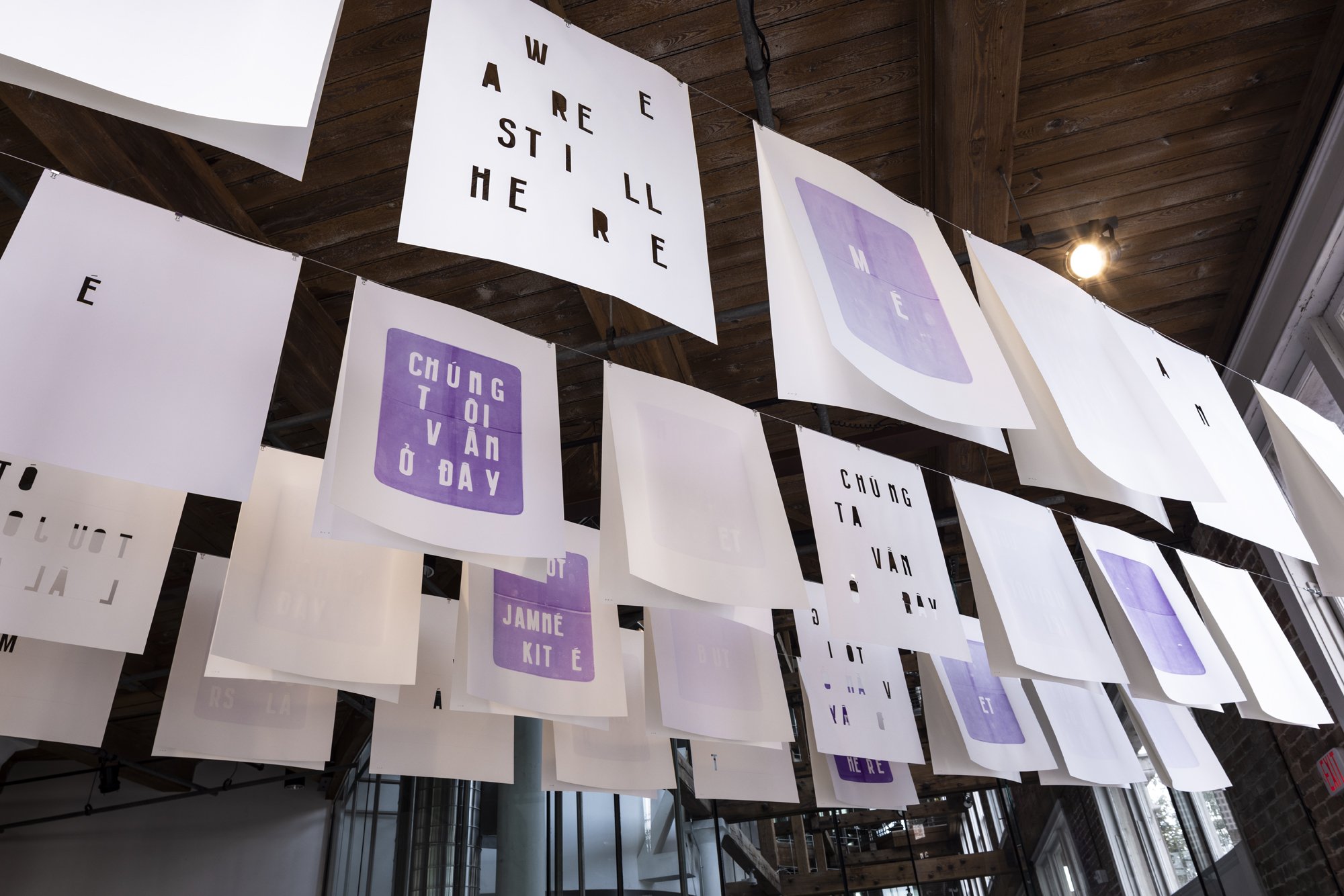
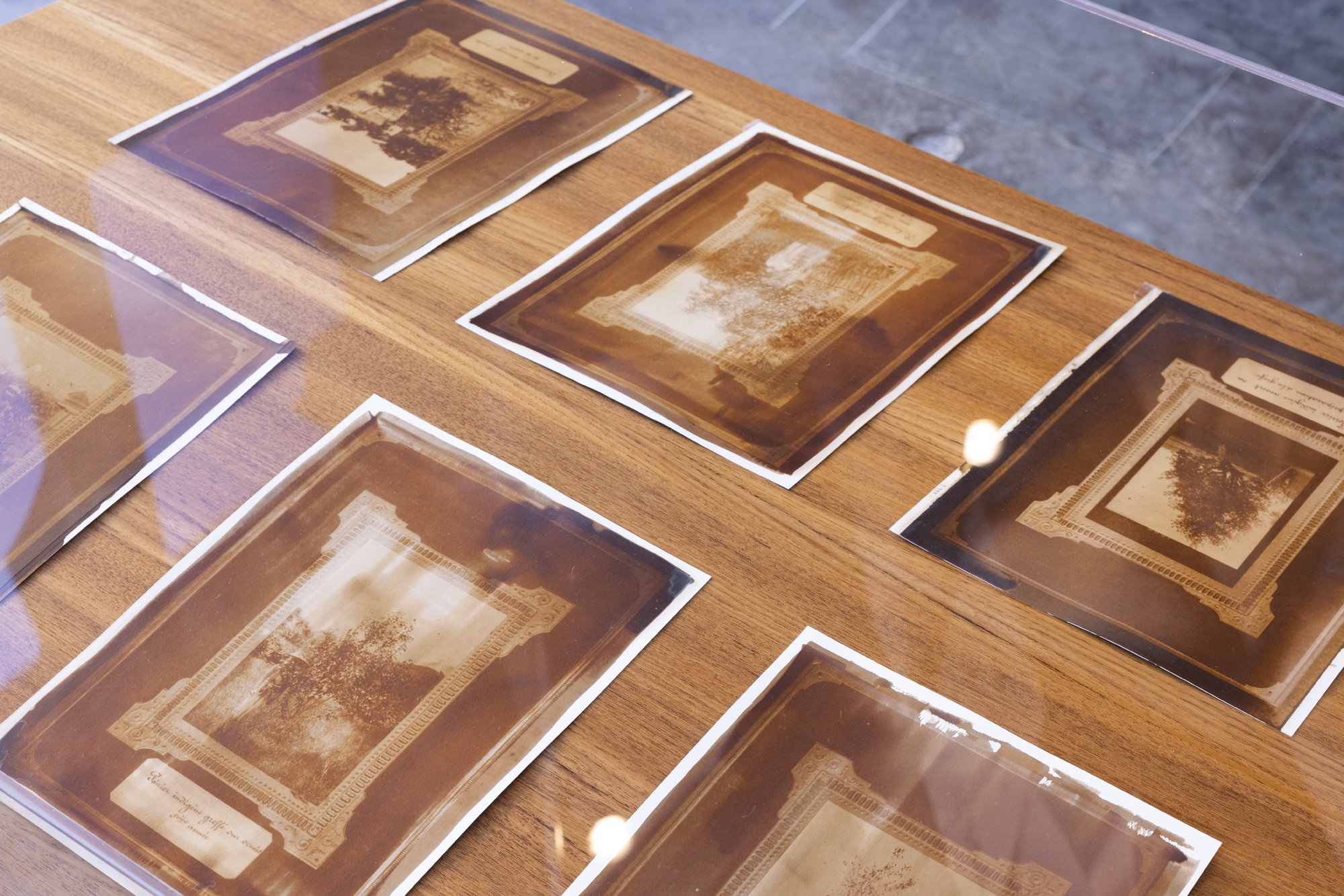
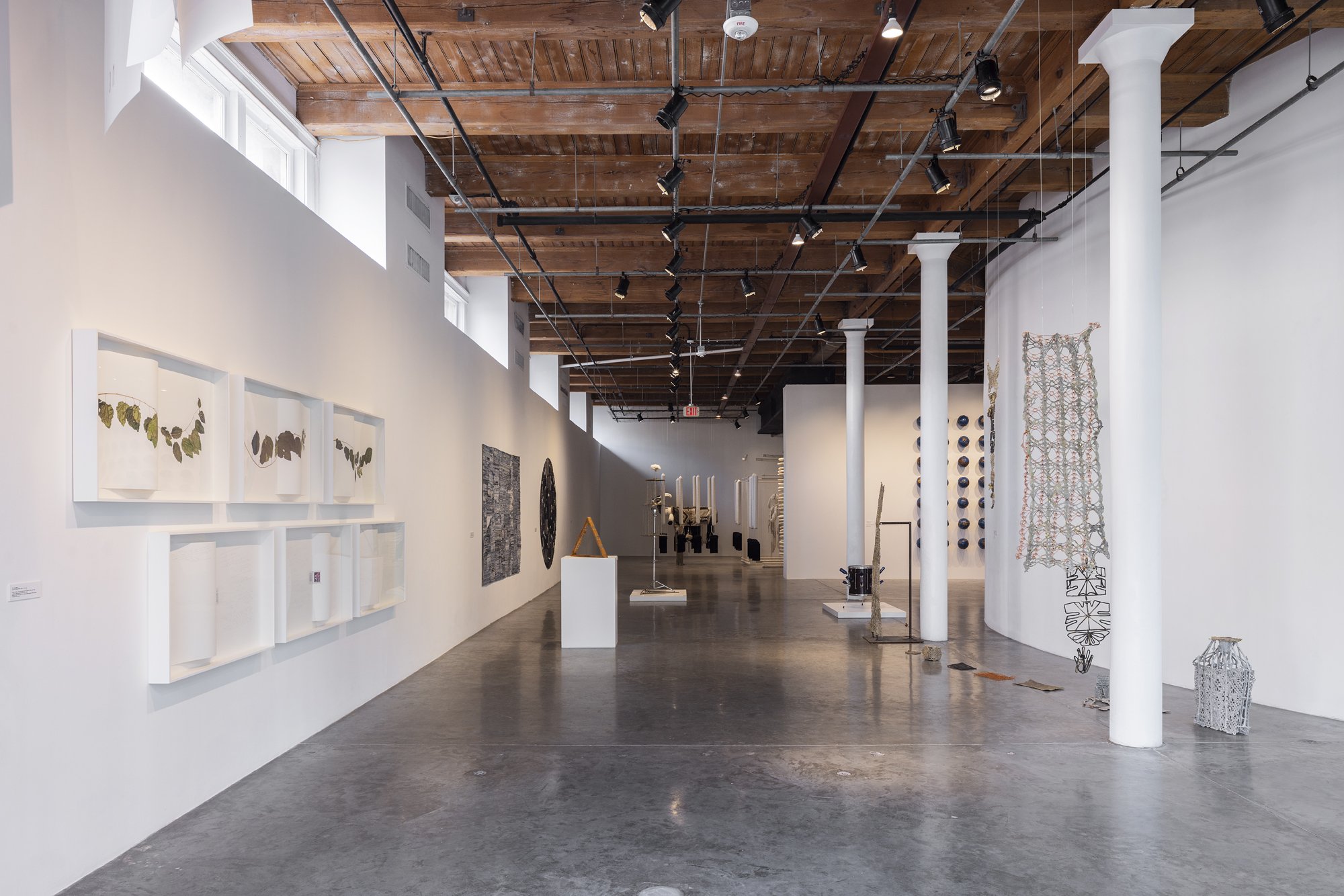
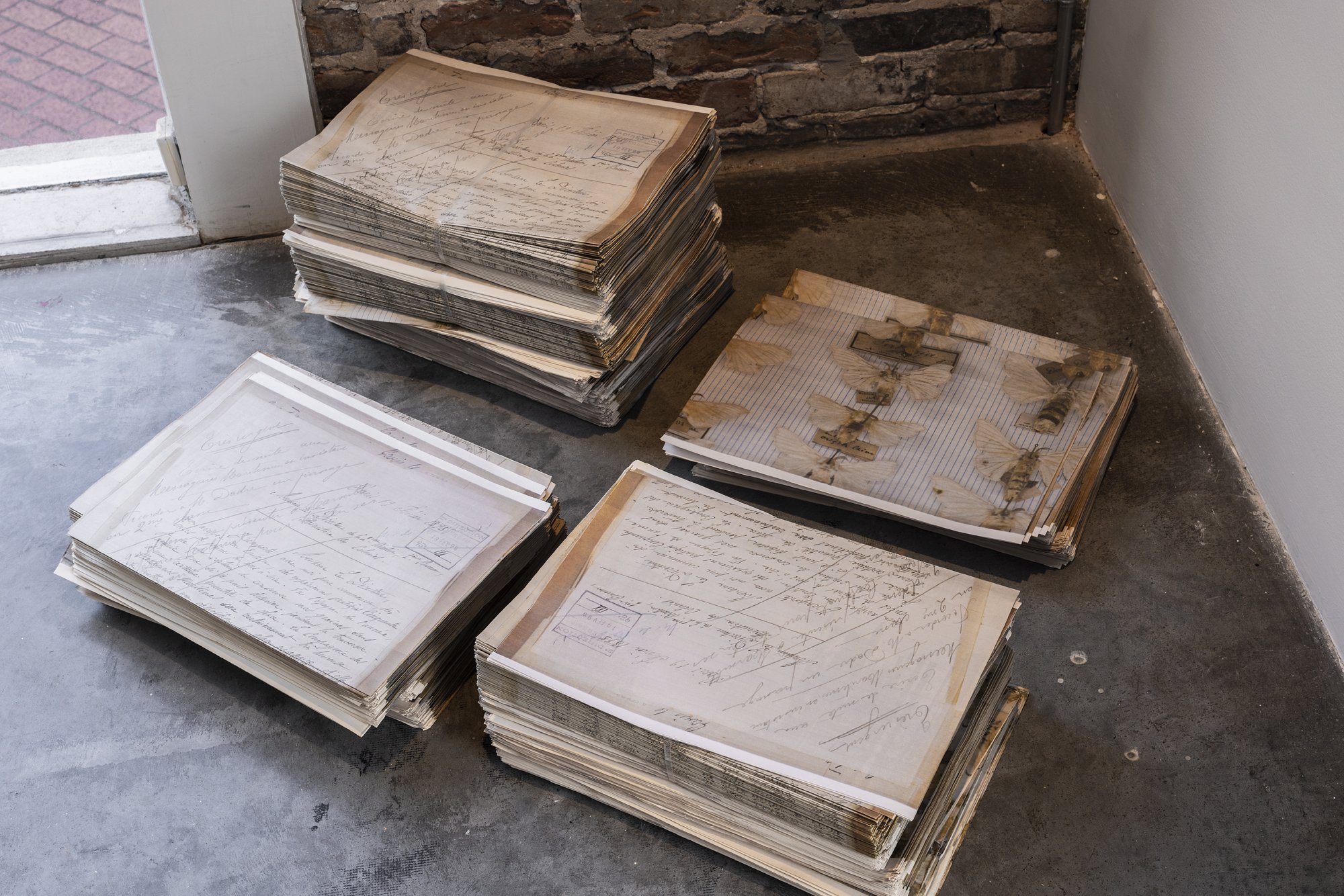
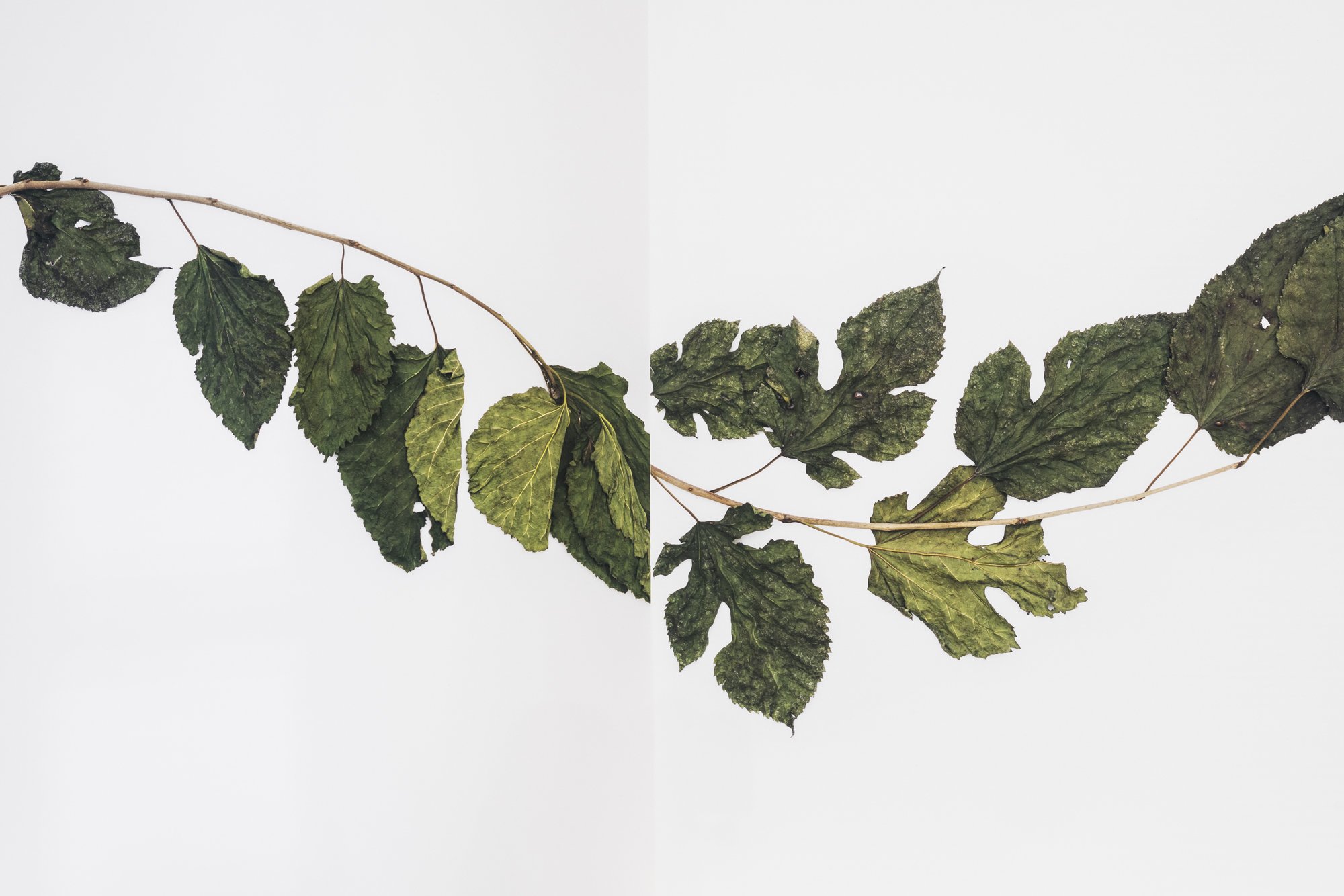
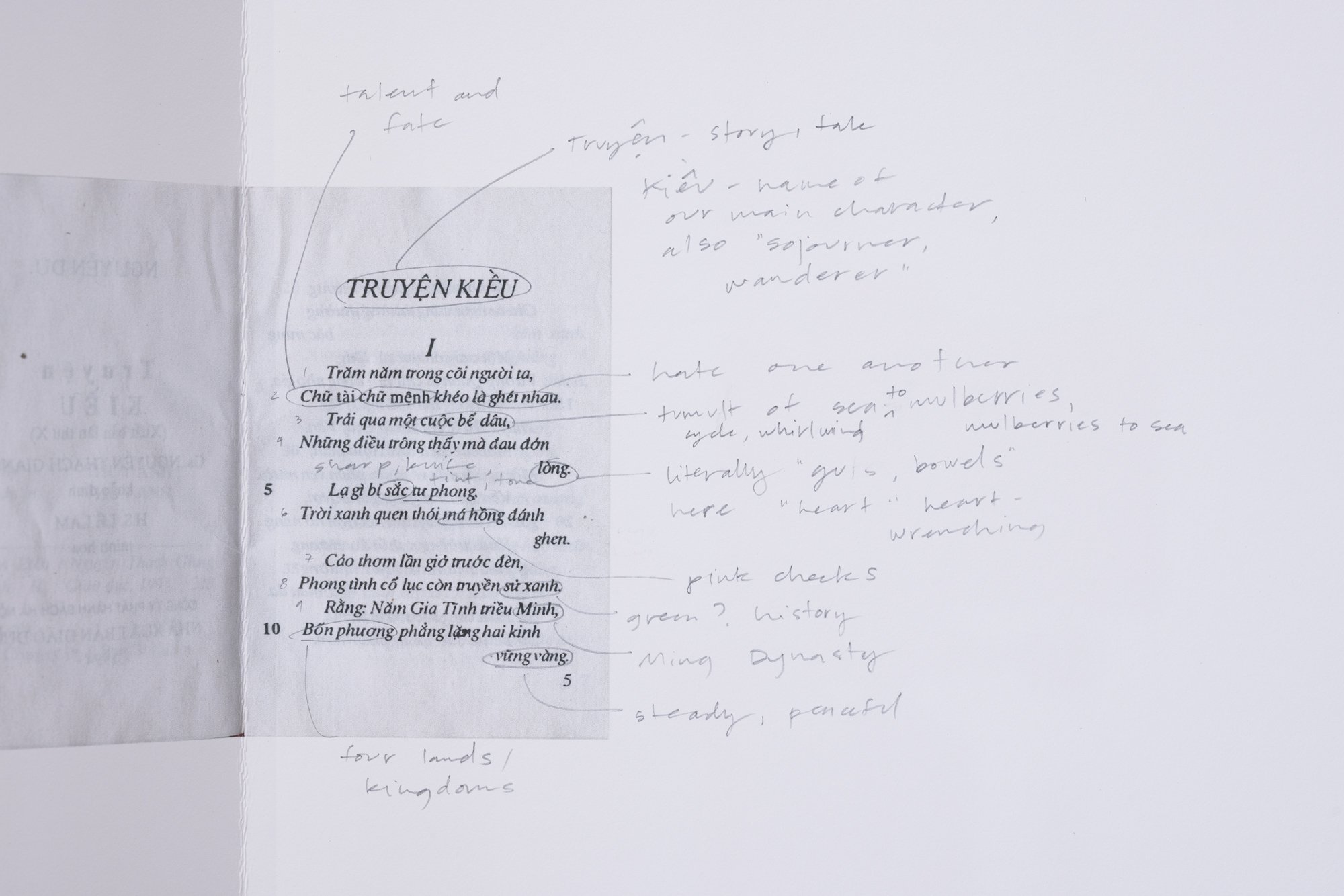
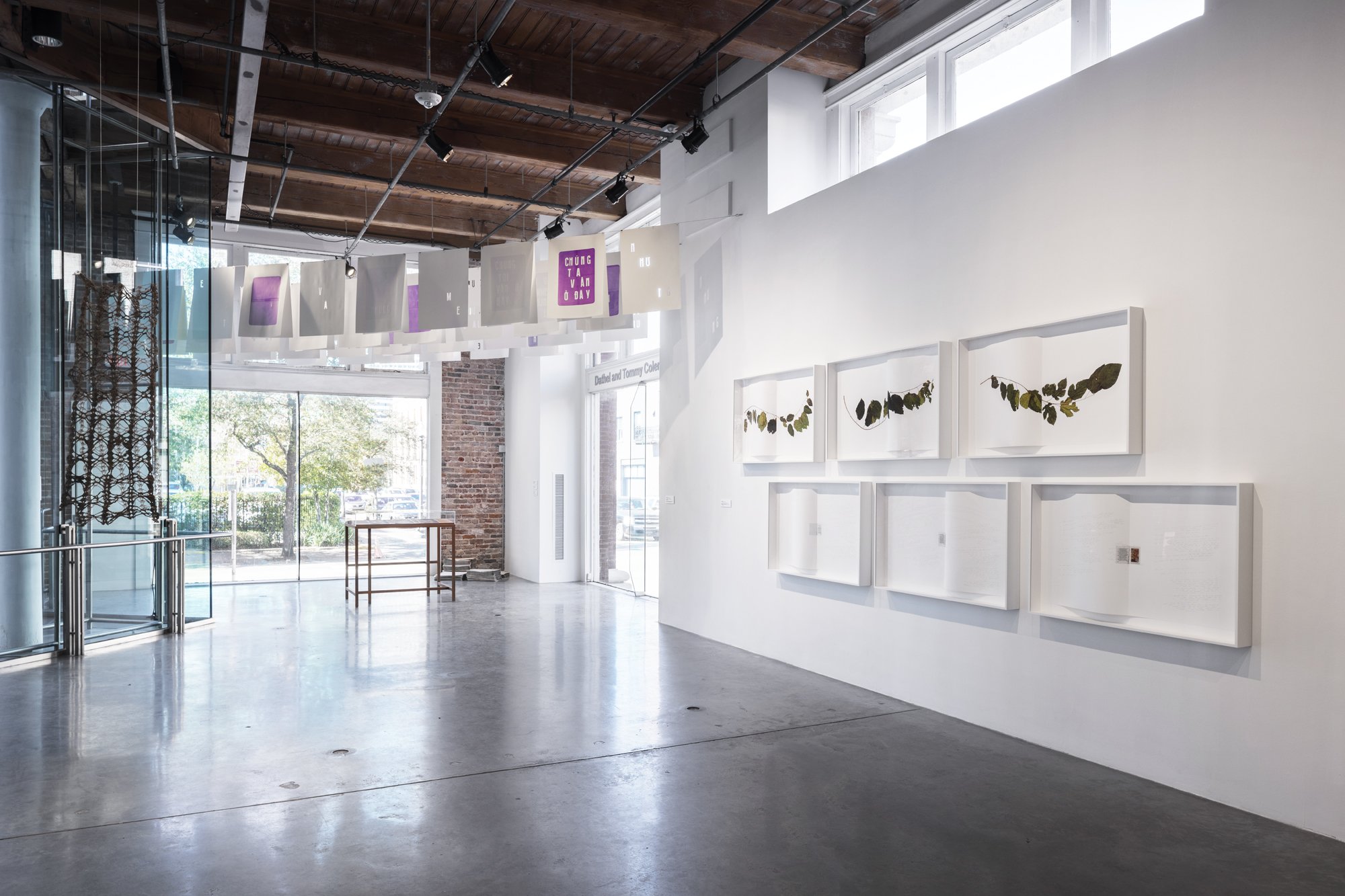
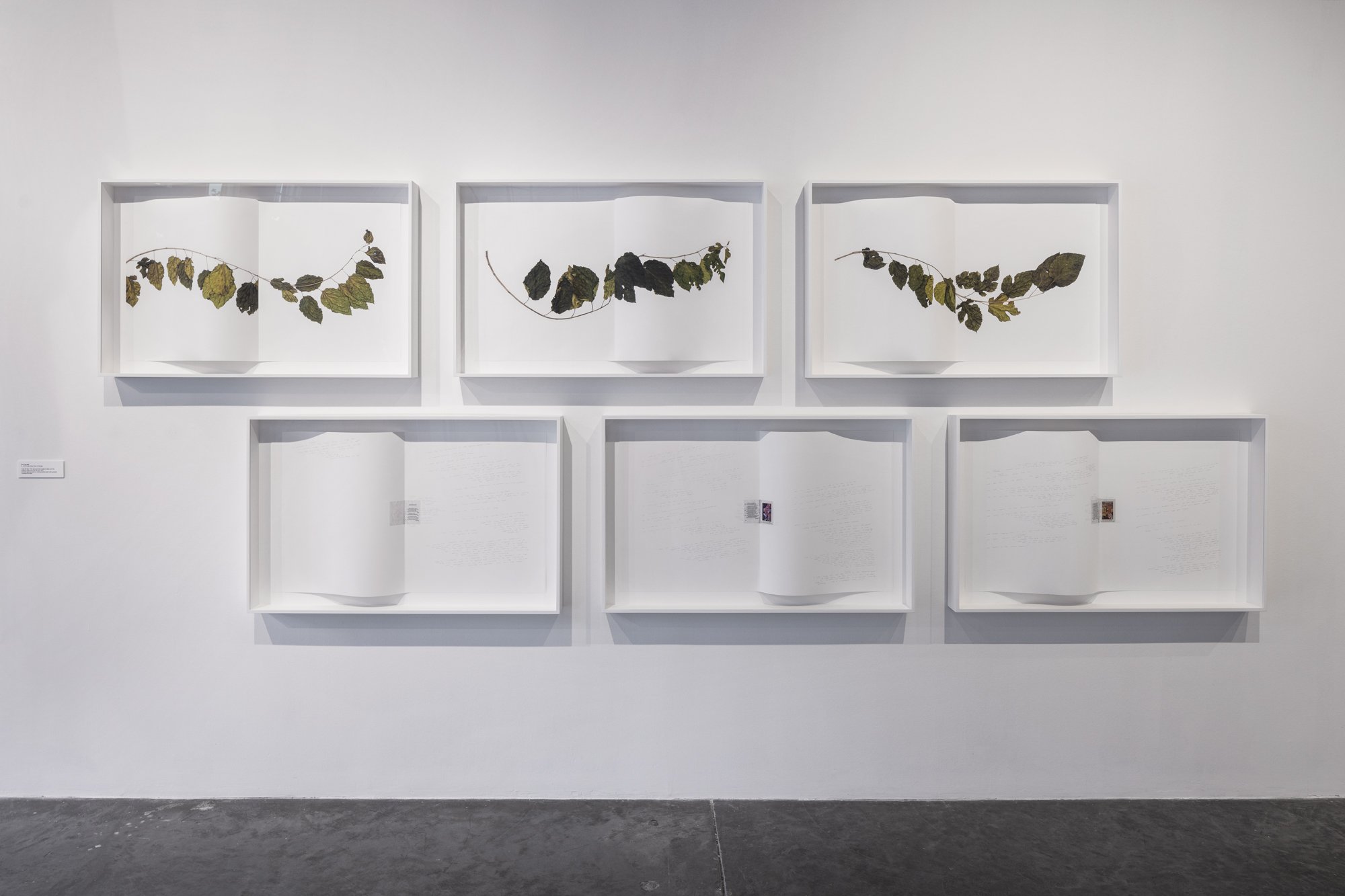
Cuộc bế dâu/ The sea turns into mulberry fields and the mulberry field turns into the sea
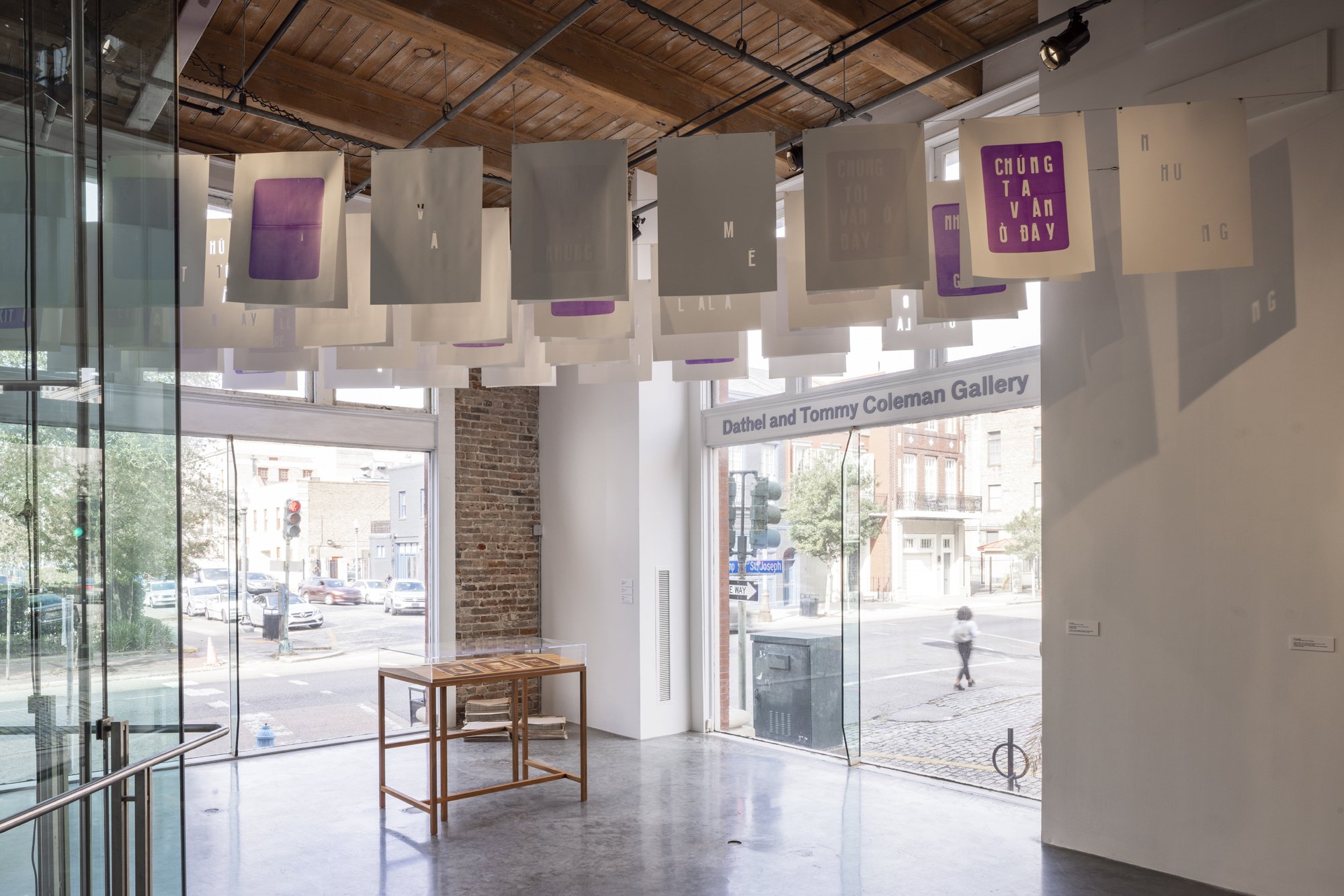
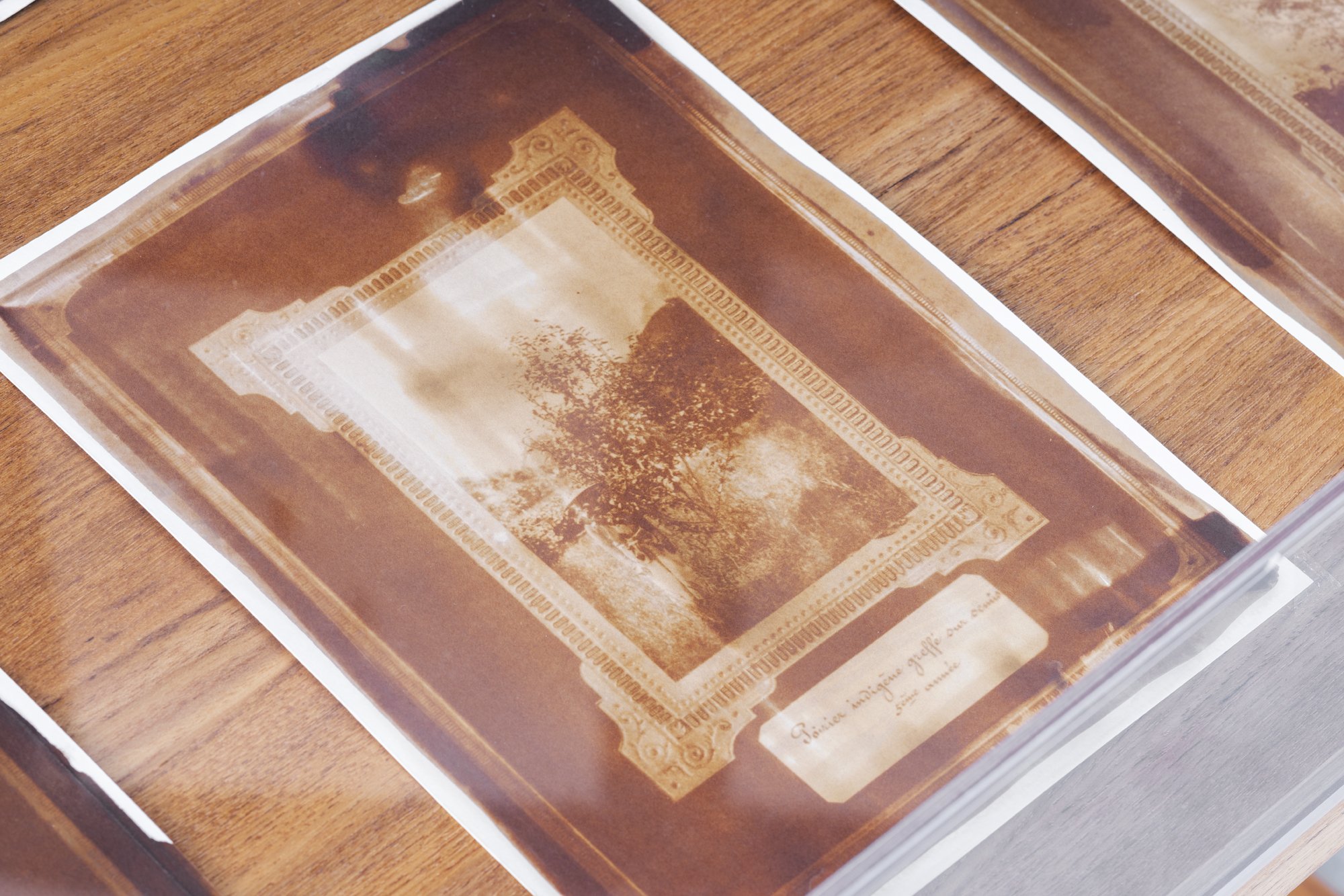
Archival pigment print on Hahnemüehle paper with graphite, hectographic prints, newspapers unfixed Van Dyke prints and custom vitrine
2021
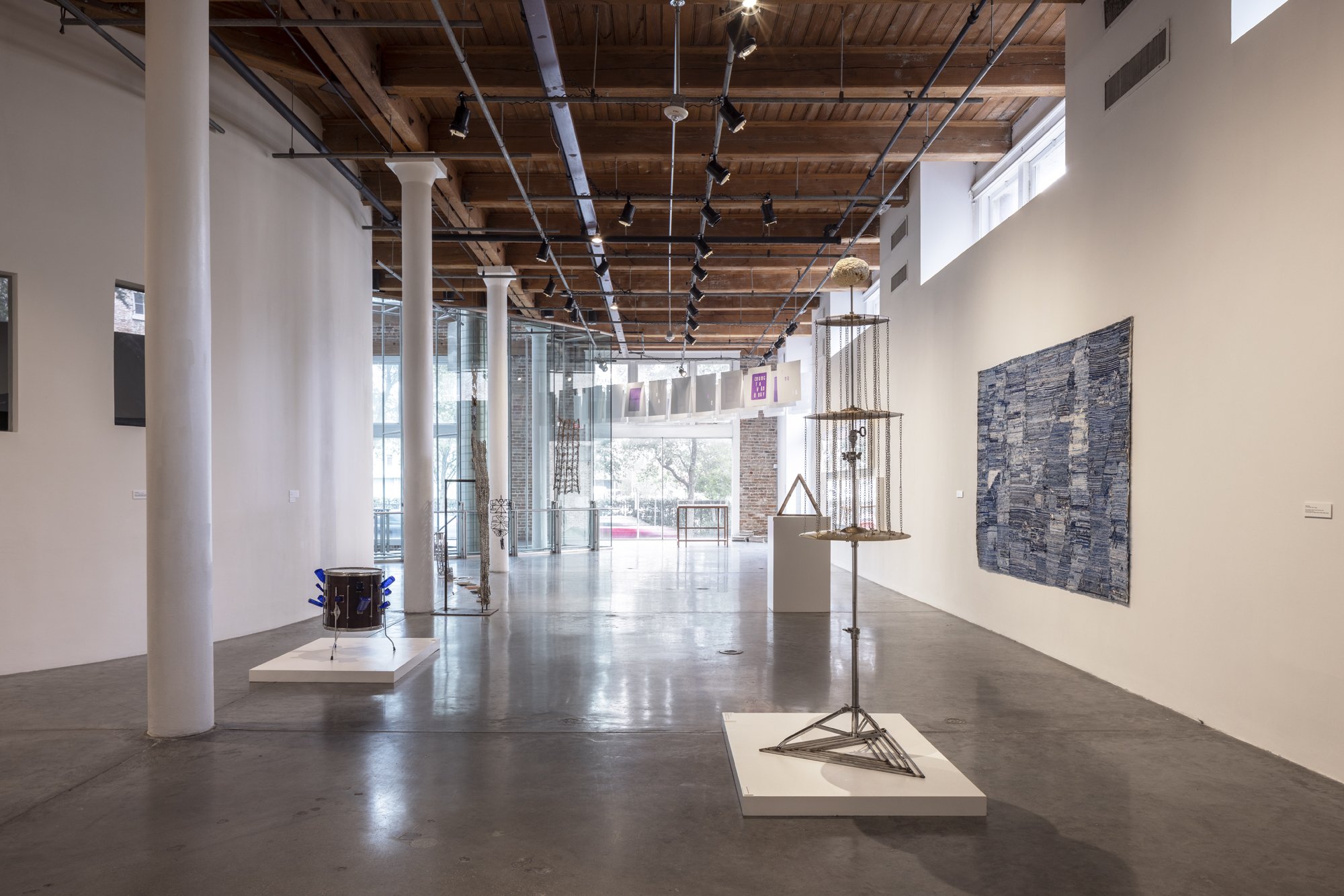
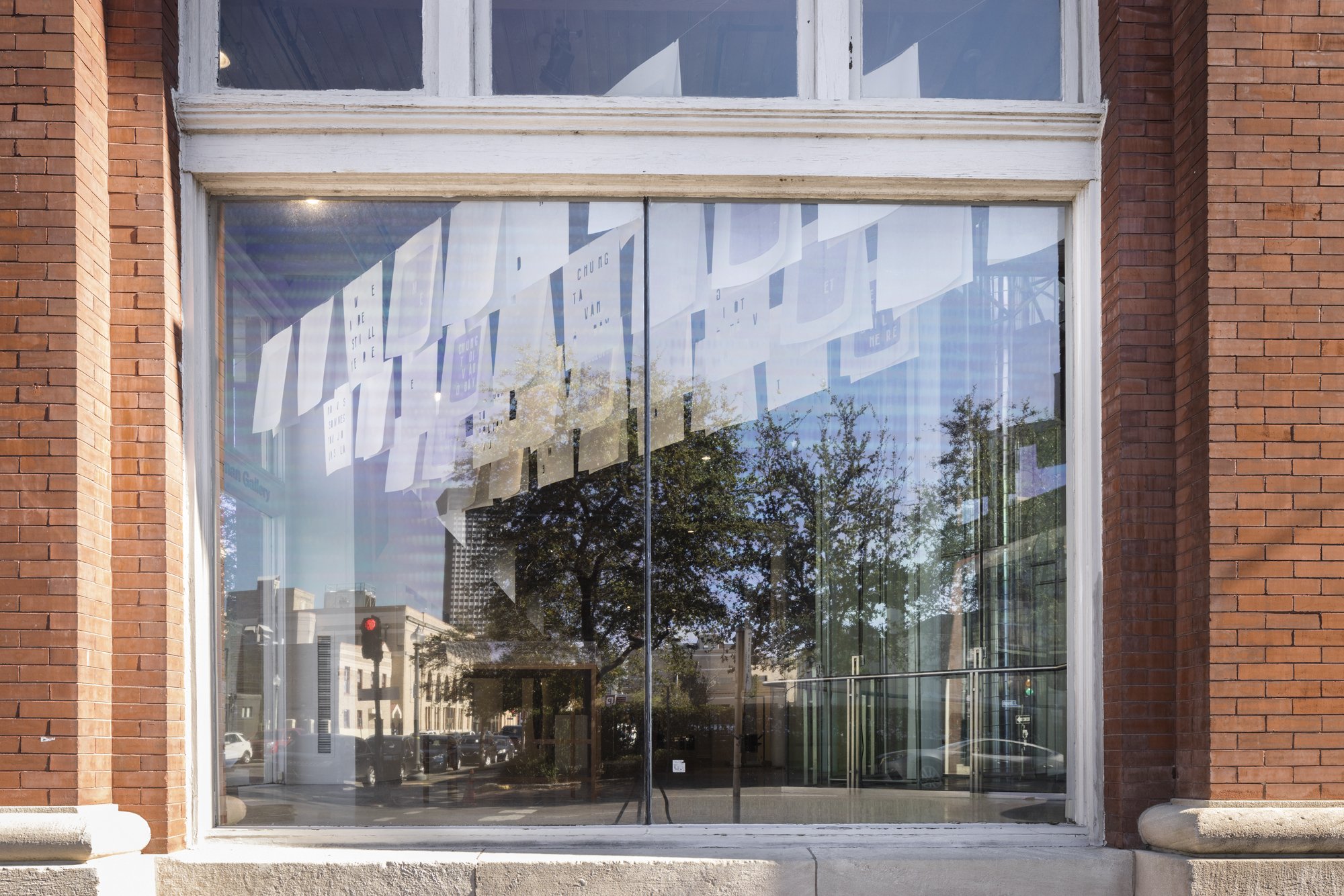
Hương Ngô’s installation explores translations across cultural contexts and across objects, beings, and ideas. She uses archival imagery and printed media to draw together the histories of French colonial practices around agriculture, labor, economy, and environment in Vietnam and Louisiana. In both colonial encounters, the French attempted––and failed––to import their form of silk trade. As Ngô details in her newsprint takeaway, the Vietnamese had a thriving silk industry that the French disrupted with the unsuccessful introduction of their own silkworms and different technologies, and the establishment of the silk industry in Louisiana likewise failed, overtaken by cotton. While reproductions of archival materials displayed in the handcrafted case show images of colonial farming in Vietnam, the artist has framed and preserved images of branches taken from mulberry trees in New Orleans, an invasive reminder of the presence of French colonialism.
Ngô is keenly aware of how these histories reverberate in the present—in the populations of Vietnamese, Native, and Black people who have passed through and remain in Louisiana and in the altered landscape that we inhabit today. The hectograph-print posters hanging from the rafters declare in Louisiana Creole, Kouri-Vini, and Vietnamese: “We are still here.” These low-tech, highly accessible prints created using a water solution reference the Communist anti-colonial movement that employed this medium to swiftly disseminate sensitive information. In New Orleans, hectography takes on added layers of meaning because the printmaking process relies on the use of water, a force that has brought commerce and life to the port city while harboring potential violence. The newsprint takeaway that accompanies this installation, along with the other forms of print material, details the artist’s own interventions into these histories, weaving together seemingly disparate narratives to reveal and fill crucial gaps in the archives.
Text courtesy of Prospect.5. Photos: Alex Marks.
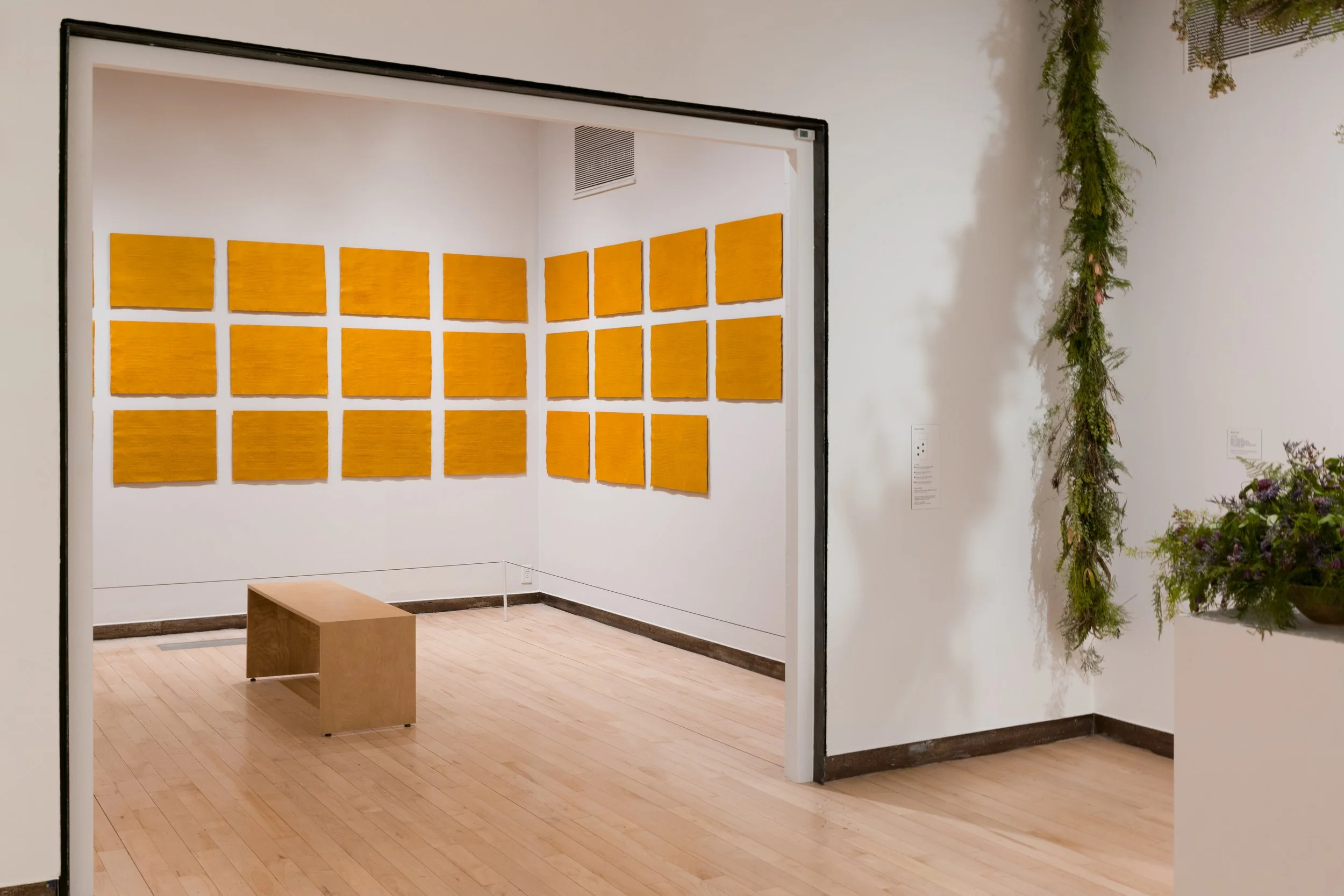
Vấn đề Phụ Nữ : A Question or a Problem
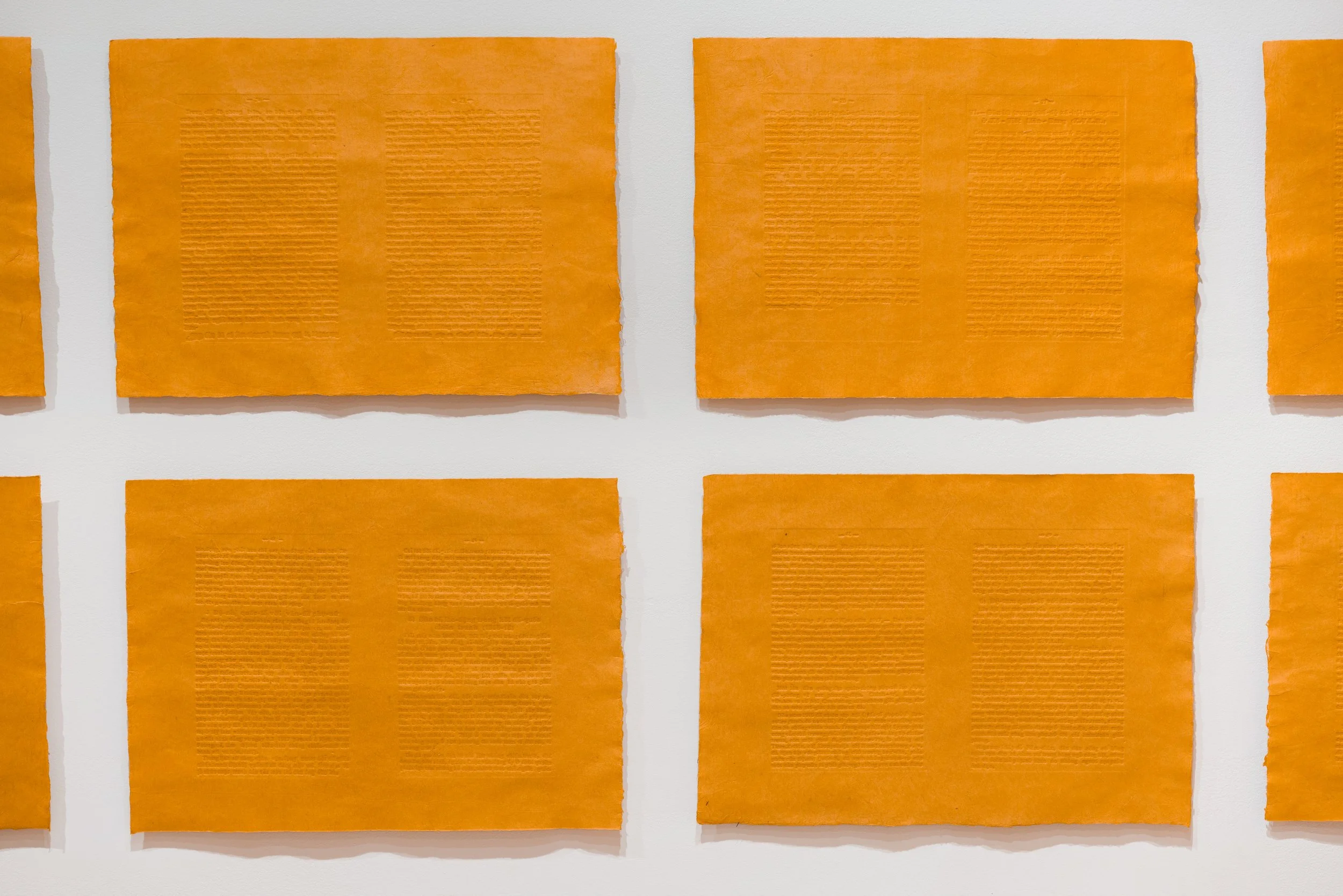
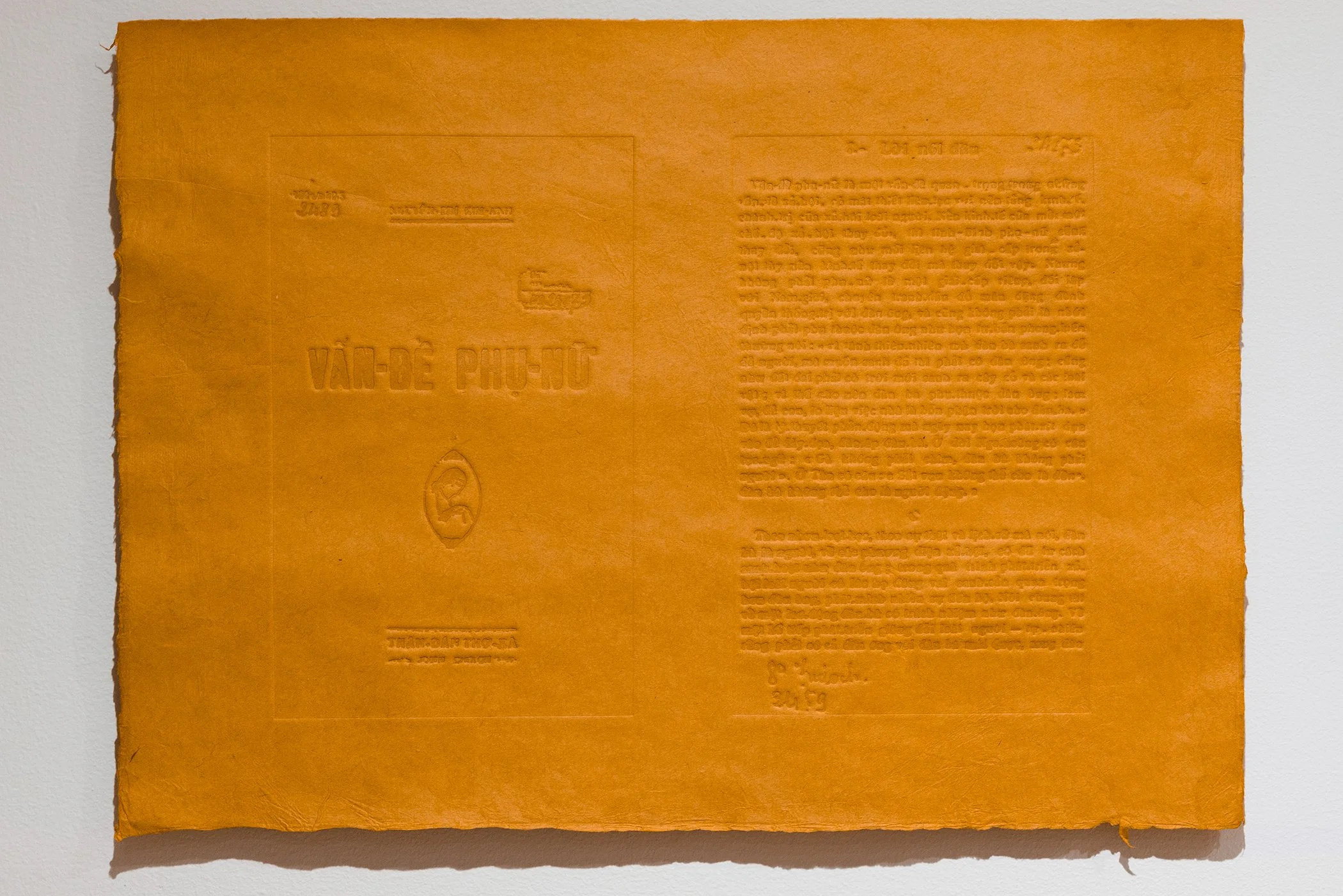
28 pieces of blind-embossing with tint base on golden Dó paper
2023
From Meghan Considine for the exhibition to see oneself at a distance at MASS MoCA: “Since 2014, Hương Ngô has investigated the gap-ridden archives of Nguyên Thị Minh Khai (1910-1941), a lionized martyr of the Vietnamese Communist Party. Here Ngô reproduces and reaffirms a pseudonymous anti-fascist political tract attributed to Minh Khai, Vấn đề Phụ Nữ (1938), which can be translated as "The Question of Women." or "The Problem of Women." The text explores the role of women and motherhood throughout feudal times in Asia to the then-present colonial age and Confucian society. It takes an anti-Fascist stance, attempting to balance calls for equality with the rise of the popular front and thereby navigating tricky waters of class-based versus gender-based identities and their corresponding priorities. Ngô reproduces the entirety of Vấn đề Phụ Nữ in its original language, refusing to translate for non-Vietnamese-speaking audiences. This illegibility acknowledges and aims to rectify the fact that, in her lifetime, Minh Khai was denied what postcolonial theorist Édouard Glissant called "the right to opacity," as her movements were heavily tracked by French colonial surveillance. The laborious act of pressing text into fibrous paper affords Ngô intimacy with both Minh Khai and the material histories embedded in this golden surface: do paper handmade by the Hanoi-based Zó Project, which uplifts traditional papermaking practices. Dó paper has been sustainably crafted from the bark of Northern Vietnamese rhamnoneuron balansae trees since the third century. Crucially, Ngô elevates the text and its author's radical legacy: because of its inherent durability and beauty, dó paper has historically been reserved for special purposes such as official record keeping.”



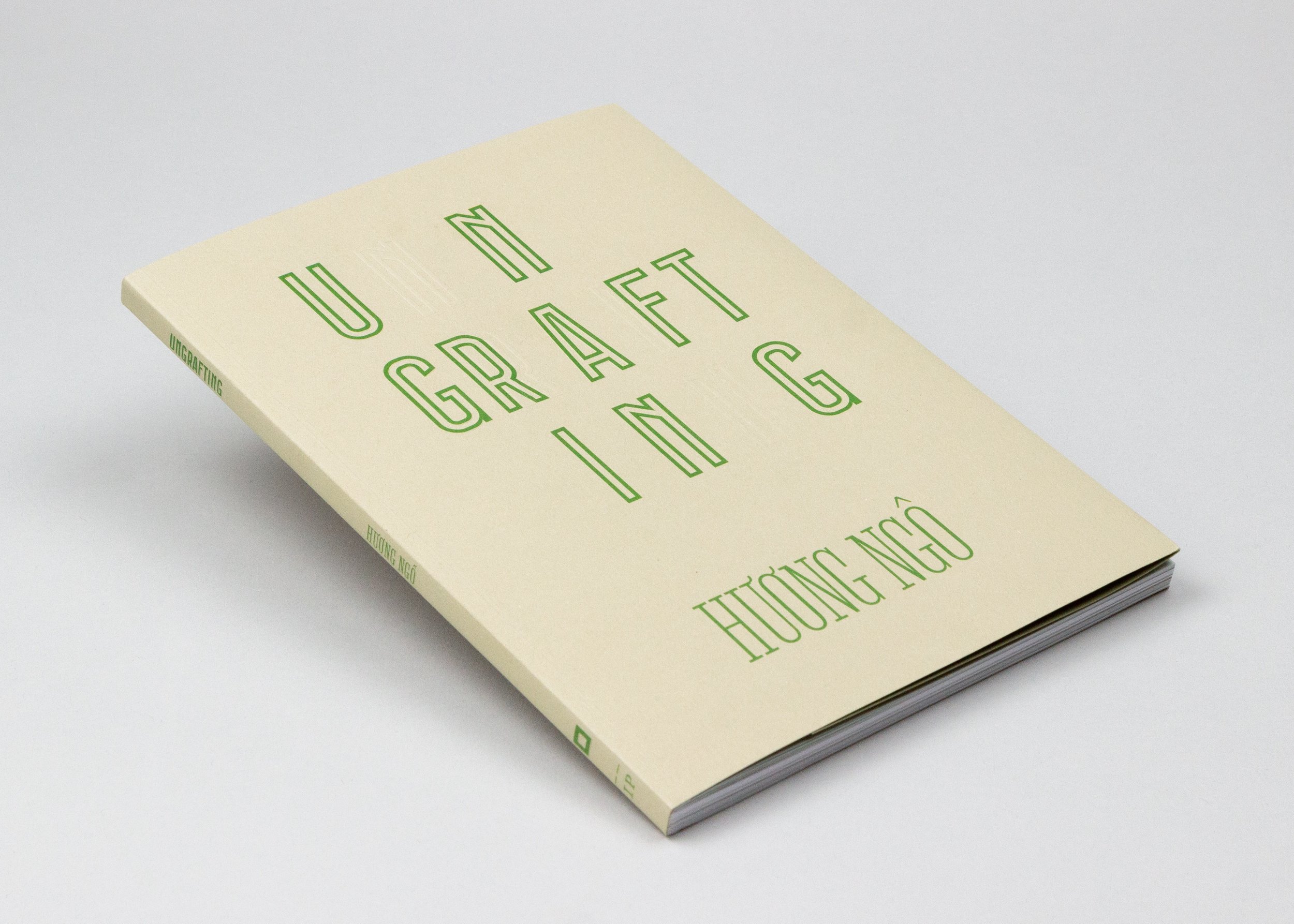
Ungrafting
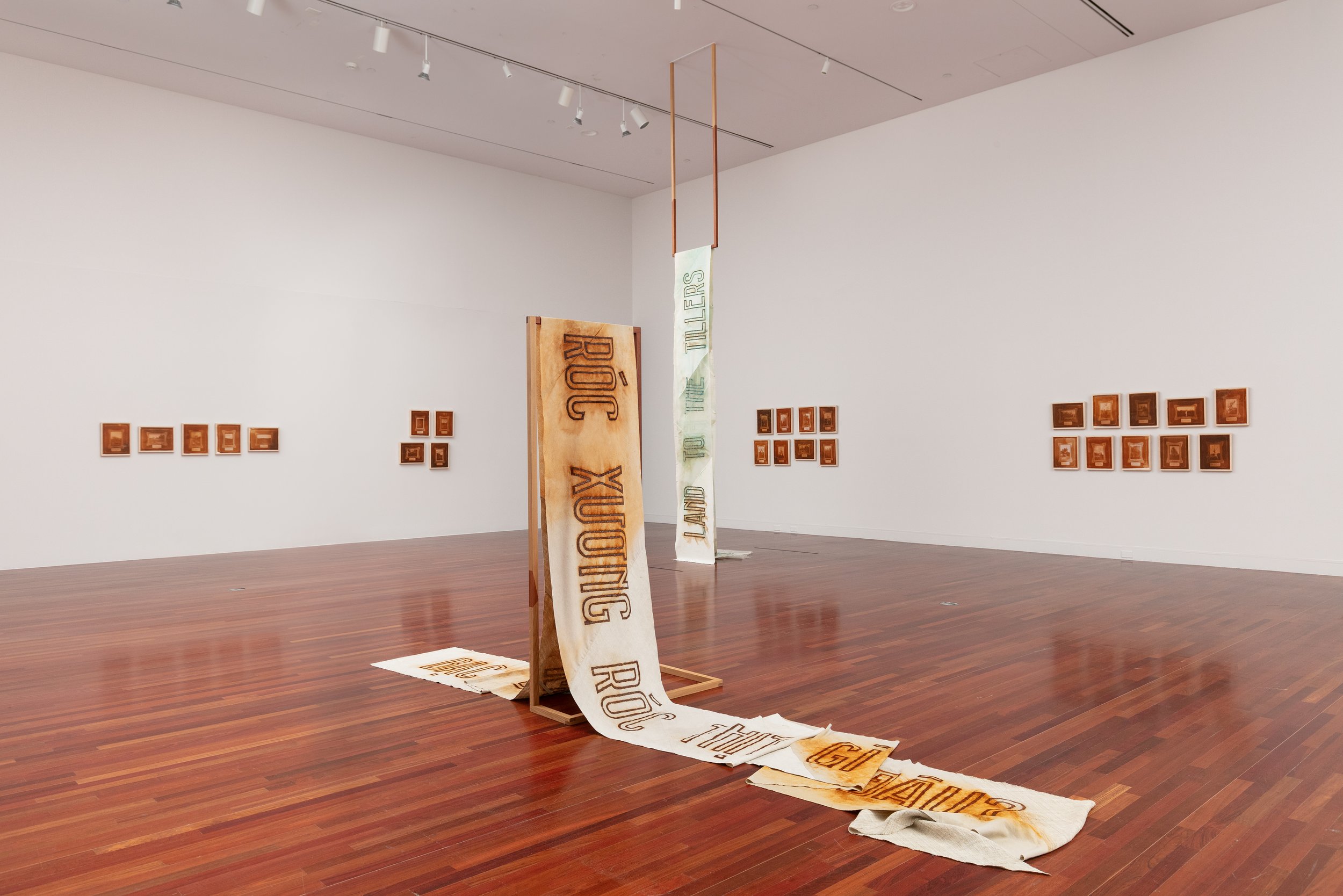
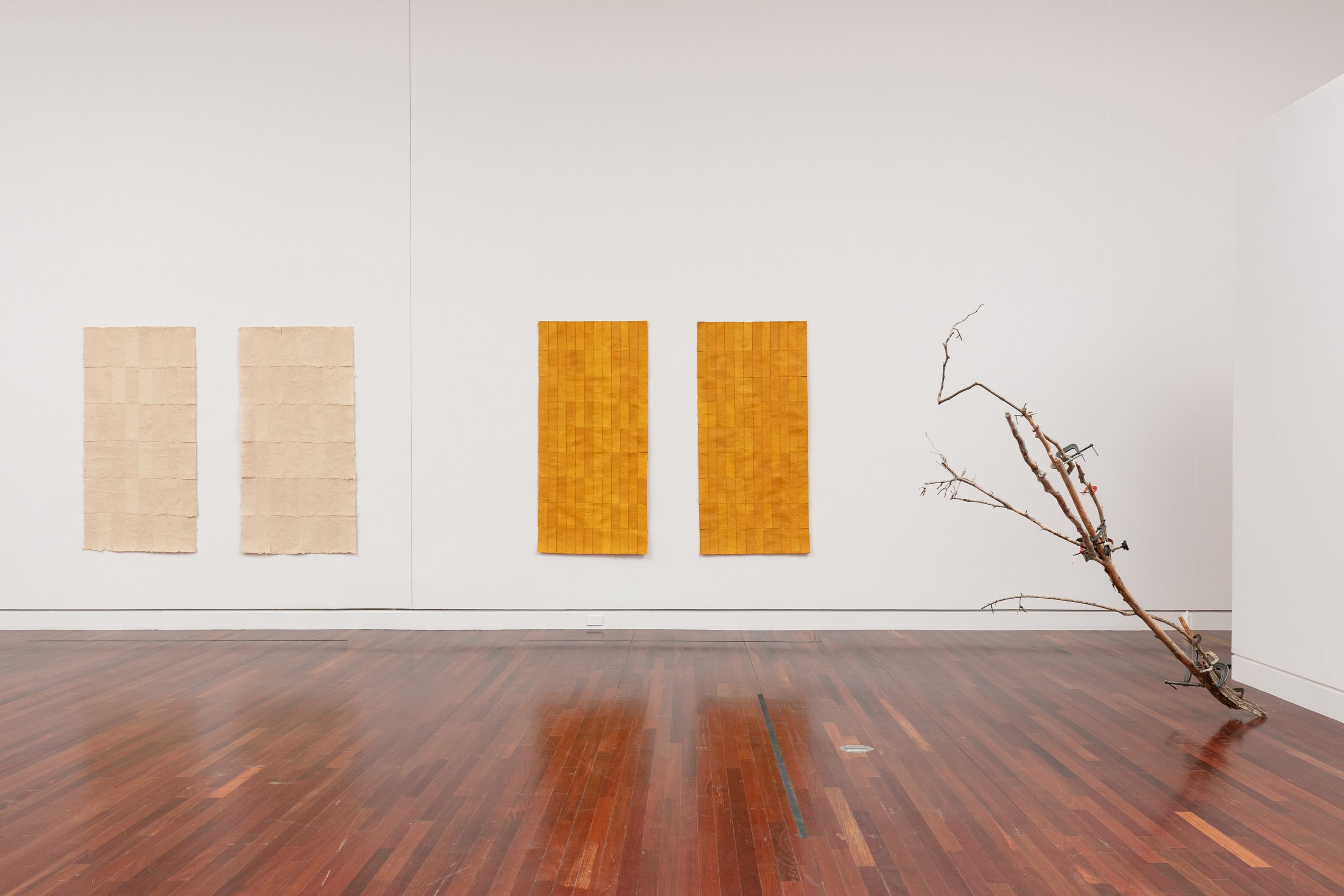
Blind embossing on Rives BFK, Van Dyke prints on paper, oak and mahogany armatures, steel, cotton, hemp, silk, copper, iron, clay, oak gall ink, avocado ink, stitched handmade dó paper, branches collected with my son, metal C clamps, sound recording, Photo Tex mural, plants in LECA and glass from artist’s collection
110 x 56 x 18 ft
2024
From Katja Rivera for Ungrafting, March 1–July 29, 2024, El Pomar Galleries, Colorado Springs Fine Arts Center at Colorado College:
Time is crucial to Hương Ngô, who investigates the resonances of colonial histories in the present day. She explores various aspects of Vietnamese resistance to French colonialism through archival research, and activates the historical record via imagery, language, and material matter.
For her first solo exhibition in Colorado, Ngô turns to a series of early twentieth-century photographs showing foreign trees and tree grafts planted in Vietnam by the French. For the artist, grafting—a procedure that involves cutting and splicing different species into a single plant—serves as a powerful metaphor for the physical violence inherent in colonialism. Ngô reproduces the archival photographs using the Van Dyke method, which was common at the time the original pictures were made, but alters the fixing process so that the new images will gradually deteriorate and darken.
Accompanying the photographs are other new works by Ngô: altered reproductions of plants that were catalogued in 1919 for a French herbarium (a collection of systematically organized dried plants) and hanging fabric works with visible sutures that are treated with iron, copper, and other materials, many of which carry particular significance in the Southwest region of the United States. Like tree grafts, the tears in these works serve as a reminder of the violence of agricultural and mineral extraction; control of land, the artist proposes, is often accompanied by control over the land’s inhabitants. At the same time, the mends make visible the resistance and repair that may emerge in response to such violence.
To expand on this idea, the artist will bring into the exhibition a selection of cultural heritage items from our Fine Arts Center’s permanent collection that further speak to the history of the region and its cultural intersections. Collectively, the works in the show offer a gesture of what the artist has termed “ungrafting”: a poetic decolonial methodology that weaves together networks of care across time.
Hương Ngô: Ungrafting is curated by Katja Rivera, Curator of Contemporary Art, in collaboration with the artist. Support of the exhibition is generously provided by The Anschutz Foundation and Colorado Creative Industries.